ThingsBoard 4.4: Redesigned UI, Java 25, Remote Agents, and More

On this page
ThingsBoard 4.4 introduces a redesigned user interface, Java 25, Remote Agents for centralized deployment management, expanded Reporting capabilities, faster integration processing, and new options across APIs and dashboards.
This release also marks an important milestone: Community Edition and Professional Edition are now unified into a single ThingsBoard platform. Features that were previously exclusive to Professional Edition, such as integrations and Reporting, are now available in every deployment. We covered this transition and the updated licensing model in our dedicated One ThingsBoard post.
Redesigned user interface
Navigation is easier, and you get more space for dashboards, rule chains, entity tables, and configuration pages. Administrators can also match the interface more closely to their brand.
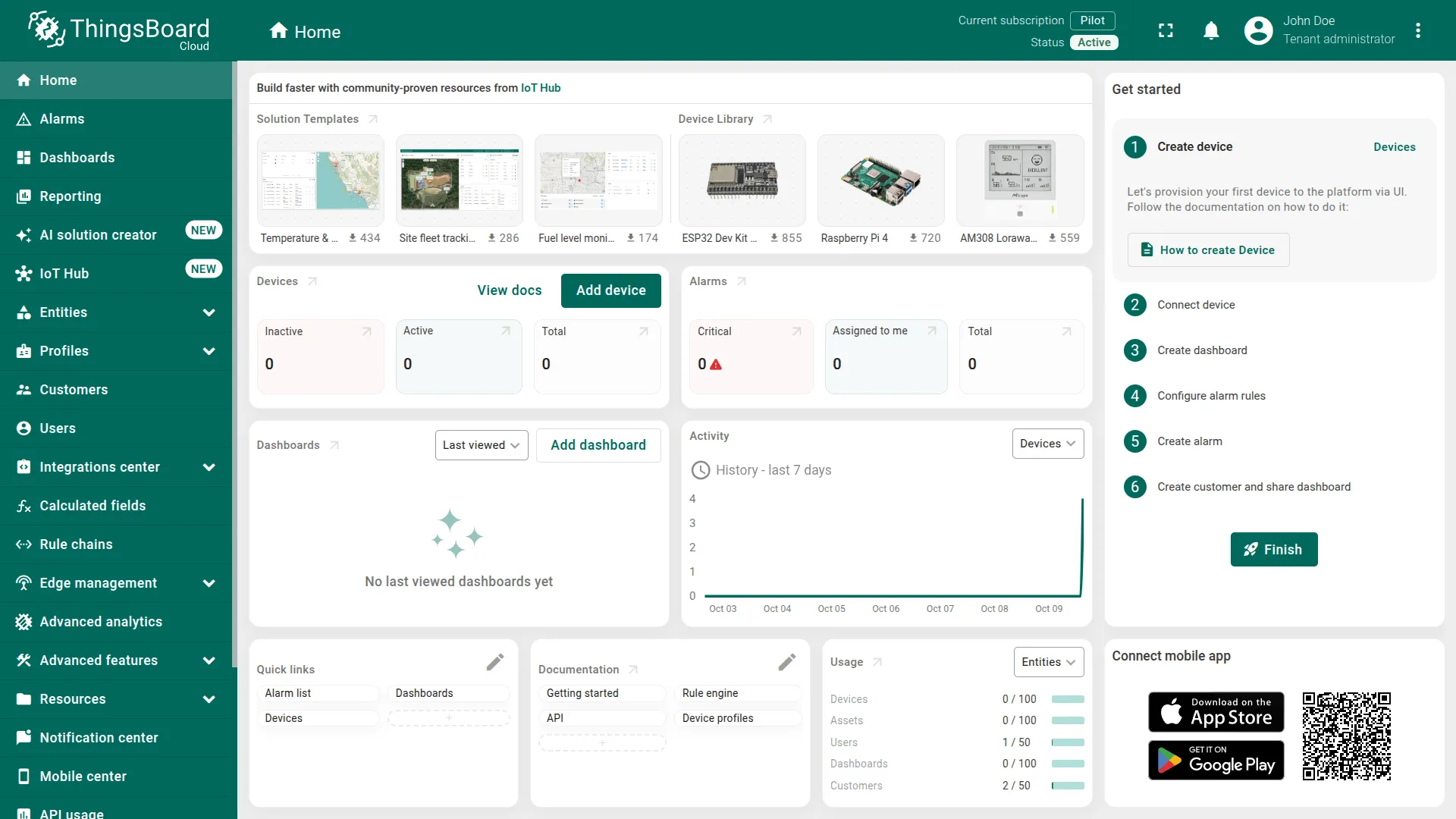
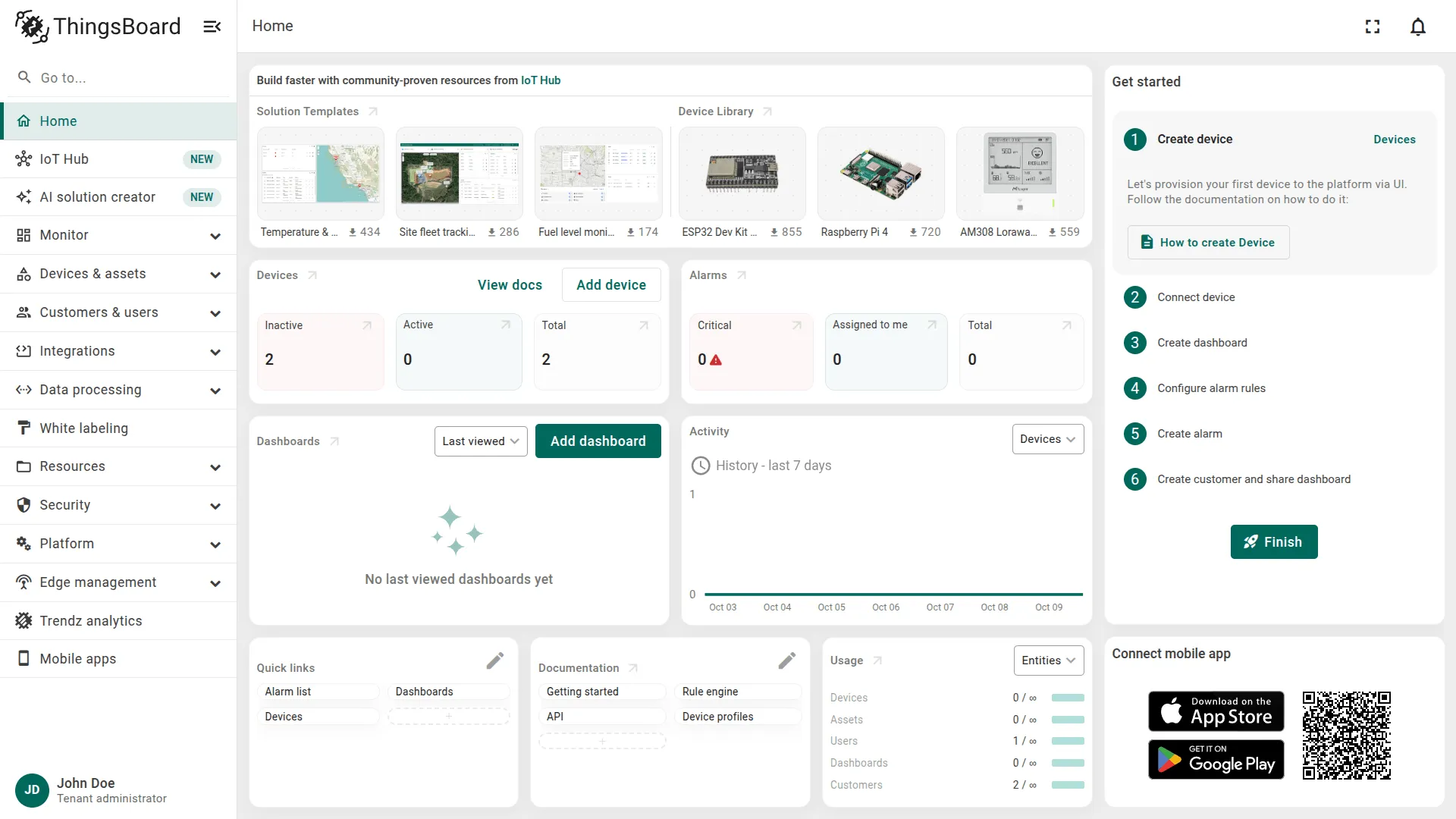
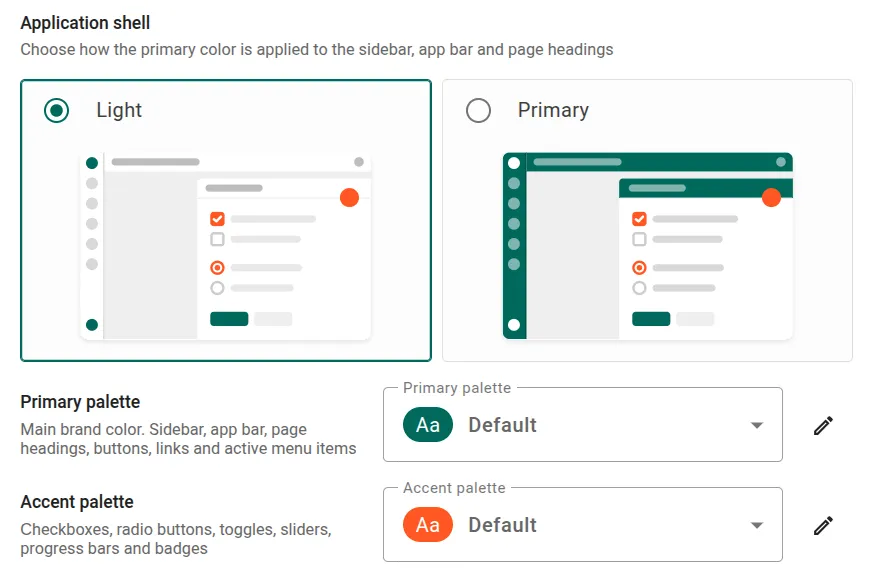
Light or branded app shell
In White-labeling settings, administrators can give the sidebar, app bar, and page headings a light style or their brand colors.
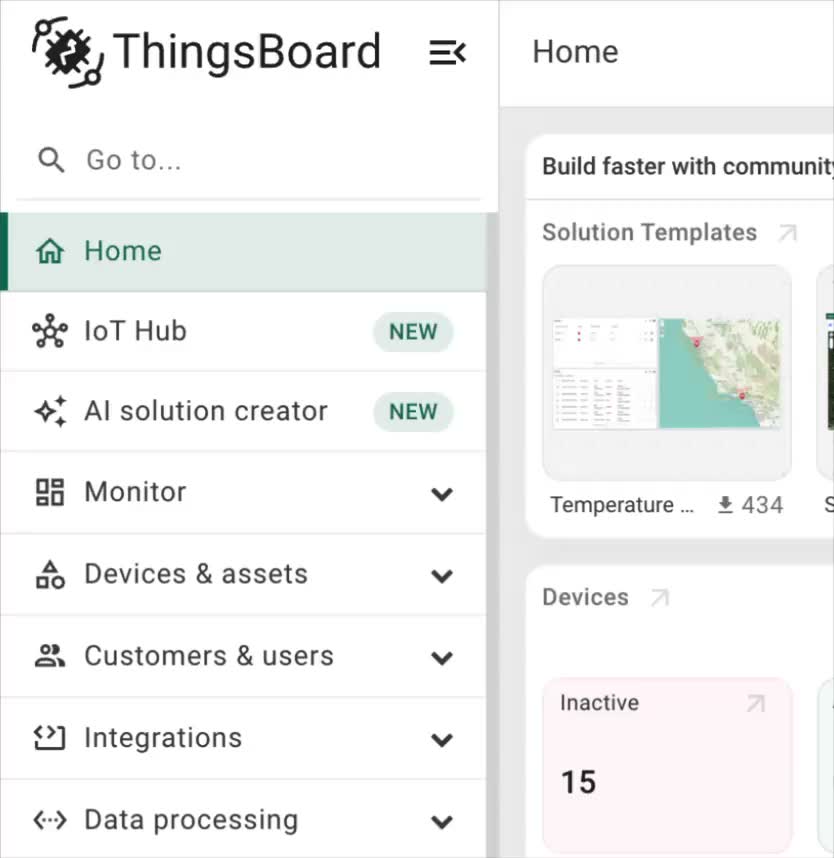
Go to any page faster
Find any page or feature without clicking through the menu. Type its name in the search field under the logo and jump straight there.
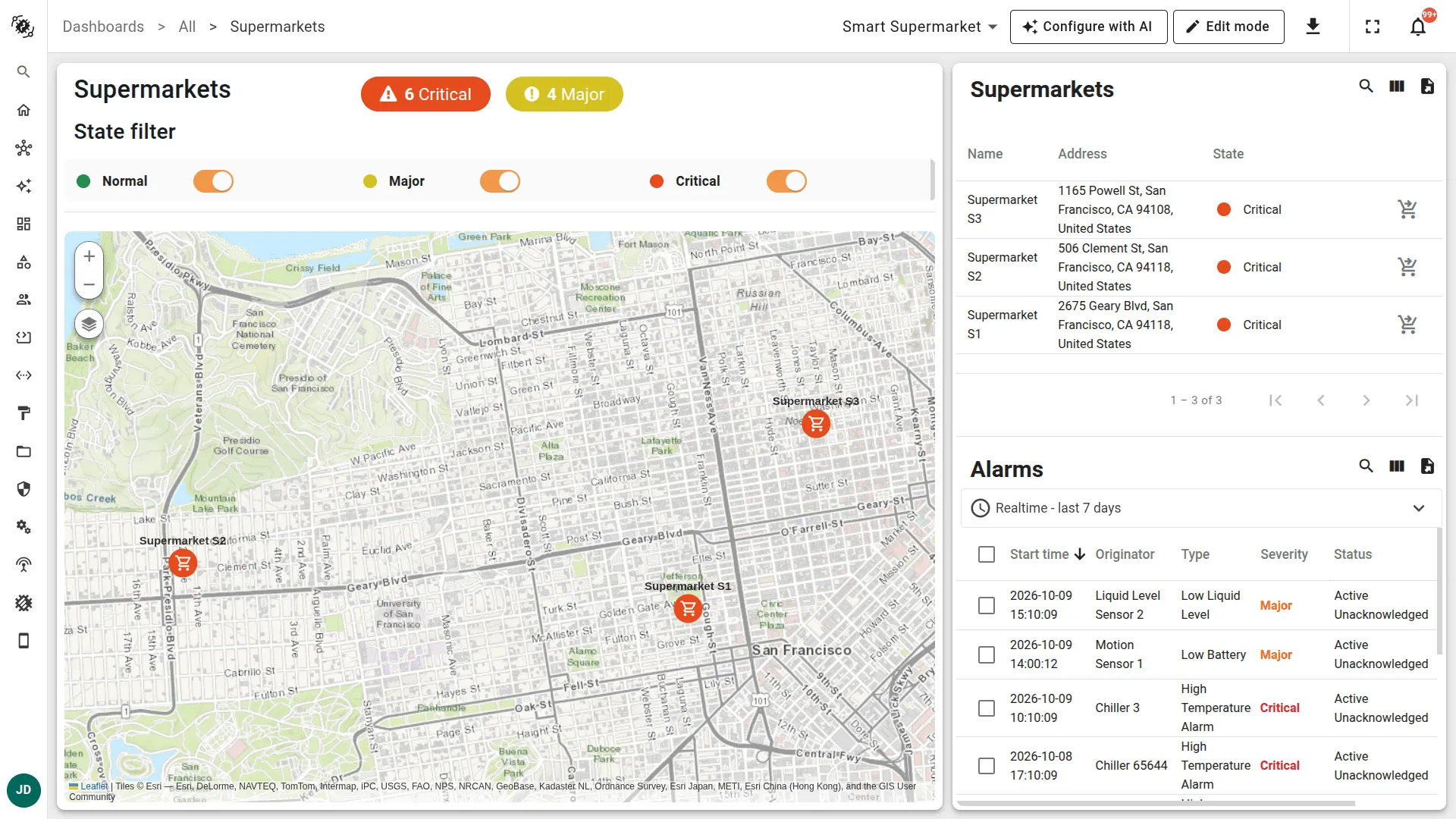
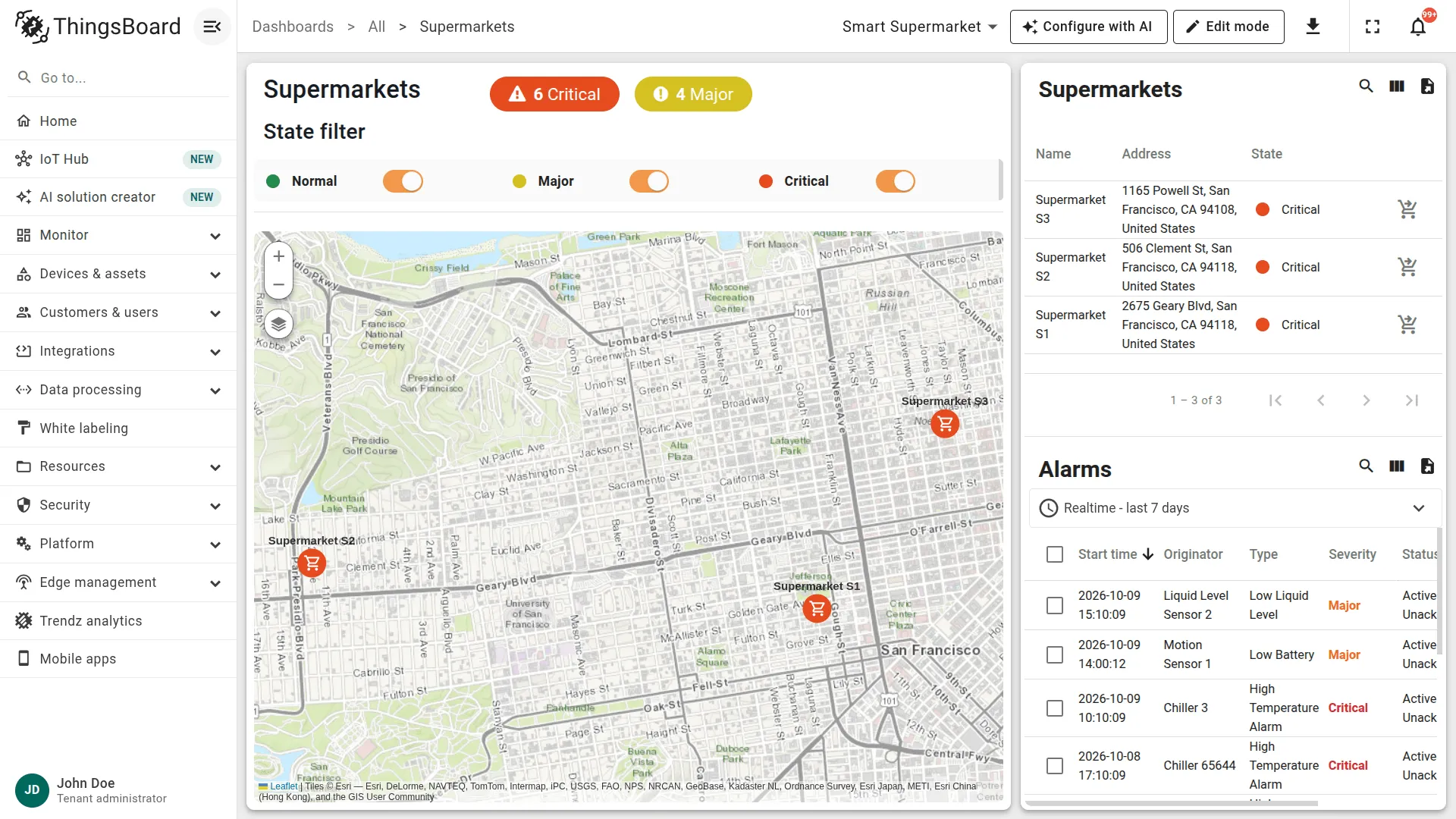
You can switch the sidebar between full mode and a compact mode that shows only icons. The compact mode frees up horizontal space, so dashboards can use more of the screen.
Run ThingsBoard on Java 25
ThingsBoard 4.4 runs on Java 25. The runtime, Docker images, and installation packages are all updated. Docker images already include Java 25. On Linux or Windows installations without Docker, install JDK 25 and make it the default Java version before upgrading.
Remote Agents: manage remote deployments from one place
Manage your remote hosts from the ThingsBoard UI, without connecting over SSH for routine deployment tasks.
You can deploy and manage ThingsBoard Edge, IoT Gateway, and other Docker Compose apps, even on many hosts at once. Reusable application profiles keep configurations consistent, and backup and rollback make upgrades safer.
Install a Remote Agent on each host you want to manage. The agent deploys and manages apps there, sends host and container metrics to ThingsBoard, and shows live container logs.
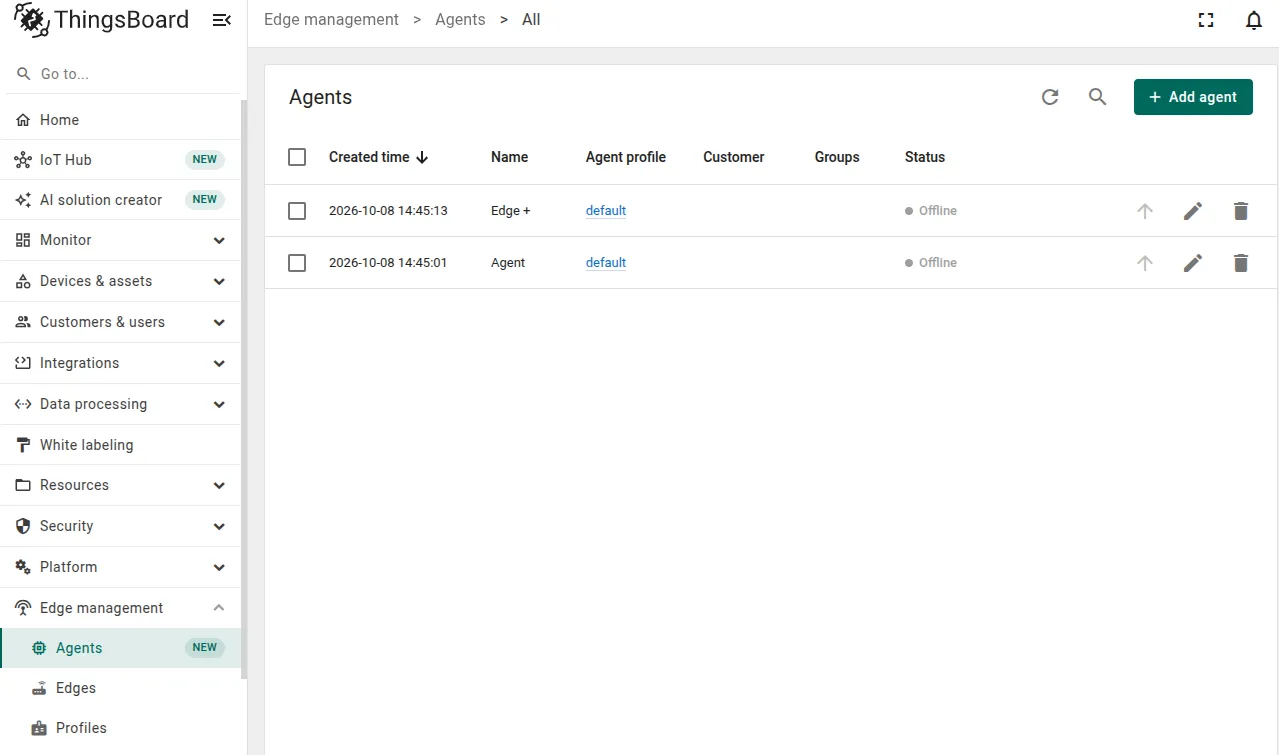
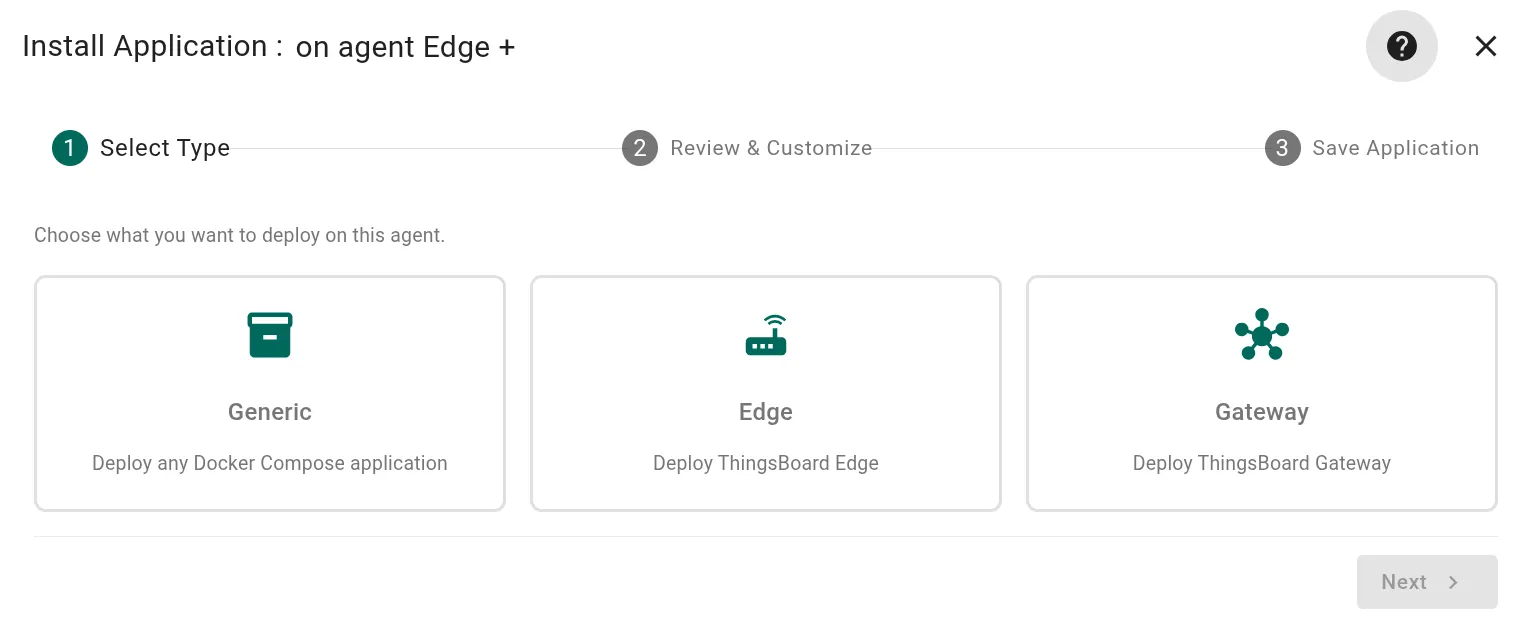
Learn more in the Remote Agents documentation.
Reporting improvements
Your customers can now work with reports on their own: customer users get report templates, schedules, and generated reports for their own data.
Public report download links make sharing easier, and dynamic Y-axis configuration makes report charts more flexible.
Faster integration processing
Integration data now reaches the Rule Engine faster, and TB Core has less work to do.
Before, the Integration Executor sent data to TB Core, which converted it and found the right device. Now, the Integration Executor does this work itself and keeps device and profile data in memory. It then sends messages straight to the Rule Engine.
The processing path changes from:
To:
The new path also needs fewer Redis calls. TBEL converters run inside the Integration Executor, while JavaScript converters still use the JS Executor service.
API and integration improvements
API keys for WebSocket
Secure real-time connections the same way as other API calls. WebSocket clients can use the API keys introduced in ThingsBoard 4.3.
Alarm Rules API
Manage alarm rules programmatically through a dedicated API. Create and configure alarm rules directly from your systems and scripts.
Request body templates
Control exactly what your rule chains send to other services. The REST API Call rule node now supports request body templates.
OAuth 2.0 for Kafka
Connect to Kafka clusters that require OAuth 2.0, using the new OAUTHBEARER authentication support in Kafka integrations.
Dashboard and visualization improvements
OR conditions in dashboard filters
Match any of several criteria, not only all of them, with OR conditions in dashboard filters.
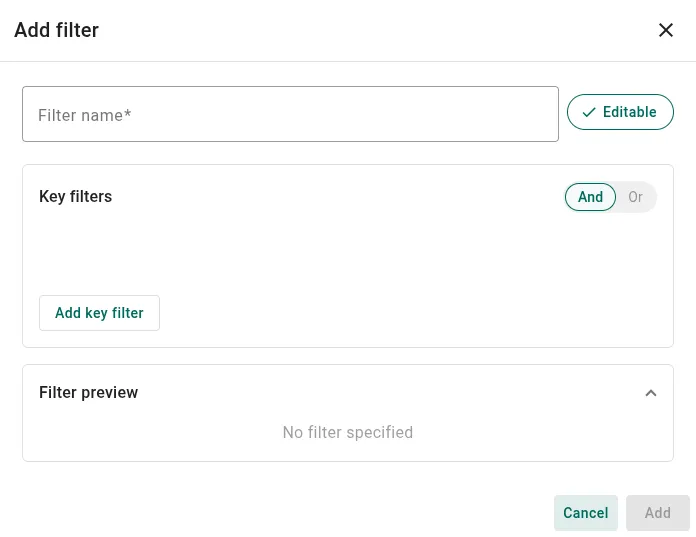
Export and import widget actions
Reuse action setups across widgets. You can now export and import widget actions.
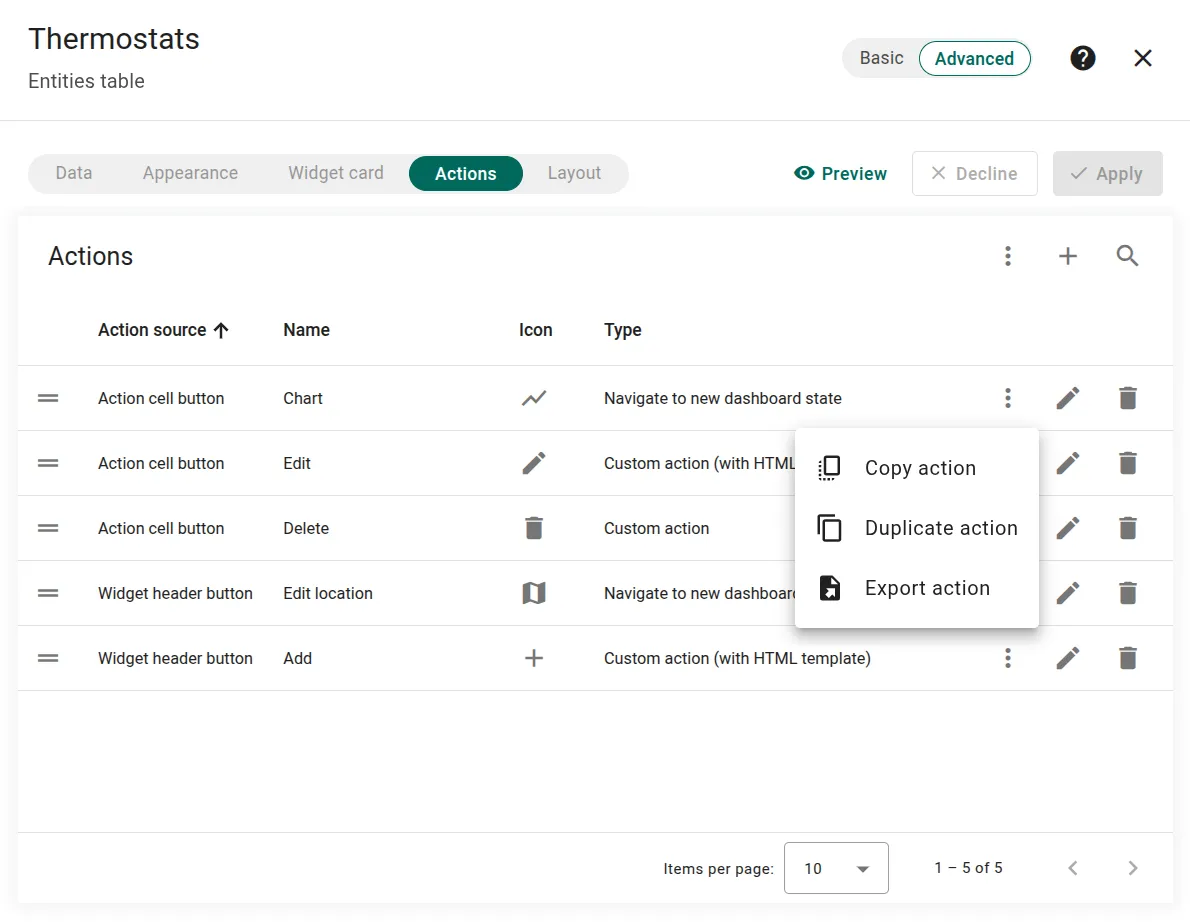
OpenFreeMap and chart zoom
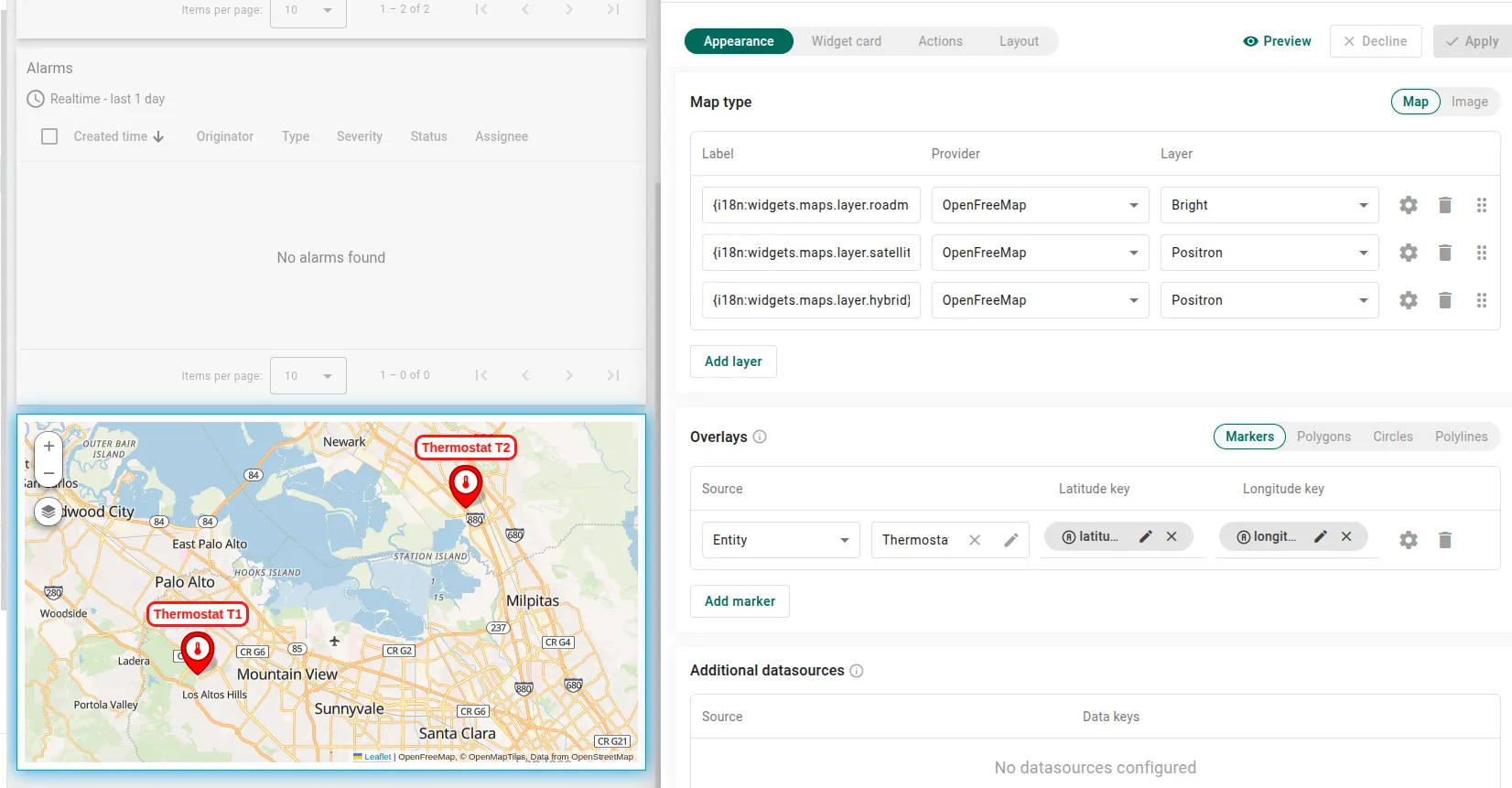
Map widgets now support vector tiles, with OpenFreeMap as a built-in provider. Separately, zooming into a time-series chart now updates the dashboard time window, so related widgets stay on the same range.
Upgrading from Community Edition
Existing Community Edition deployments can move to ThingsBoard 4.4 for free through the Community Grant Program. The grant covers your current scale, plus 10% more devices (up to 1,000 extra).
Learn more about the Community Grant Program.
Final thoughts
ThingsBoard 4.4 gives you more room in the interface, runs on Java 25, and makes remote deployments easier to manage. You also get more control over reports, faster integrations, and new options for APIs and dashboards.
See the release notes for the full list of changes and the upgrade instructions to move to 4.4.
Ready to try 4.4?