Grouping by Time
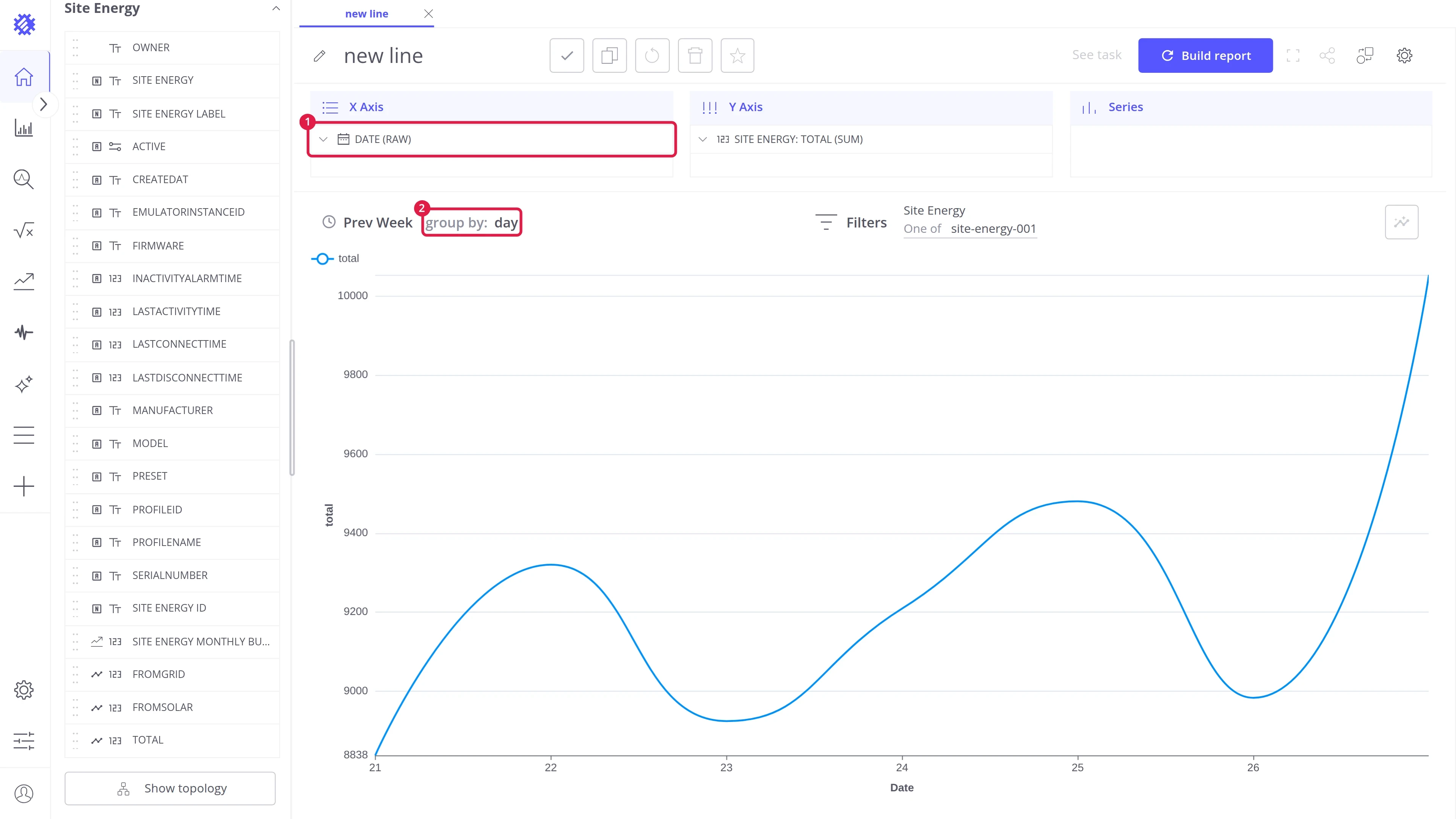
To show how data changes over time, put the Date field on the X-axis of a view. Trendz splits the time range
of the date picker into intervals, called buckets, and
reduces the data in each bucket to one value. A bucket without data is shown as -.
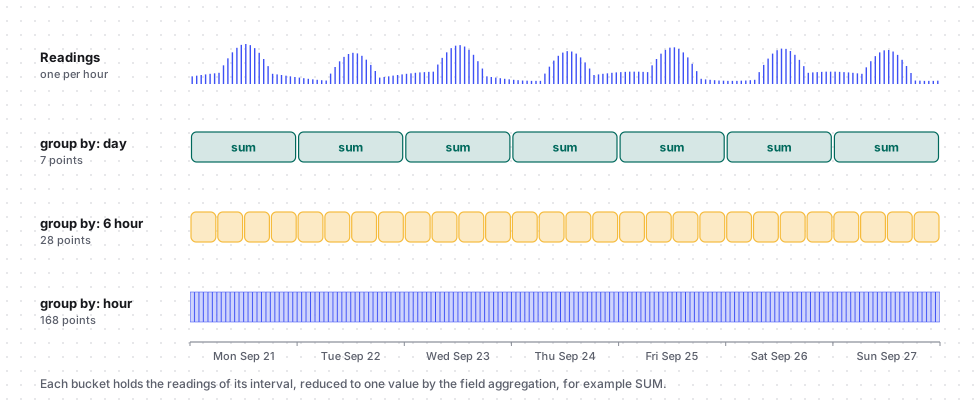
How grouping works
Section titled “How grouping works”Each bucket covers one interval of the range. The field on the Y-axis is aggregated inside it, for example summed. A smaller bucket gives more points and more detail.
The Date field has two kinds of grouping:
| Grouping | Bucket size is set by | Use it for |
|---|---|---|
| RAW | The group by control, at any time | Trends you zoom in and out of |
| Fixed option | The view configuration | Patterns, like the typical day or week |
RAW mode
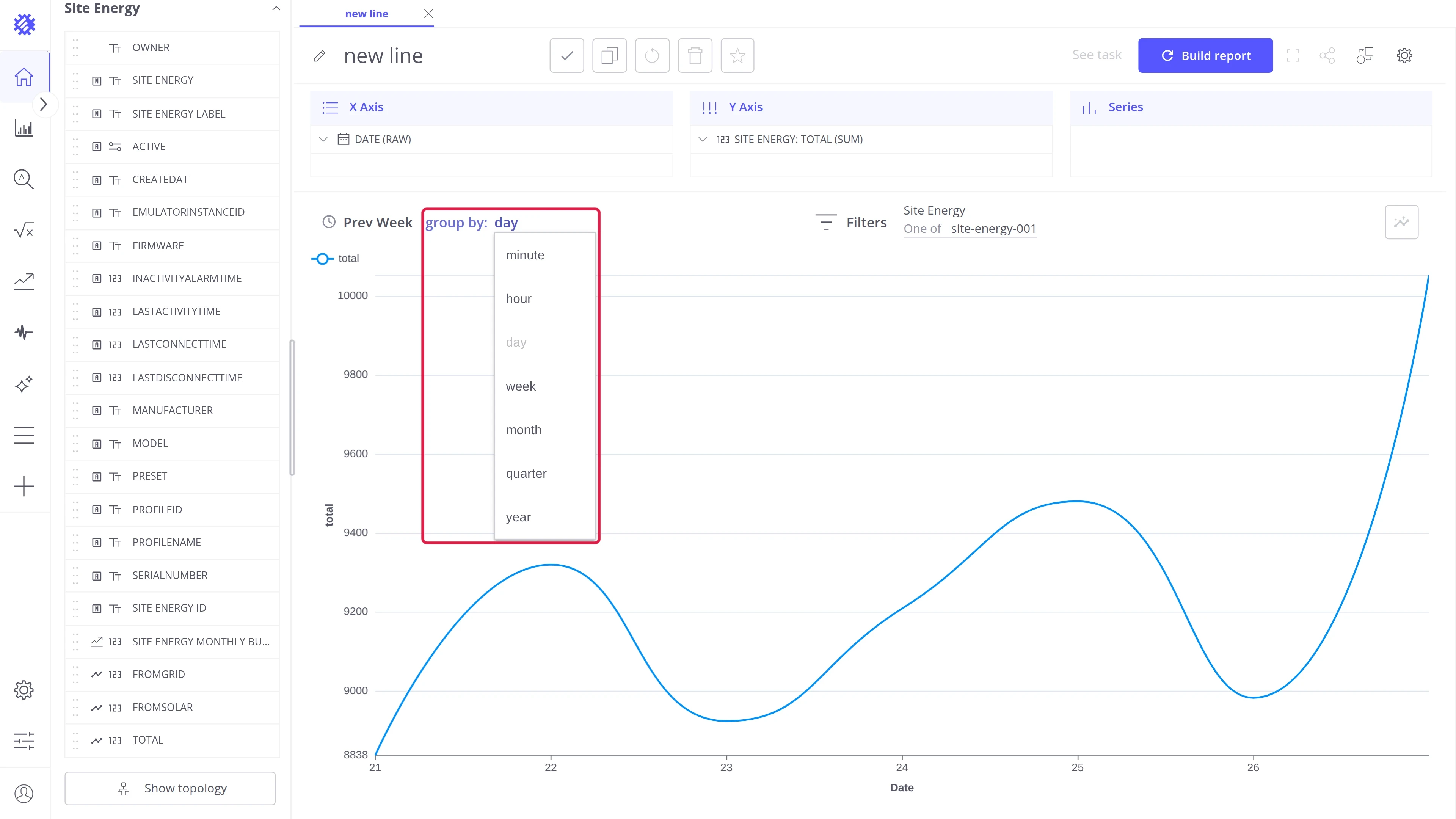
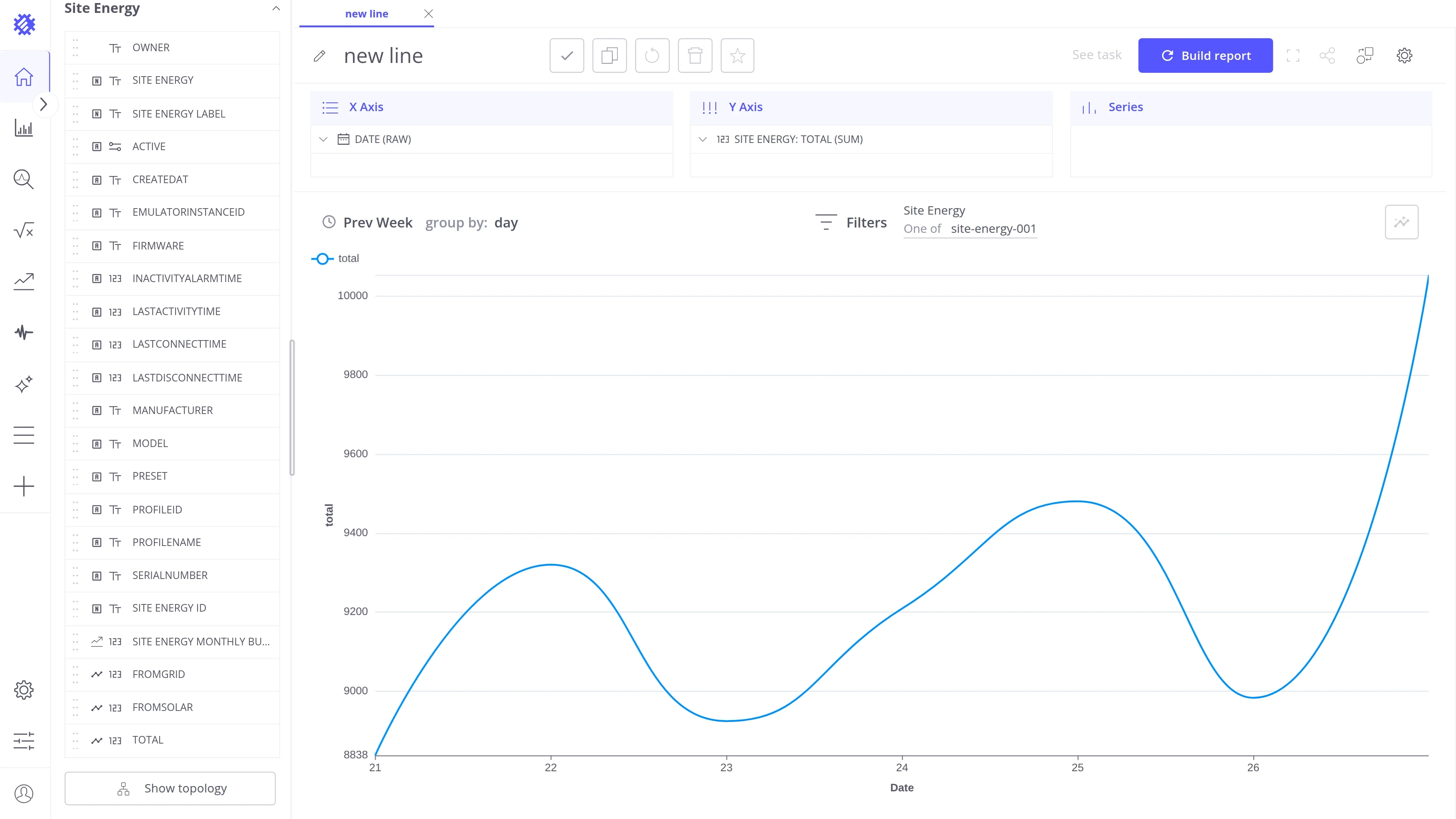
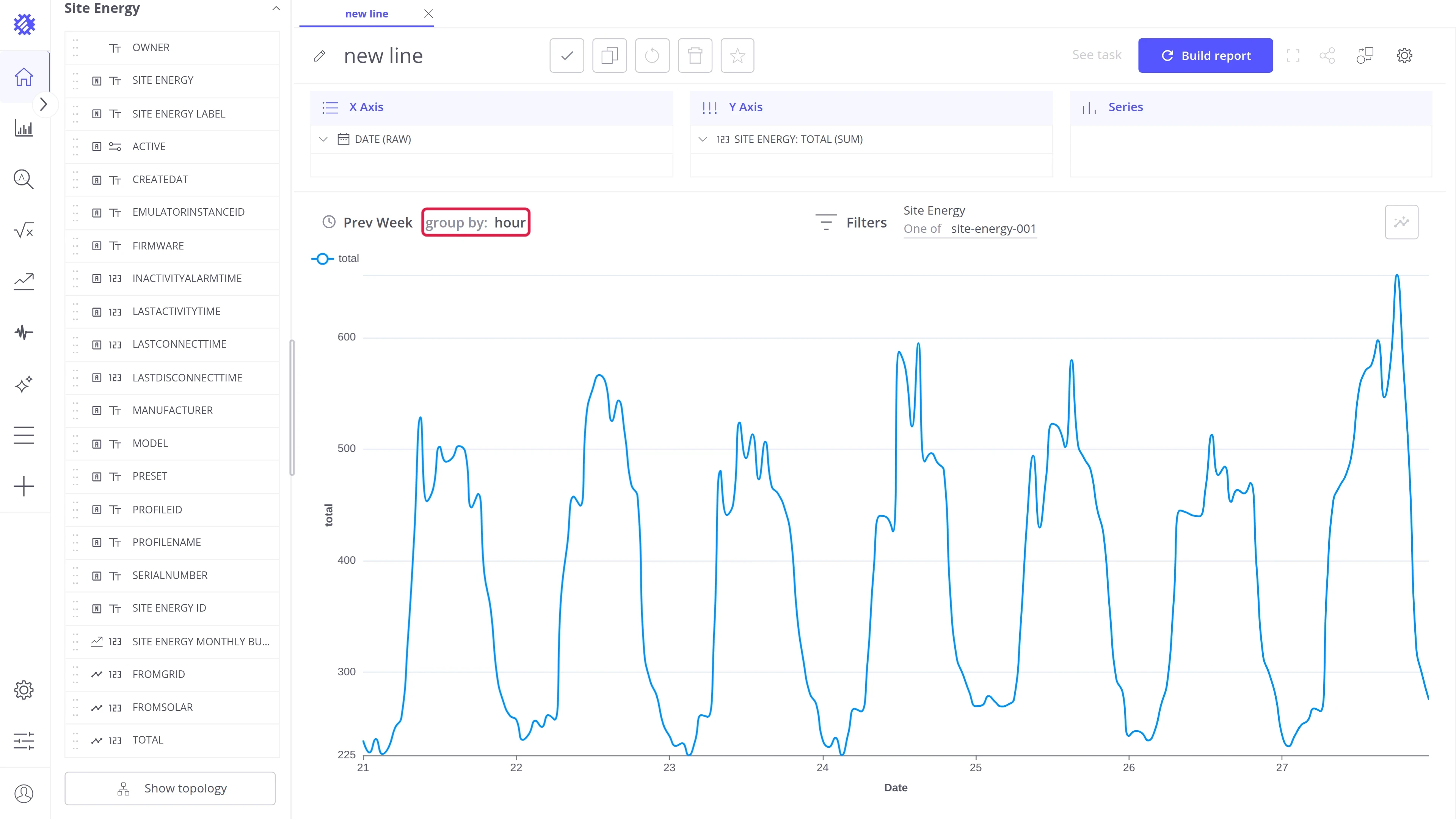
Section titled “RAW mode”RAW is the default Date aggregation. The group by control next to the date picker sets the bucket size, and anyone who opens the view can change it.
| Unit | One bucket per |
|---|---|
| minute | Minute |
| hour | Hour |
| day | Calendar day |
| week | Calendar week, starting on Monday |
| month | Calendar month |
| quarter | Calendar quarter |
| year | Calendar year |
Group by amount
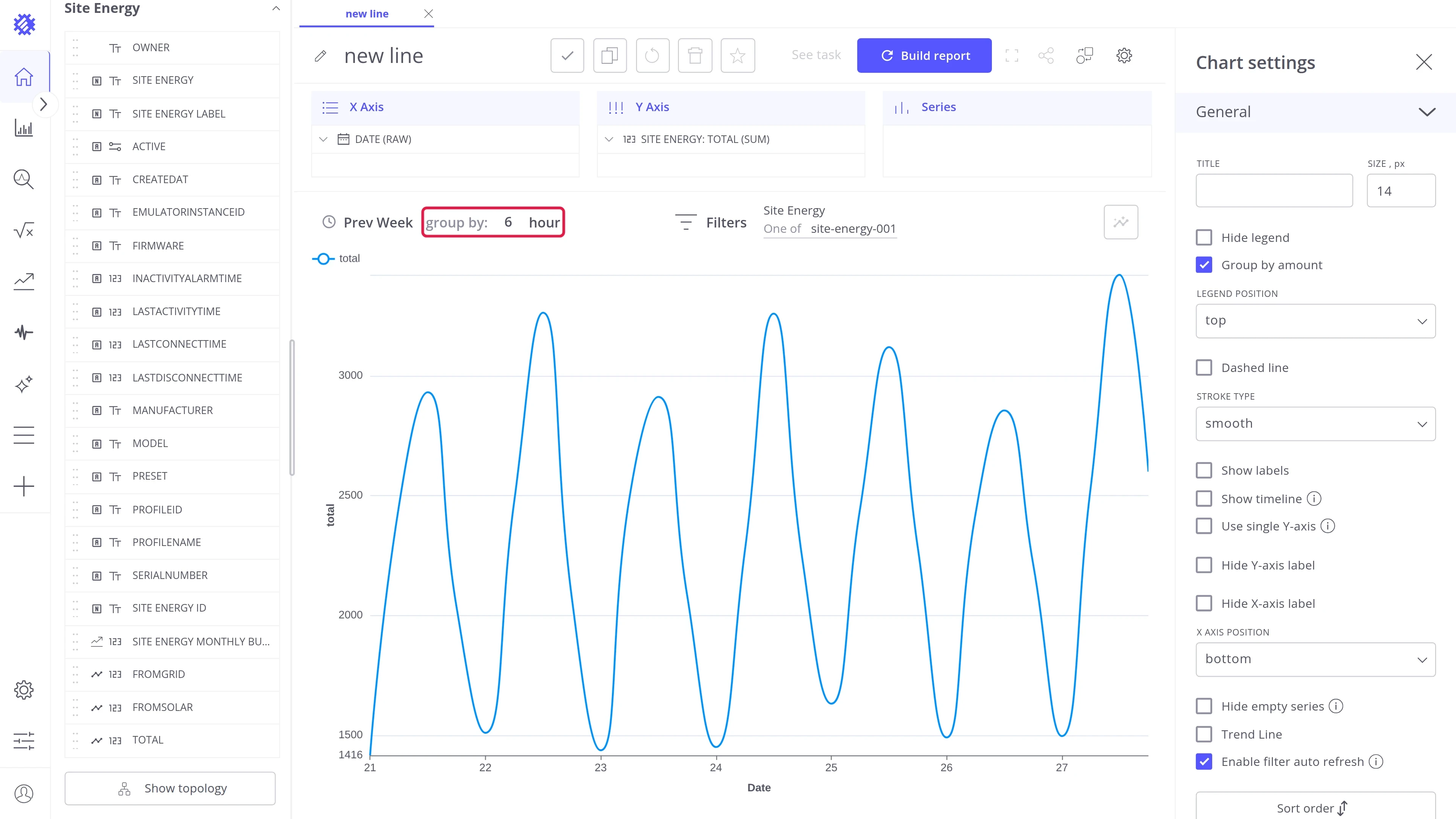
Section titled “Group by amount”Group by amount merges several units into one bucket, like every 6 hours or every 3 days. It works in RAW mode only.
-
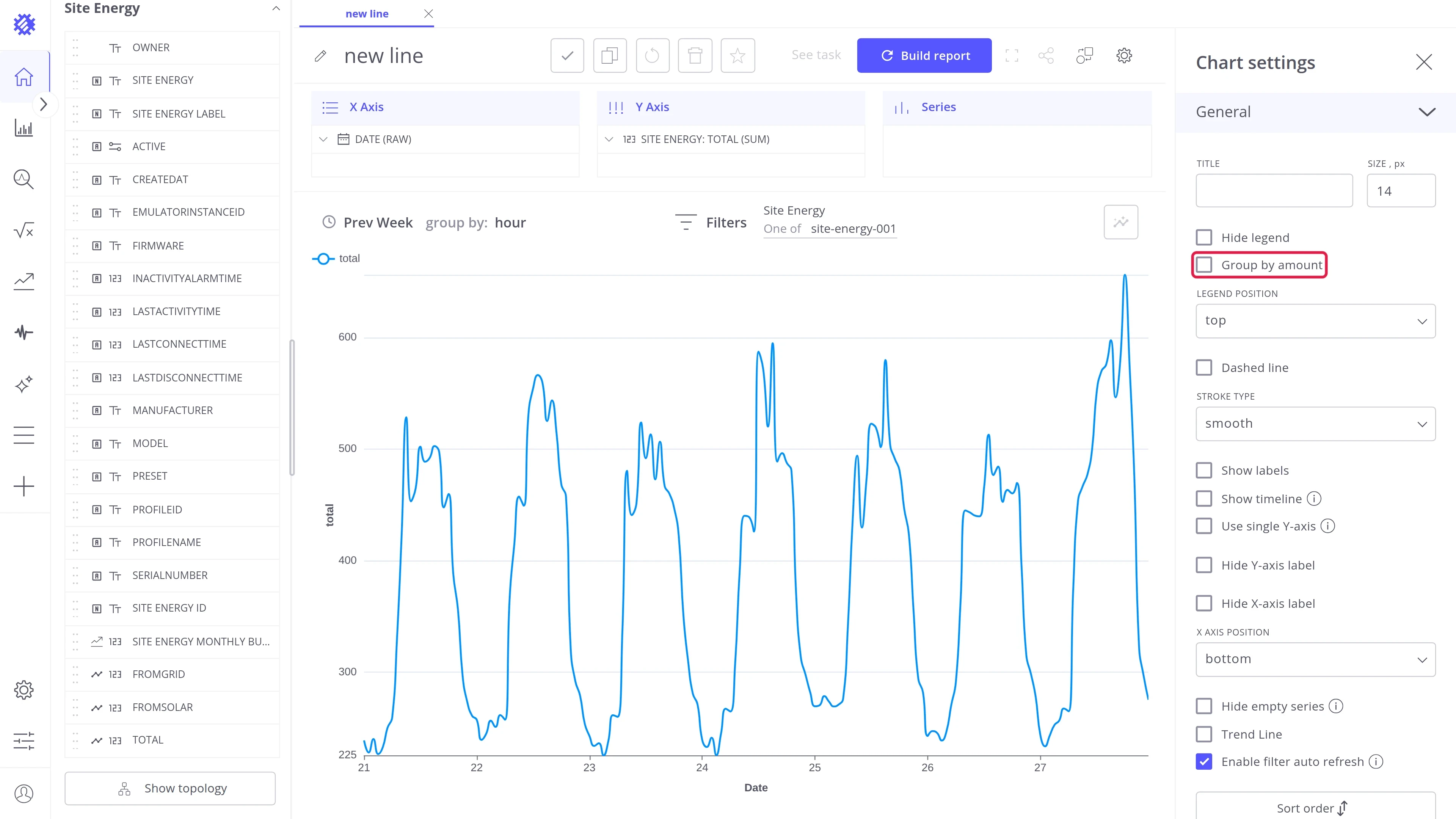
Open the view settings and select Group by amount in the General section.
-
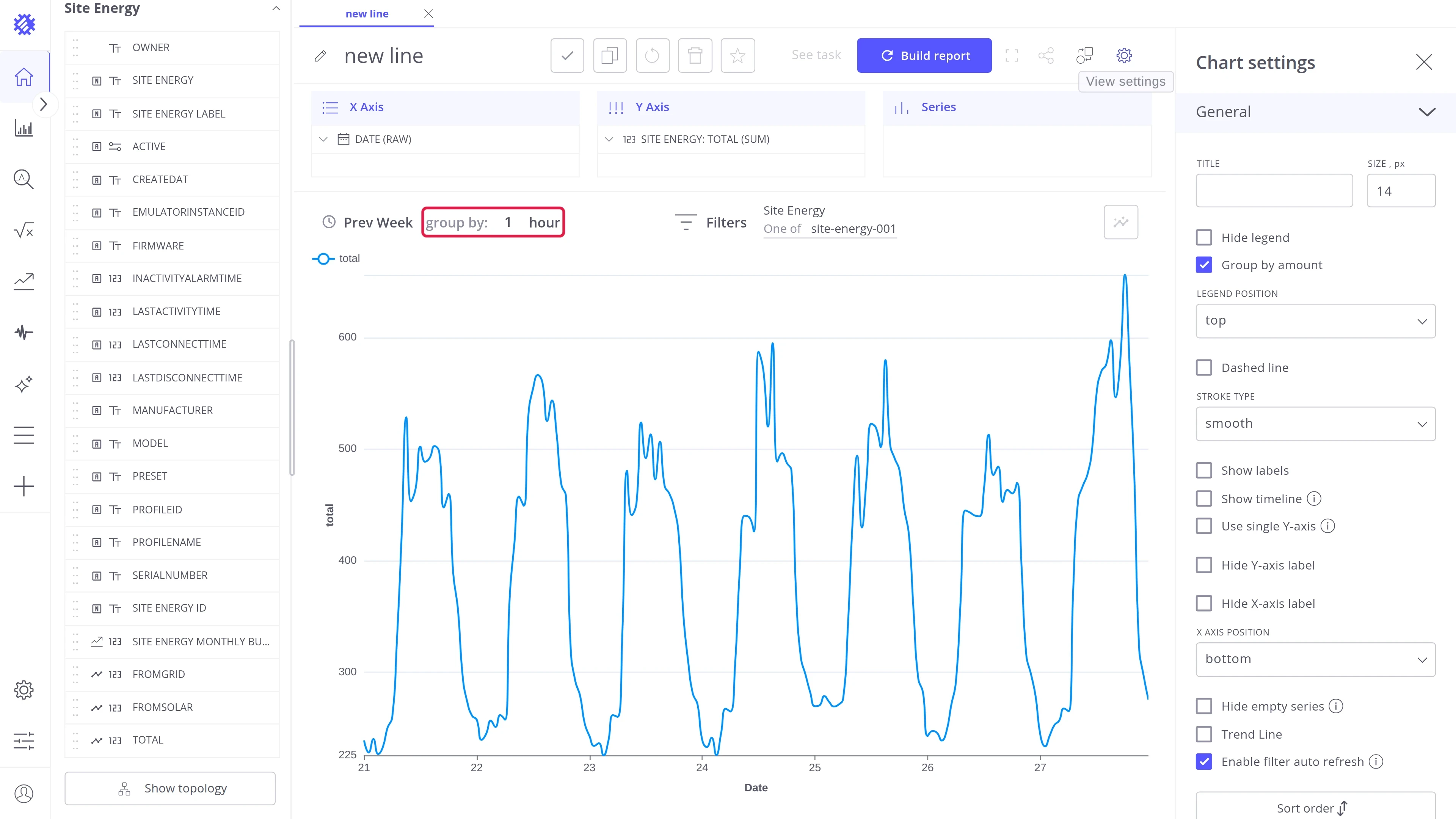
An amount field appears in the group by control, before the unit. Enter the number of units per bucket.
-
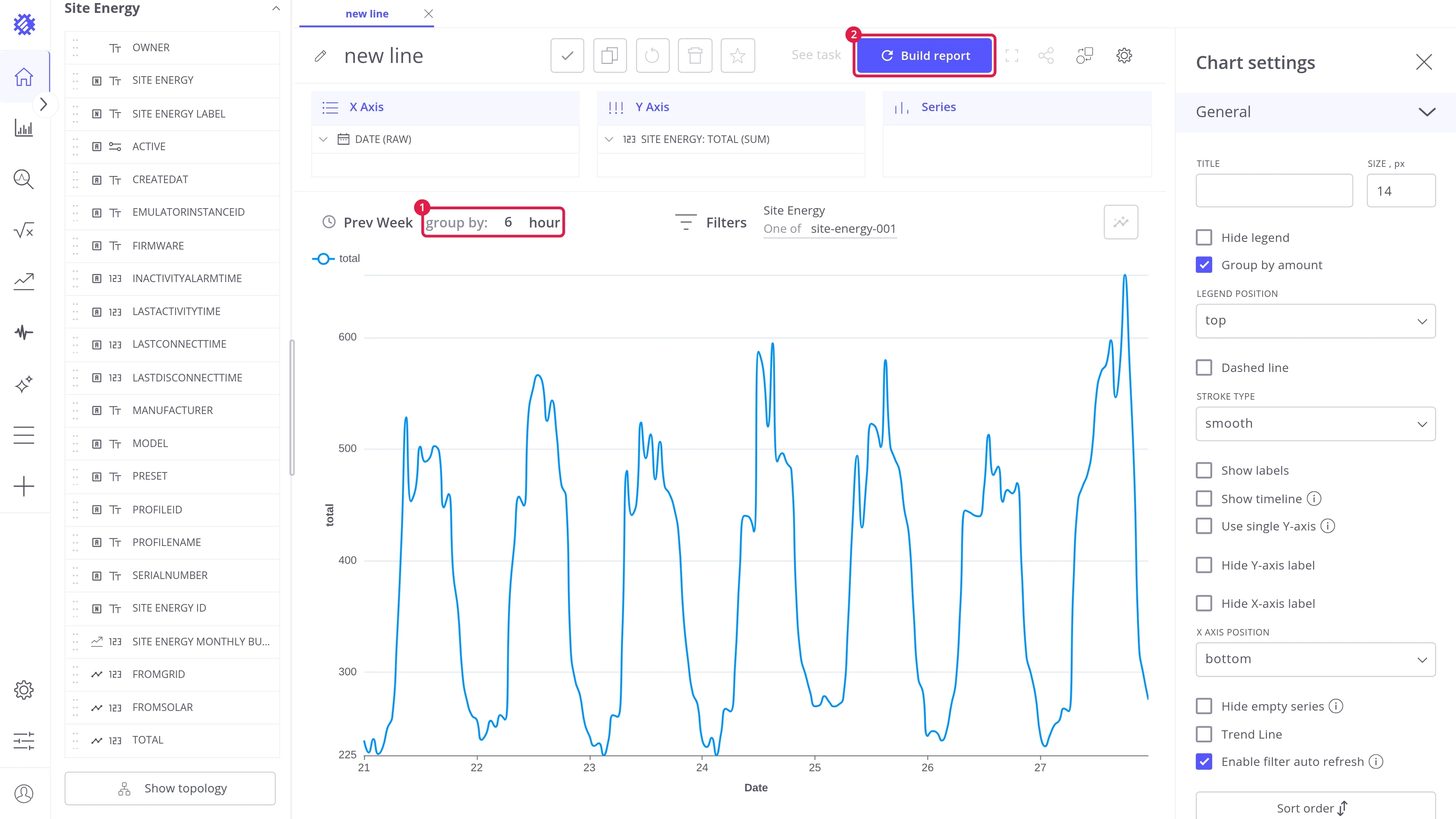
Click Build report.
Fixed aggregation options
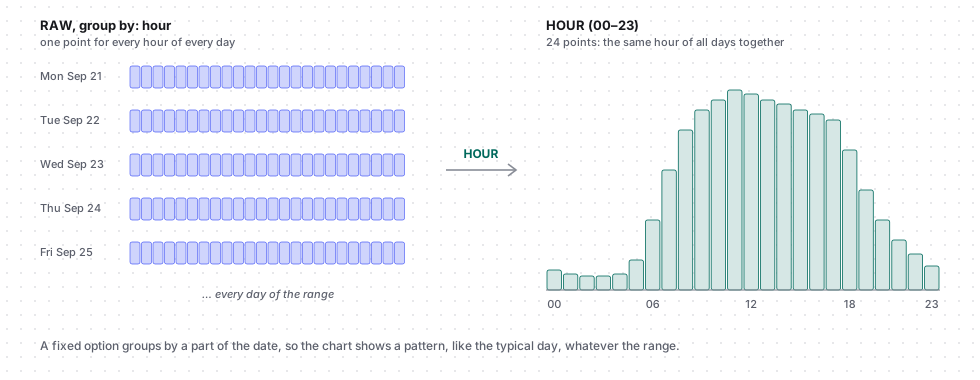
Section titled “Fixed aggregation options”A fixed option groups by a part of the date, like the hour of the day or the day of the week, and ignores the rest. Readings from every day in the range with the same hour land in the same bucket, so the chart shows a pattern whatever the range.
-
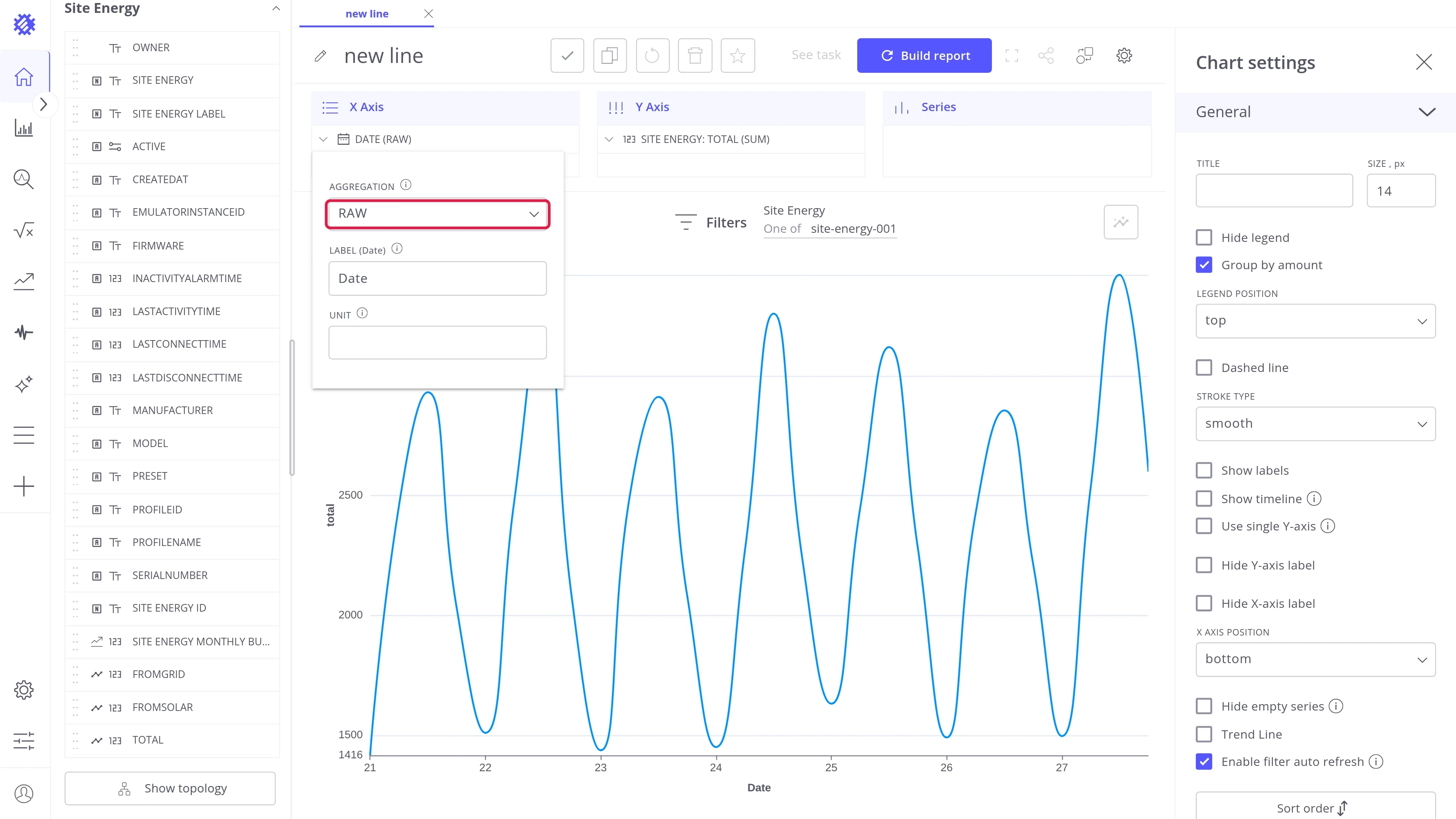
Click the Date field on the X-axis.
-
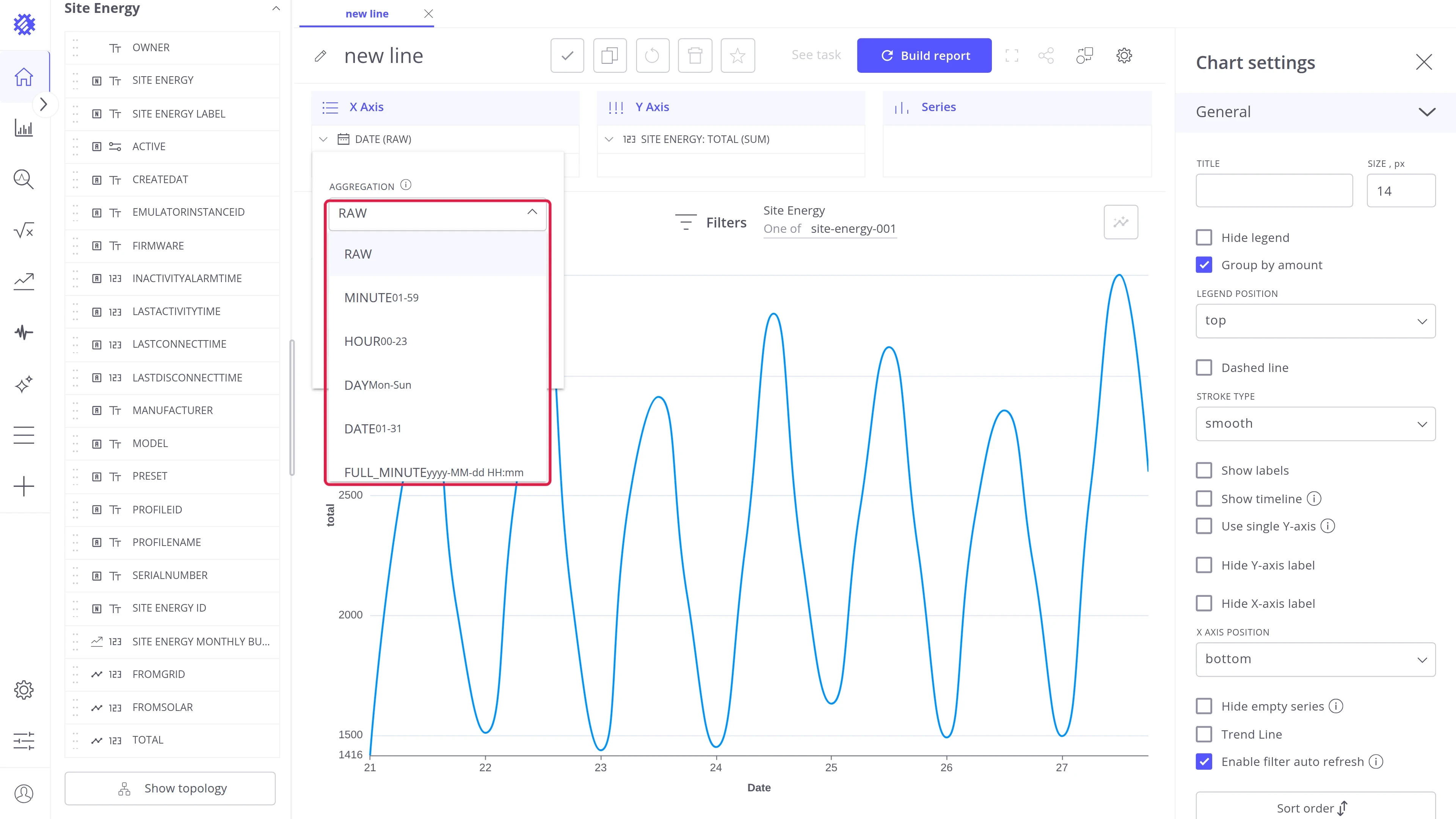
In Aggregation, select an option instead of RAW.
-
Click Build report.
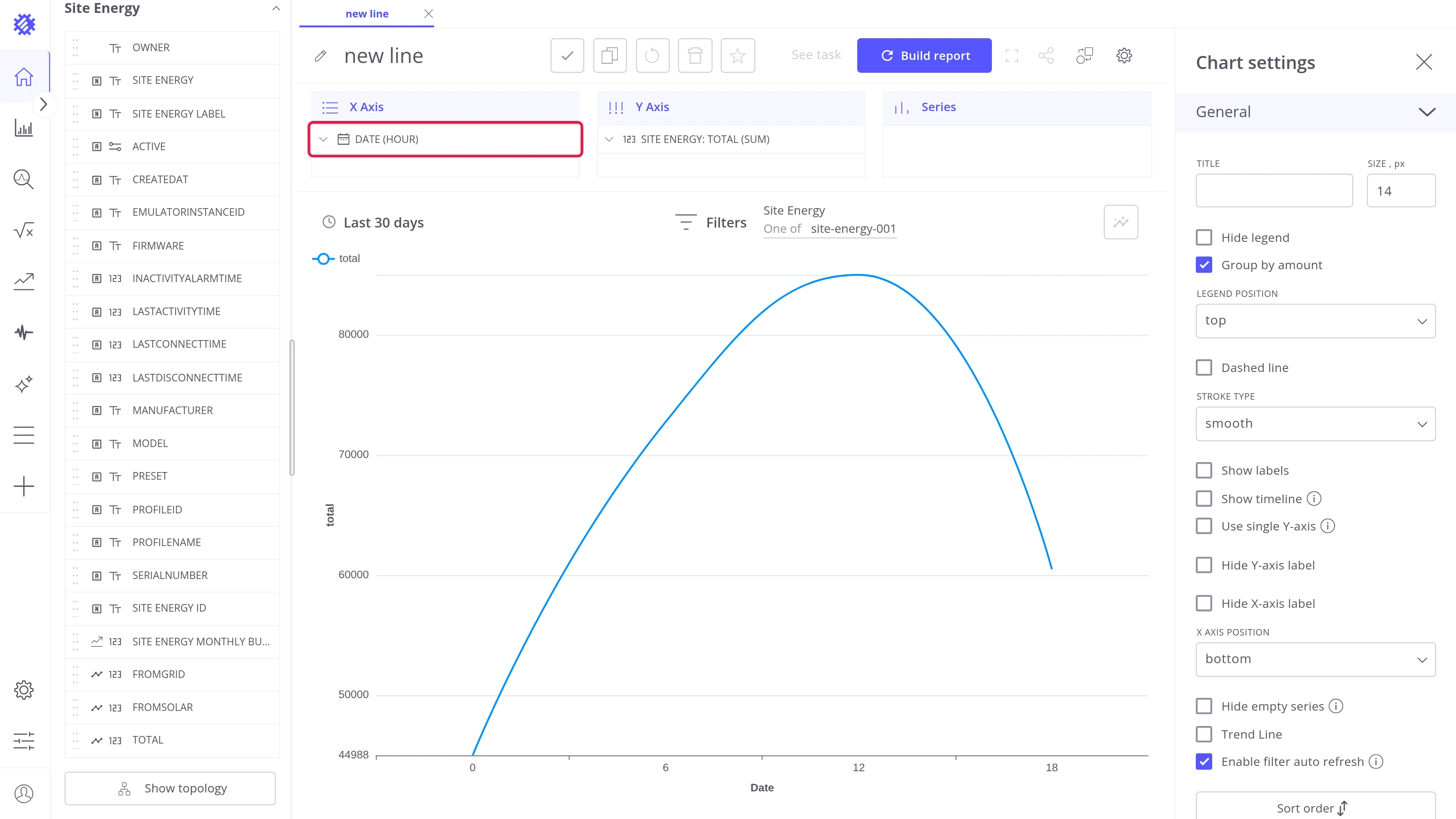
With a fixed option the group by control is hidden.
| Option | Groups data by | Example label |
|---|---|---|
| MINUTE | Minute of the hour (0–59) | 45 |
| HOUR | Hour of the day (0–23) | 23 |
| DAY | Day of the week (Mon–Sun) | Monday |
| DATE | Day of the month (1–31) | 15 |
| FULL_MINUTE | Exact date and minute | 2026-03-01 23:45 |
| FULL_HOUR | Exact date and hour | 2026-03-01 23 |
| FULL_DATE | Exact calendar date | 2026-03-01 |
| FULL_QUARTER | Year and quarter | 2026-Q1 |
| START_OF_WEEK | Monday of the calendar week | 2026-03-02 |
| WEEK_OF_YEAR | Week of the year (W1–W54) | W10 |
| WEEK_OF_MONTH | Week of the month (1–6) | 2 |
| MONTH | Month of the year (Jan–Dec) | March |
| YEARMONTH | Year and month | 2026-Feb |
| QUARTER | Quarter of the year (1–4) | 1 |
| YEAR | Calendar year | 2026 |
The FULL_ options, START_OF_WEEK, YEARMONTH, and YEAR keep the date, so they give a timeline with a fixed bucket size. The others fold the range into a pattern.
Day and week boundaries follow the time zone of the date picker. START_OF_WEEK and WEEK_OF_YEAR label a bucket by its week even when Monday is outside the range; only data inside the range is counted.
RAW or fixed
Section titled “RAW or fixed”| Choose | When |
|---|---|
| RAW | The view is used with different ranges, and viewers change the detail with group by |
| Fixed option | You want a pattern, like average energy per hour of the day or per day of the week |
Was this helpful?