Mobile App Center
The Mobile App Center is a hub for building, configuring, and managing mobile apps in ThingsBoard. Whether you are starting from scratch or publishing the ThingsBoard Mobile Application to Google Play or the App Store, this tool guides you through every step.
The Mobile App Center is divided into tabs:
- Bundle — manage settings for mobile applications included in the bundle: authentication methods, layout, and self-registration.
- Applications — add, edit, or remove mobile applications.
- QR code widget — set up a QR code widget on the Home page for easy mobile app access.
Bundle
Section titled “Bundle”A Bundle groups OAuth 2.0 settings, layout design, and self-registration for one or more mobile apps — letting you manage Android and iOS versions in one place.
The bundle wizard includes the following steps:
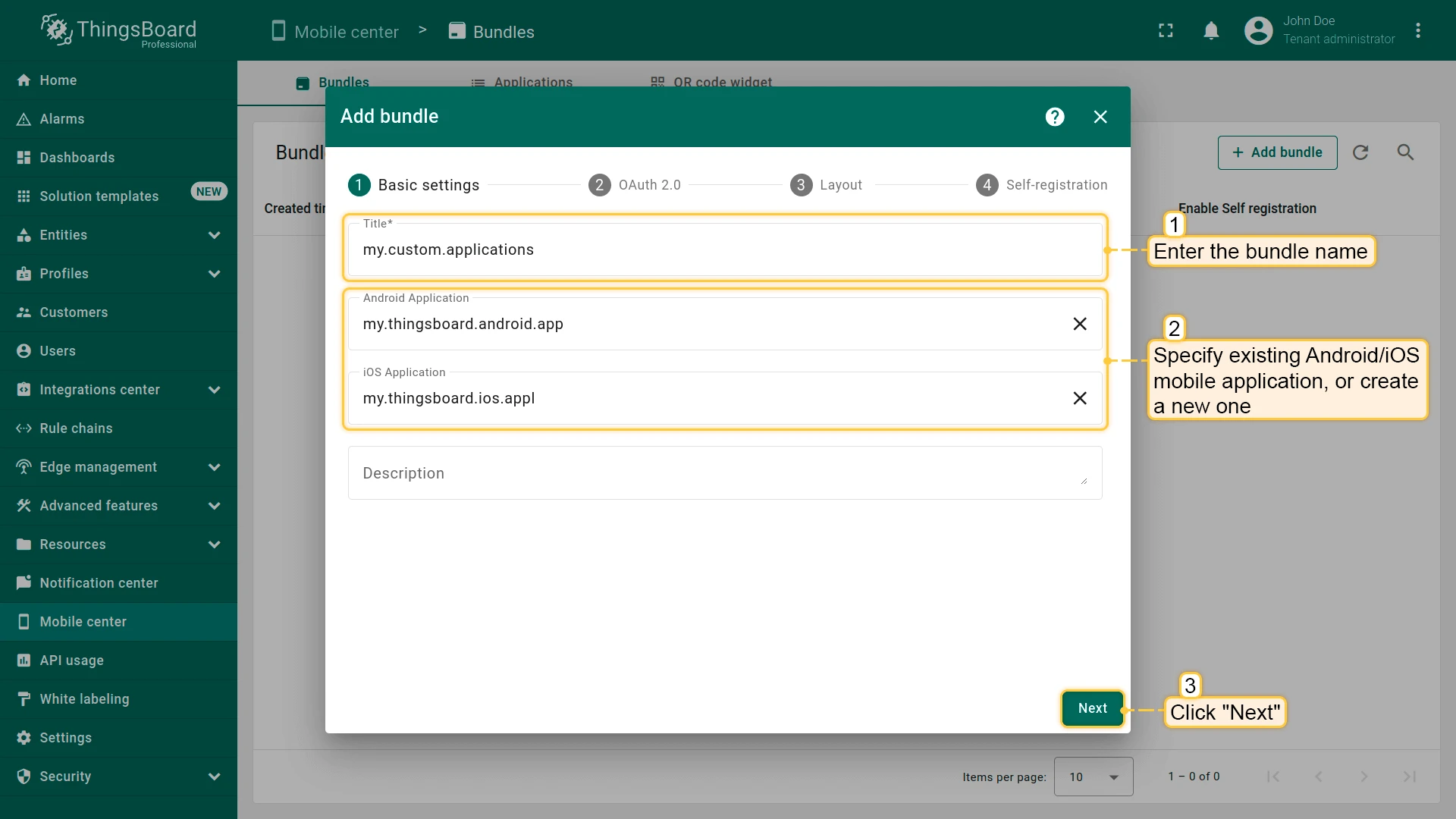
- Basic settings — define the bundle name and link your apps. You can also create a new app directly.
- OAuth 2.0 — enable Single Sign-On (SSO) via third-party identity providers that support OAuth 2.0.
- Layout — customize the app’s navigation menu to match your use cases.
- Self-registration — set up a registration form for new mobile users.
Adding a New Bundle
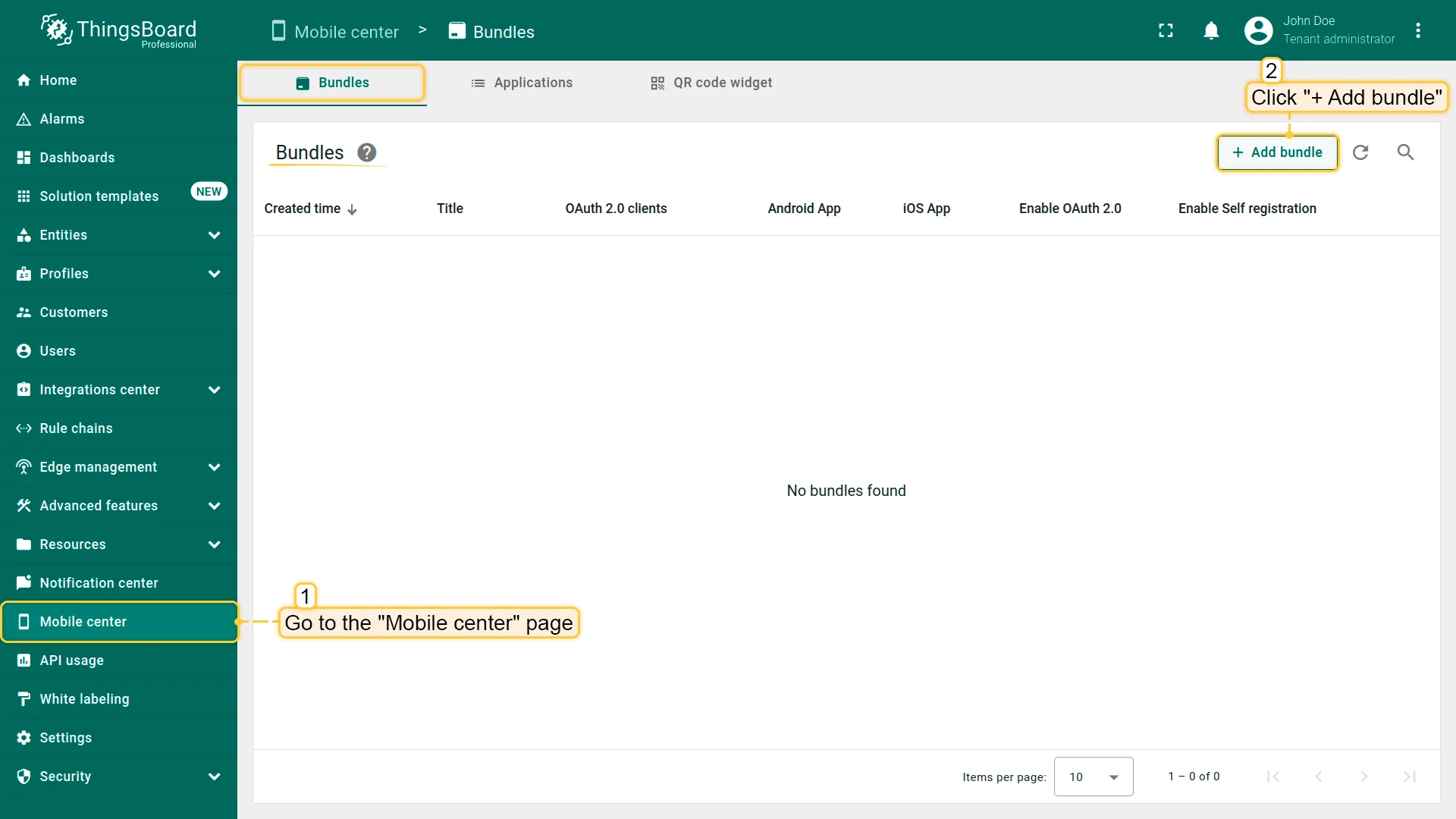
Section titled “Adding a New Bundle”- Go to the Mobile apps page.
- On the Bundle tab, click + Add bundle in the upper-right corner.
The bundle configuration wizard opens.
Basic Settings
Section titled “Basic Settings”Enter a name for the bundle and select existing Android or iOS apps, or create new ones directly from this window.
Creating an Application
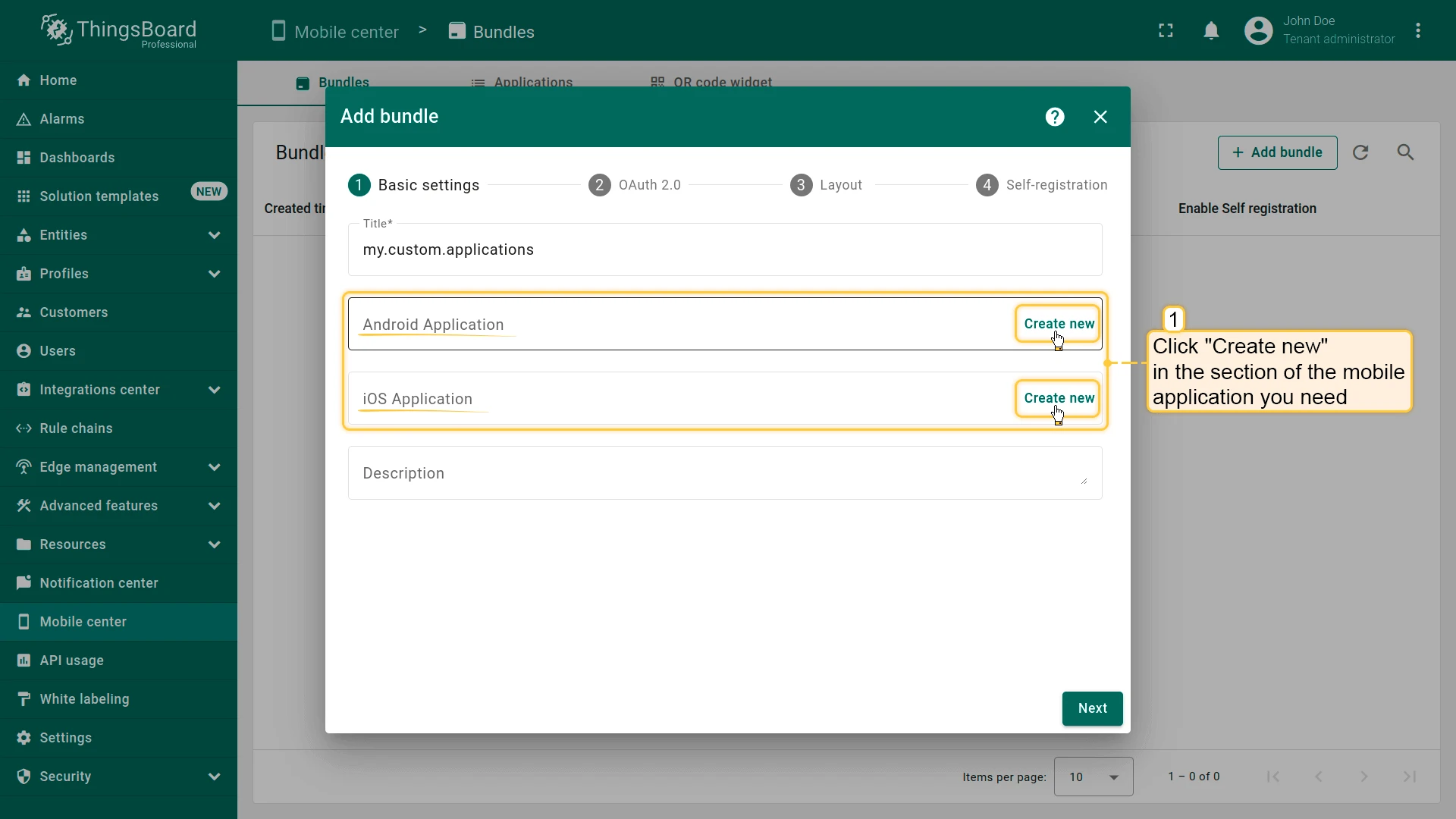
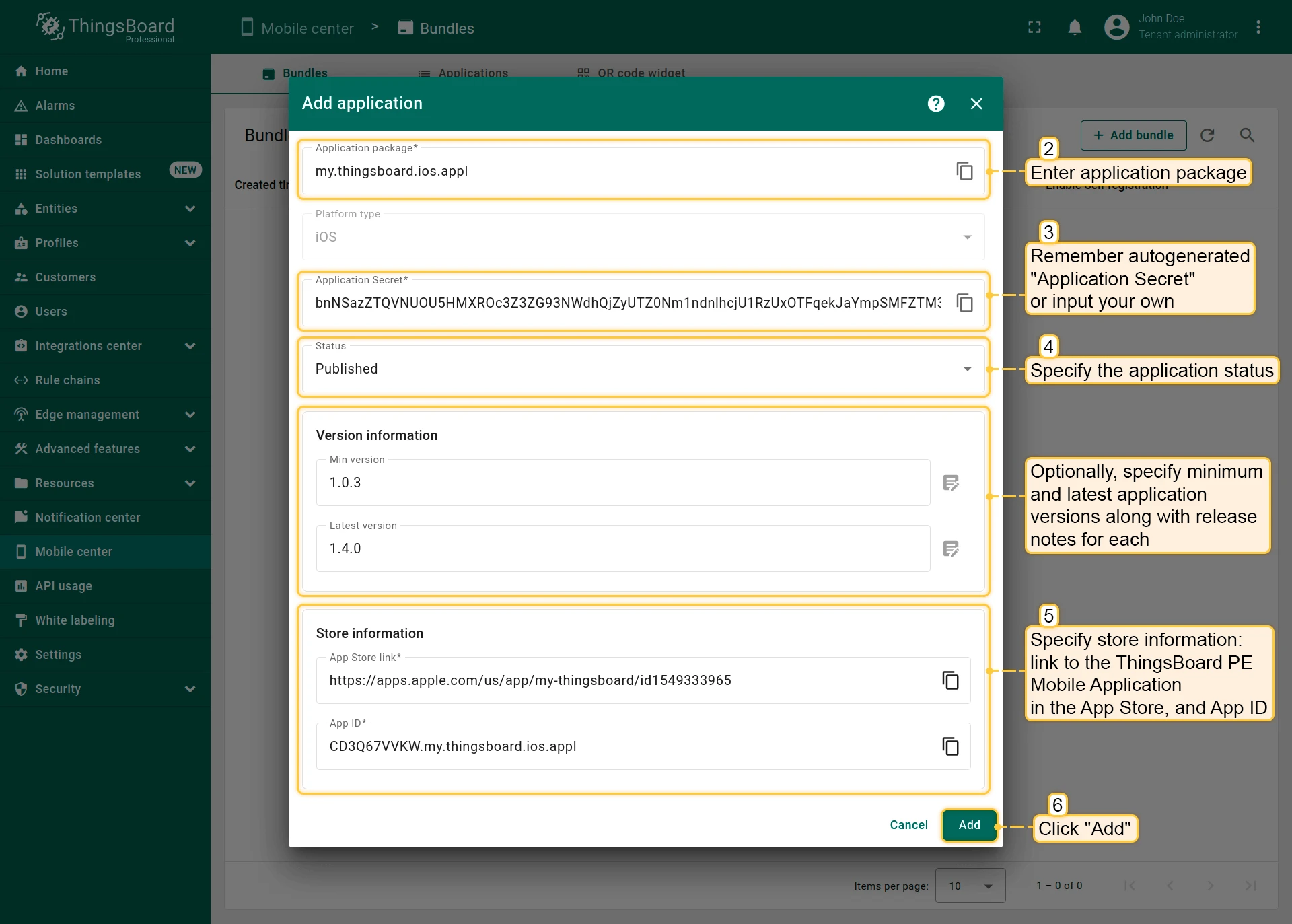
Section titled “Creating an Application”- Click Create new in the corresponding section (Android Application or iOS Application).
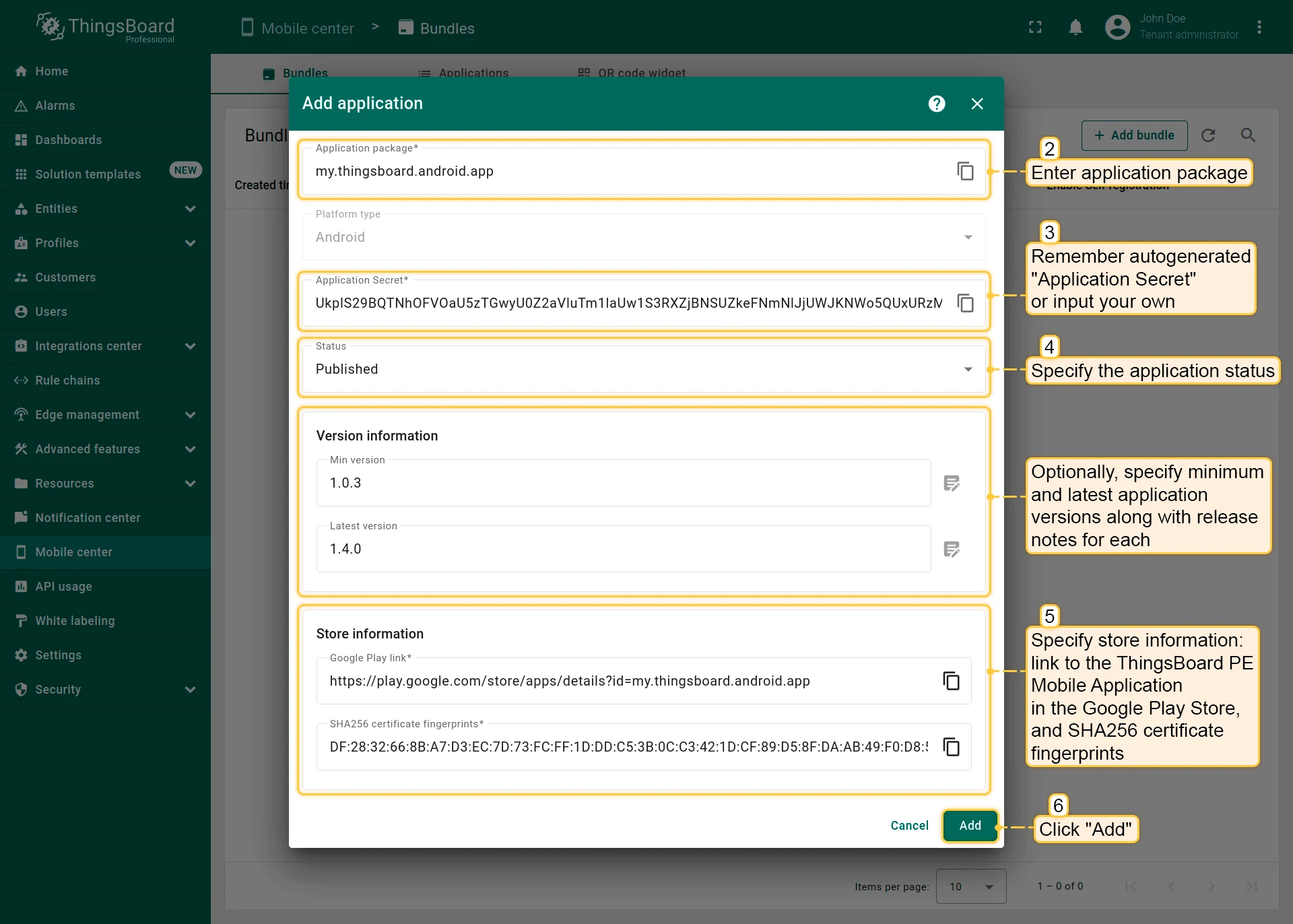
- Enter the application package name.
- An Application Secret is generated automatically — copy and store it, or replace it with your own value.
- Set the application status:
- Draft — for applications still in development. Store information can be added later.
- Published — for applications ready to be launched and used by end users.
- Deprecated — for older applications that are no longer actively supported but still available.
- Suspended — for applications that are temporarily disabled or restricted.
- (Optional) Specify minimum/latest app versions and release notes.
- Add store information:
- Android: Google Play Store link and SHA256 certificate fingerprints.
- iOS: App Store link and App ID.
- Click Add to save the application.
Click Next.
OAuth 2.0
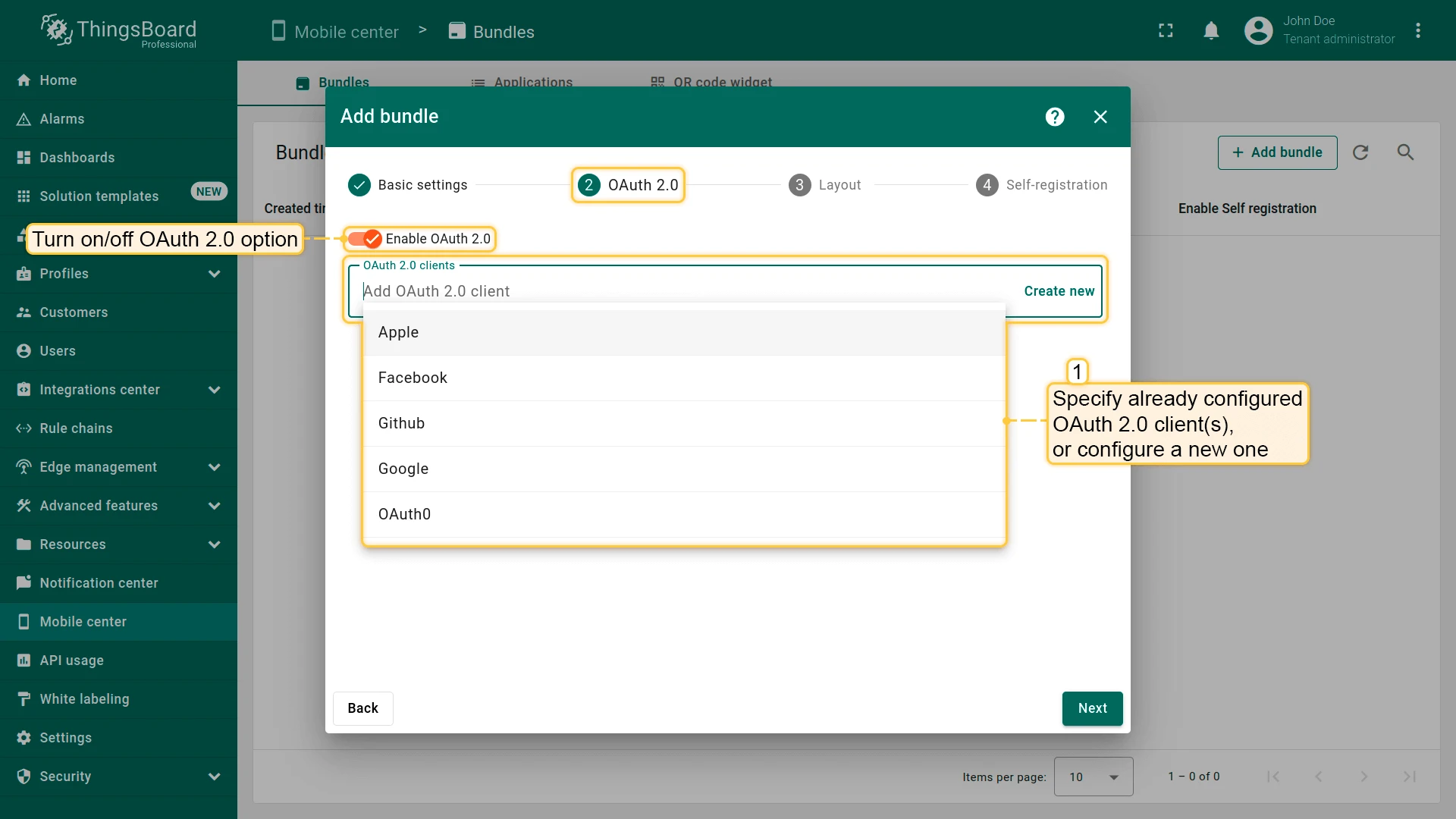
Section titled “OAuth 2.0”Enable authentication through an external provider that supports the OAuth 2.0 protocol. Select an existing OAuth 2.0 client or configure a new one.
You can also disable OAuth 2.0 for mobile devices.
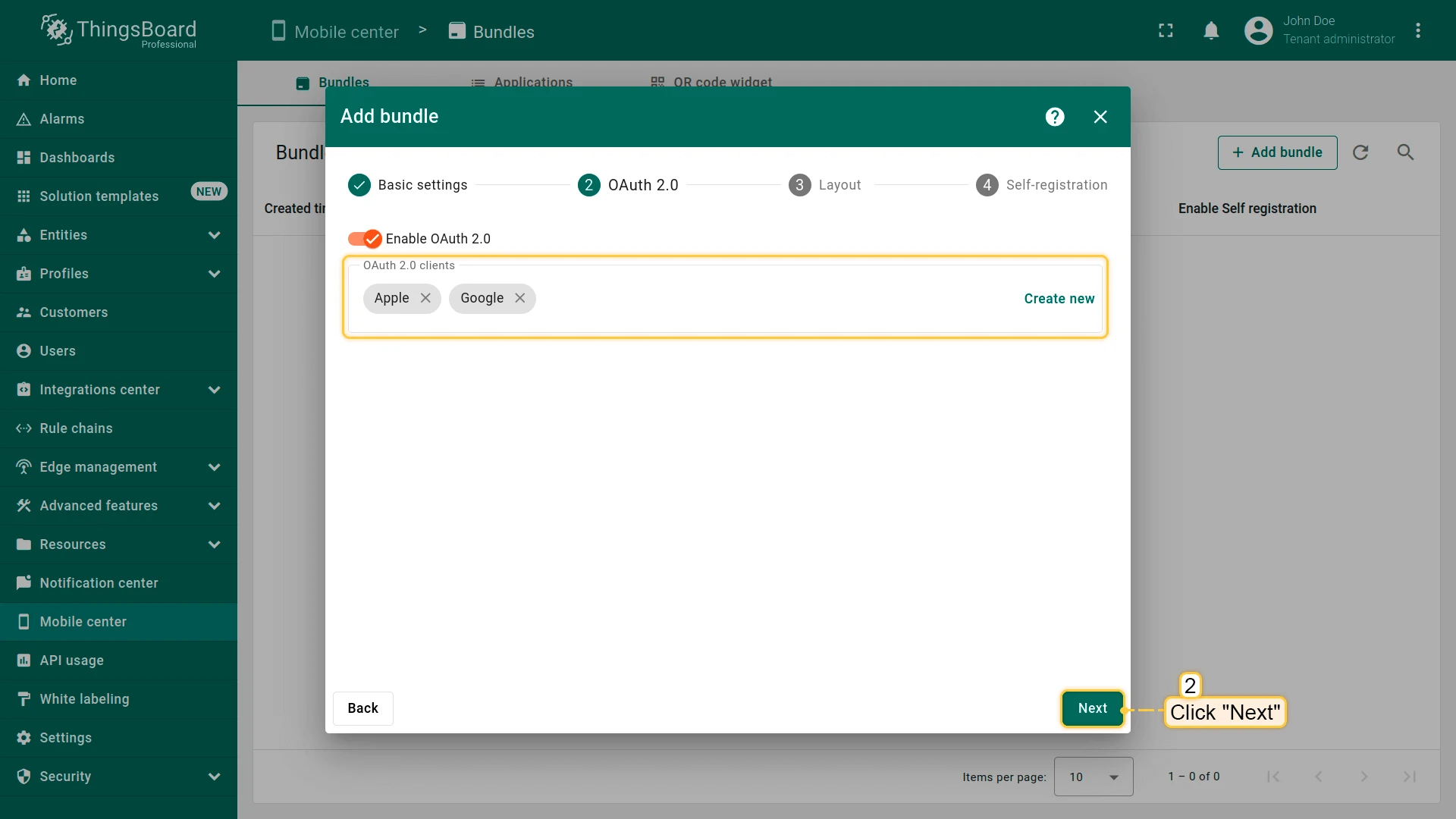
After completing the OAuth 2.0 configuration, click Next.
Layout
Section titled “Layout”Set up quick access to the dashboards and features you use most. Add menu items, change icons and names, and reorder the navigation menu.
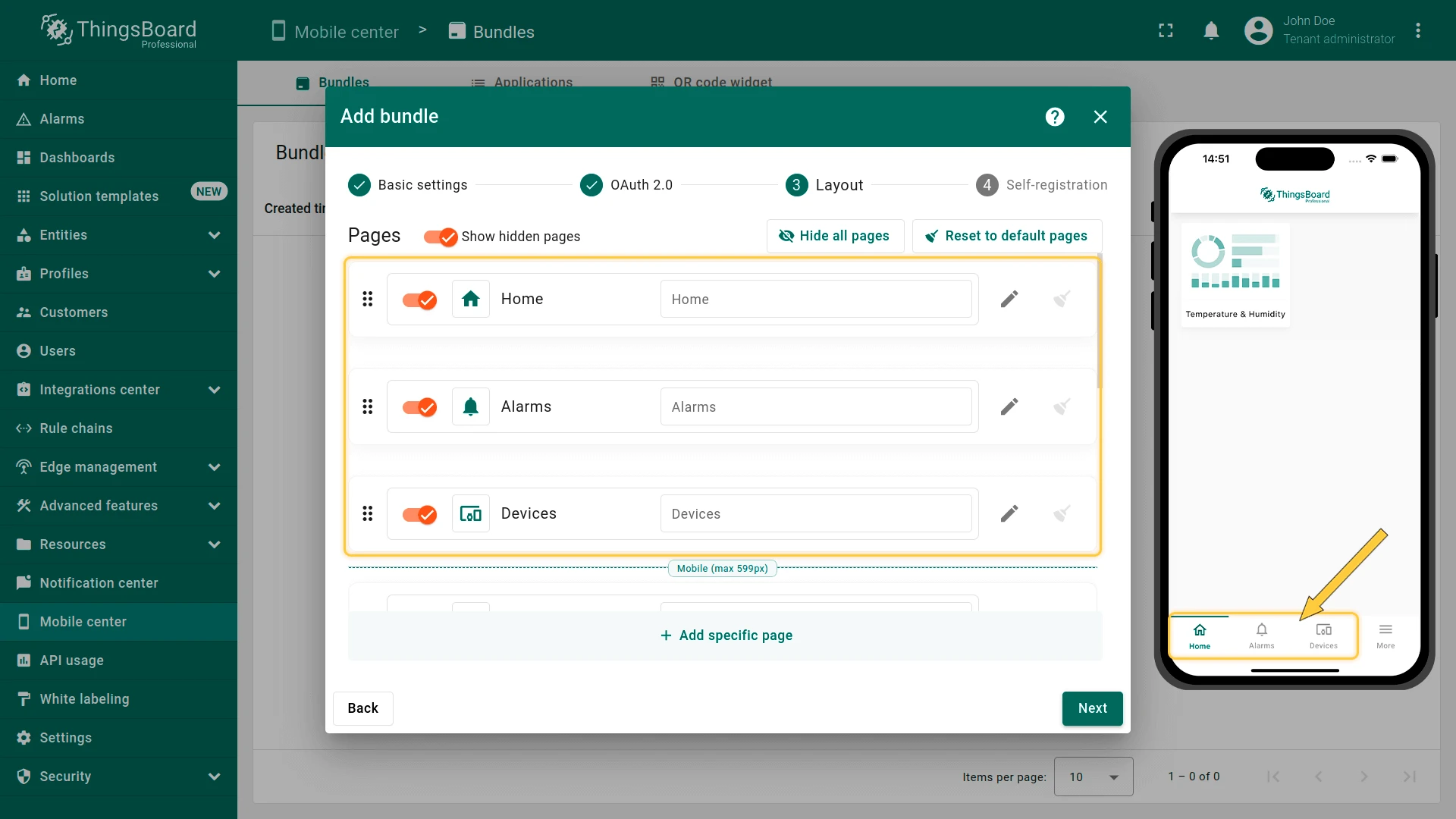
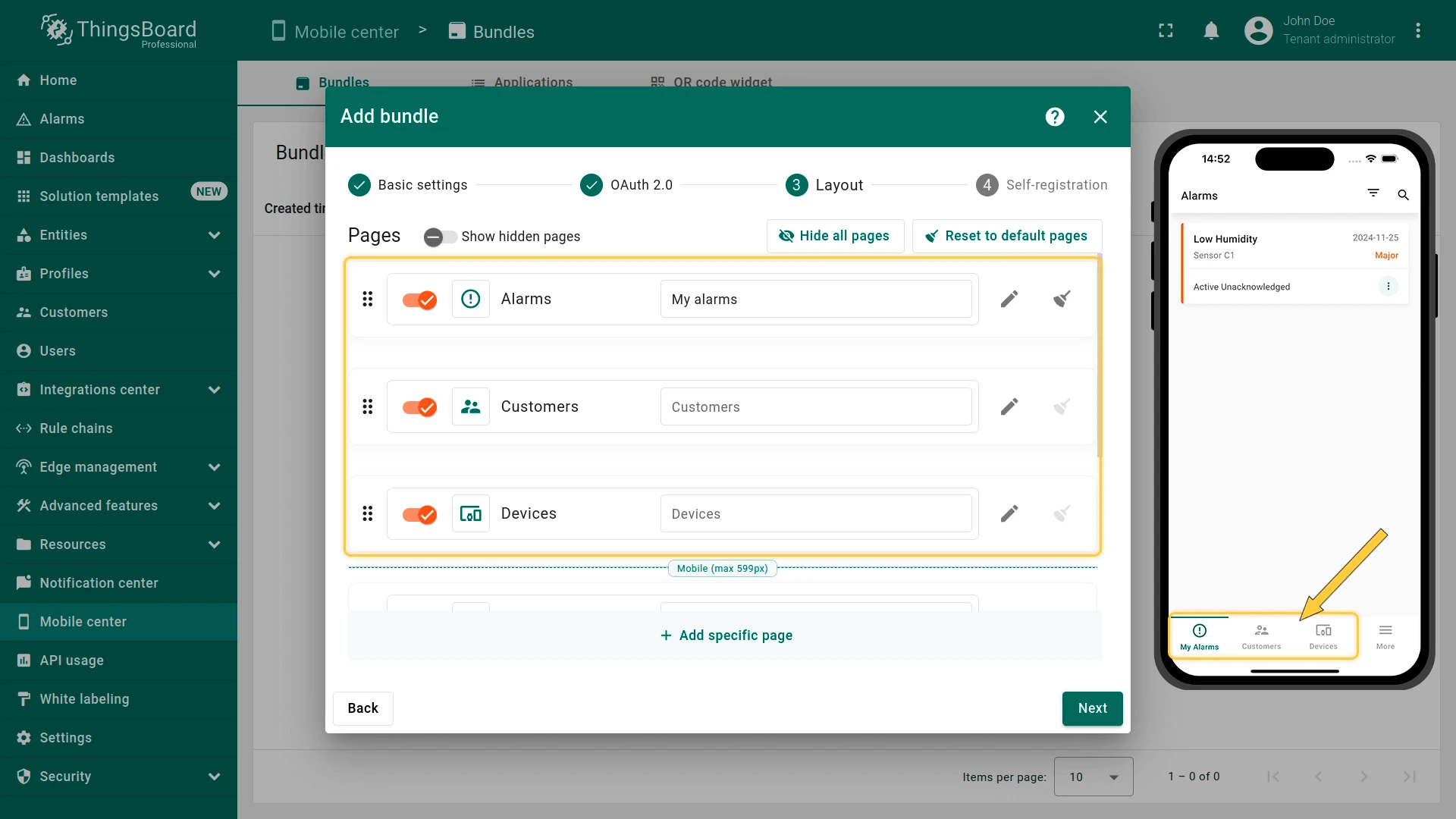
The list opens on the default menu items, with Show hidden pages already switched on. A few items arrive switched off: they belong to the bundle but stay out of the app’s navigation until you turn on the toggle at the left of the row.
Device list, Dashboards, and Live location tracking are switched off by default.
Show hidden pages changes only what this list displays, never what the app shows. Hide all pages switches every item off and turns that toggle off with them, so switch it back on to bring the hidden items into view.
To add a new menu item:
- Click + Add specific page at the bottom of the page or between existing menu items.
- Enter the name for the new menu page.
- Select the page type:
- Dashboard — link to a ThingsBoard dashboard.
- Webview — link to an external webpage.
- Custom — link to built-in ThingsBoard pages.
- Depending on the selected page type, specify a dashboard, external URL, or ThingsBoard menu item.
- Click Add.
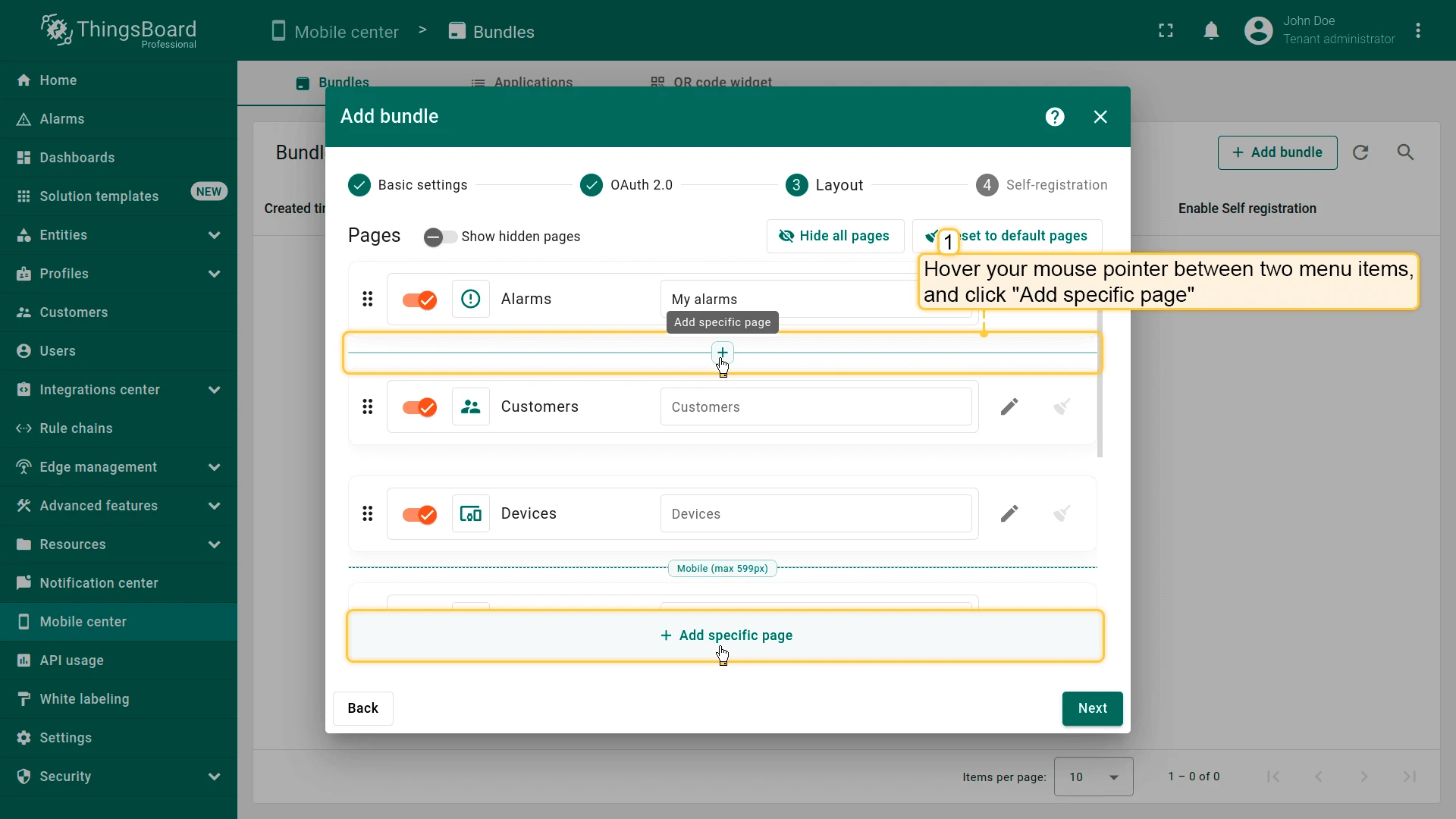
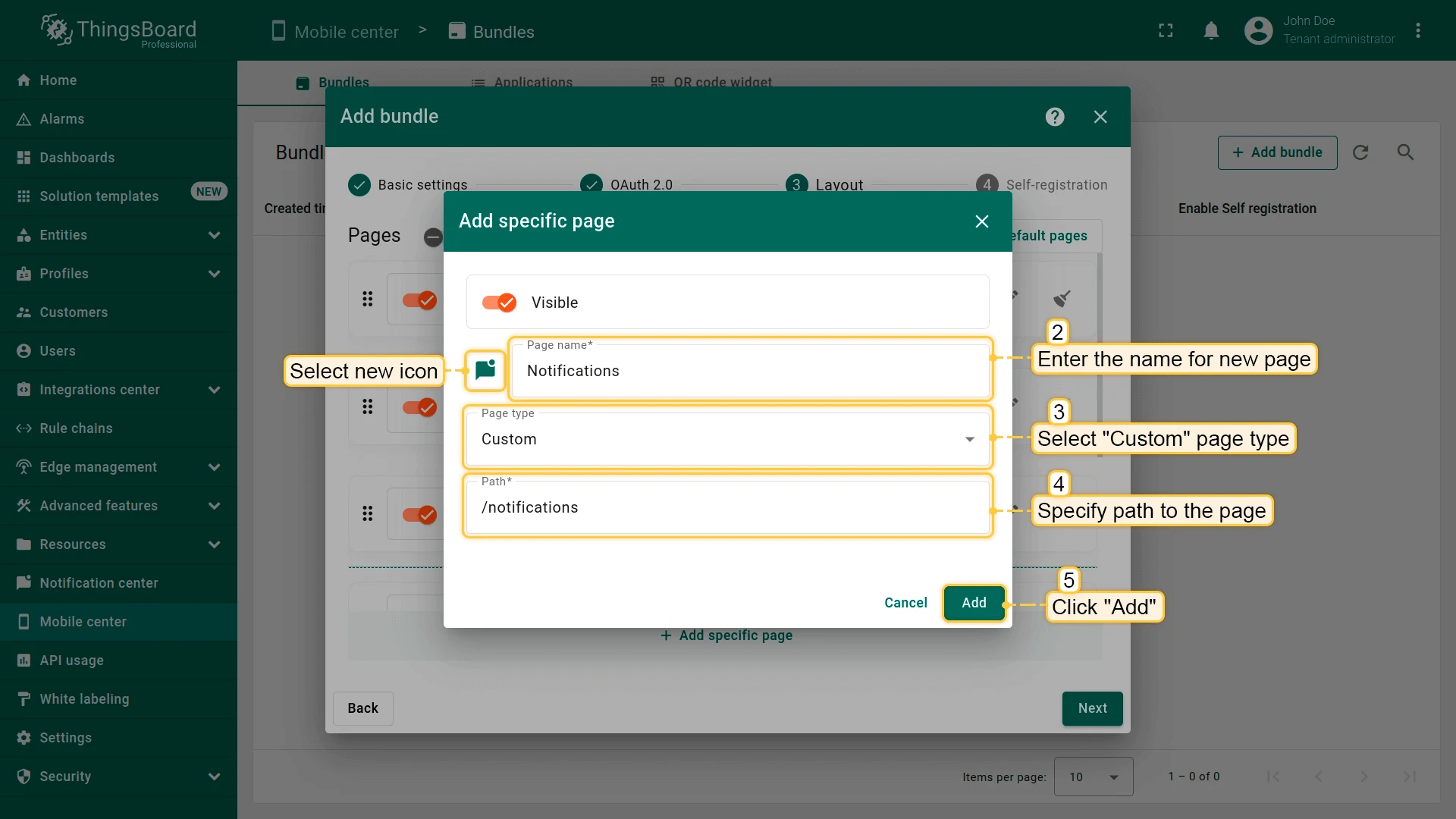
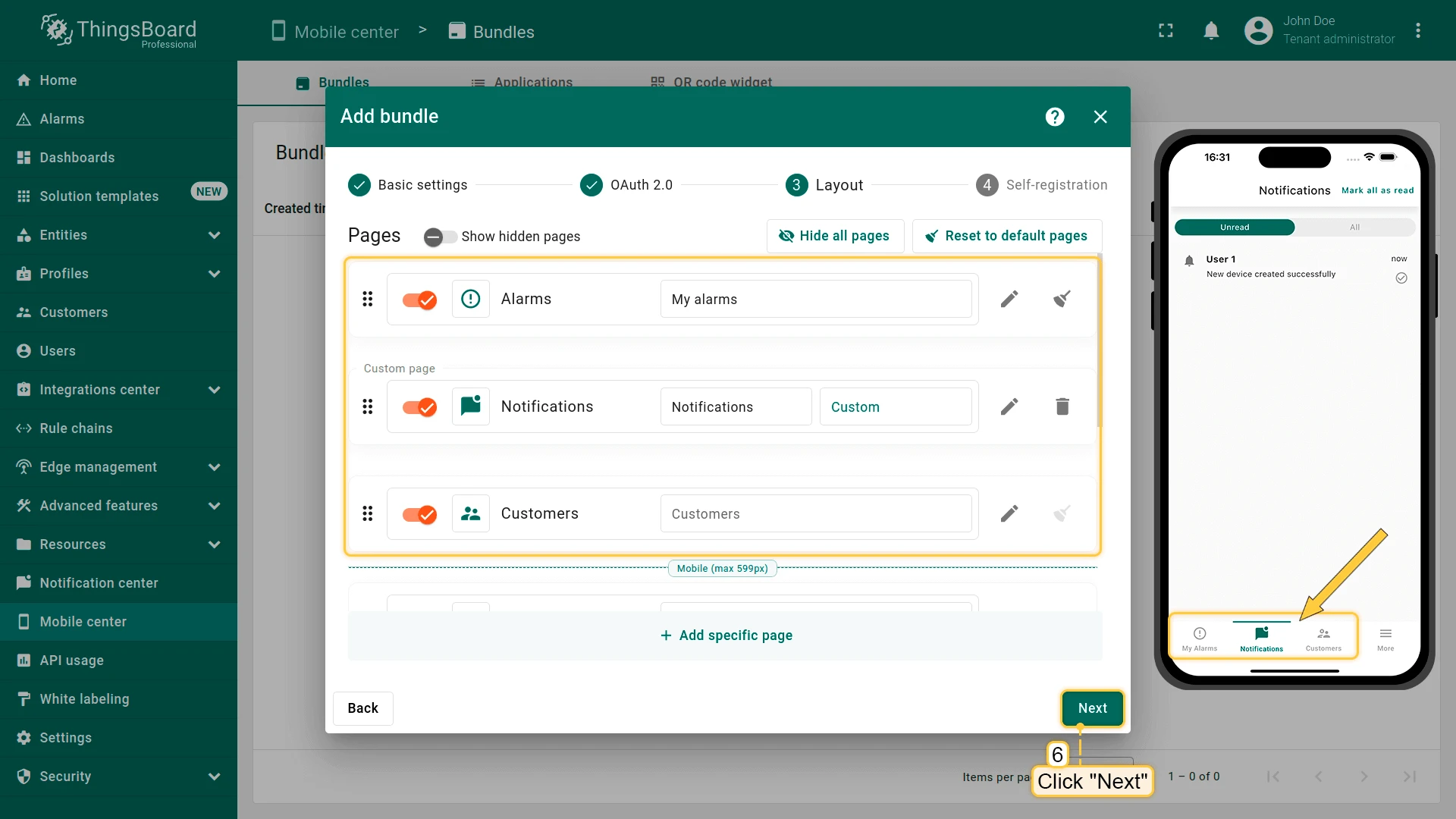
The following routes are available for the Custom page type:
| Page name | Route | Description |
|---|---|---|
| Home | /home | Displays the Home page |
| Assets | /assets | Displays the Assets page |
| Device profiles | /devices | Displays the Device profiles page |
| Device list | /deviceList | Displays the list of all devices |
| Alarms | /alarms | Displays the list of alarms |
| Dashboards | /dashboards | Displays the list of dashboards |
| Specific dashboard | /dashboard/:id | Displays the specified dashboard |
| Audit logs | /auditLogs | Displays the Audit logs page |
| Customers | /customers | Displays the list of customers |
| Specific customer | /customer/:id | Displays the specified customer |
| Notifications | /notifications | Displays the list of notifications |
| Live location tracking | /liveTracking | Displays the GPS tracking session page |
| Custom URL link | /url/:link | Displays an external URL |
The “More” Page
Section titled “The “More” Page”The number of menu items displayed in the bottom navigation menu depends on the screen size of the mobile device. Items that do not fit are grouped under the More page.
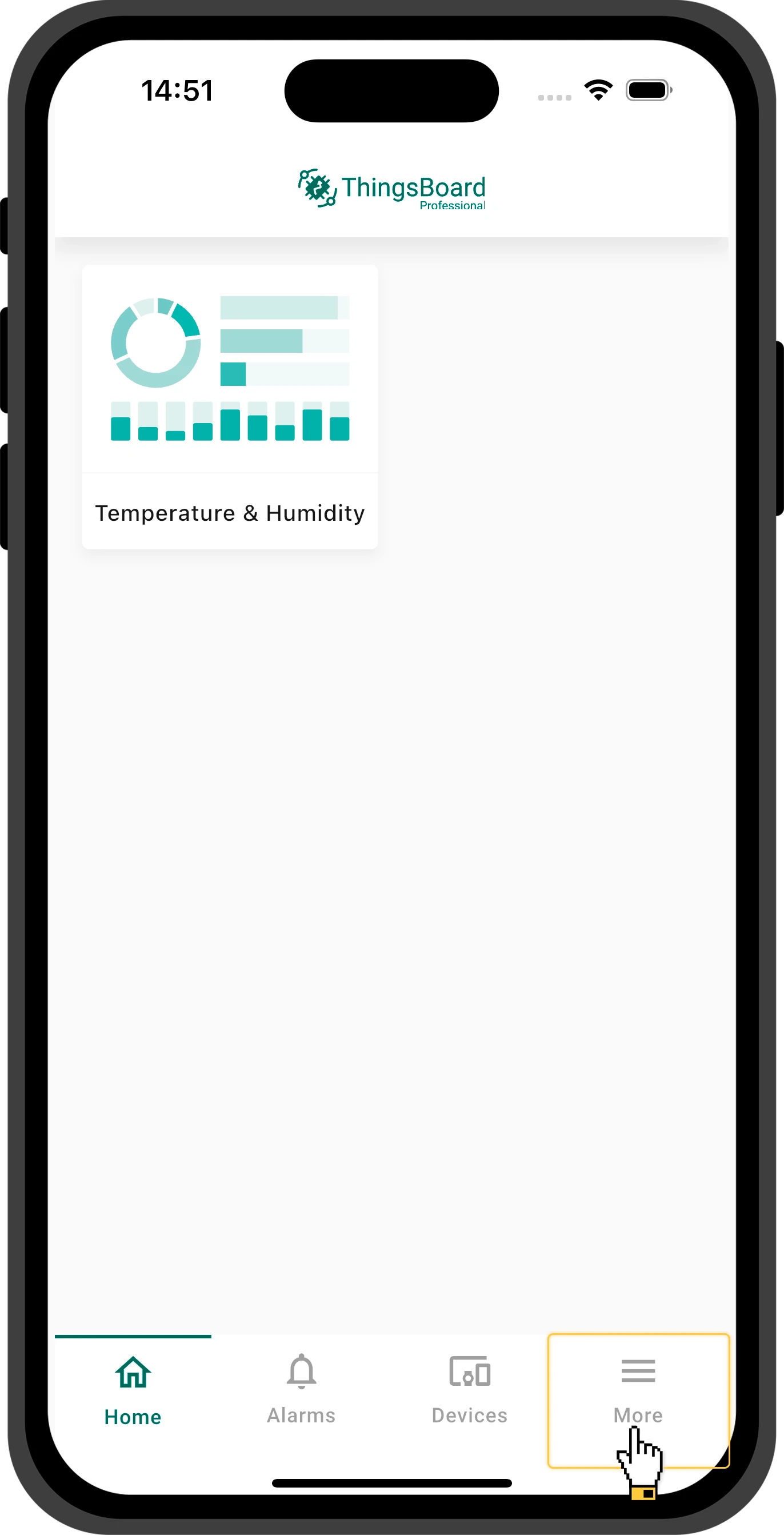
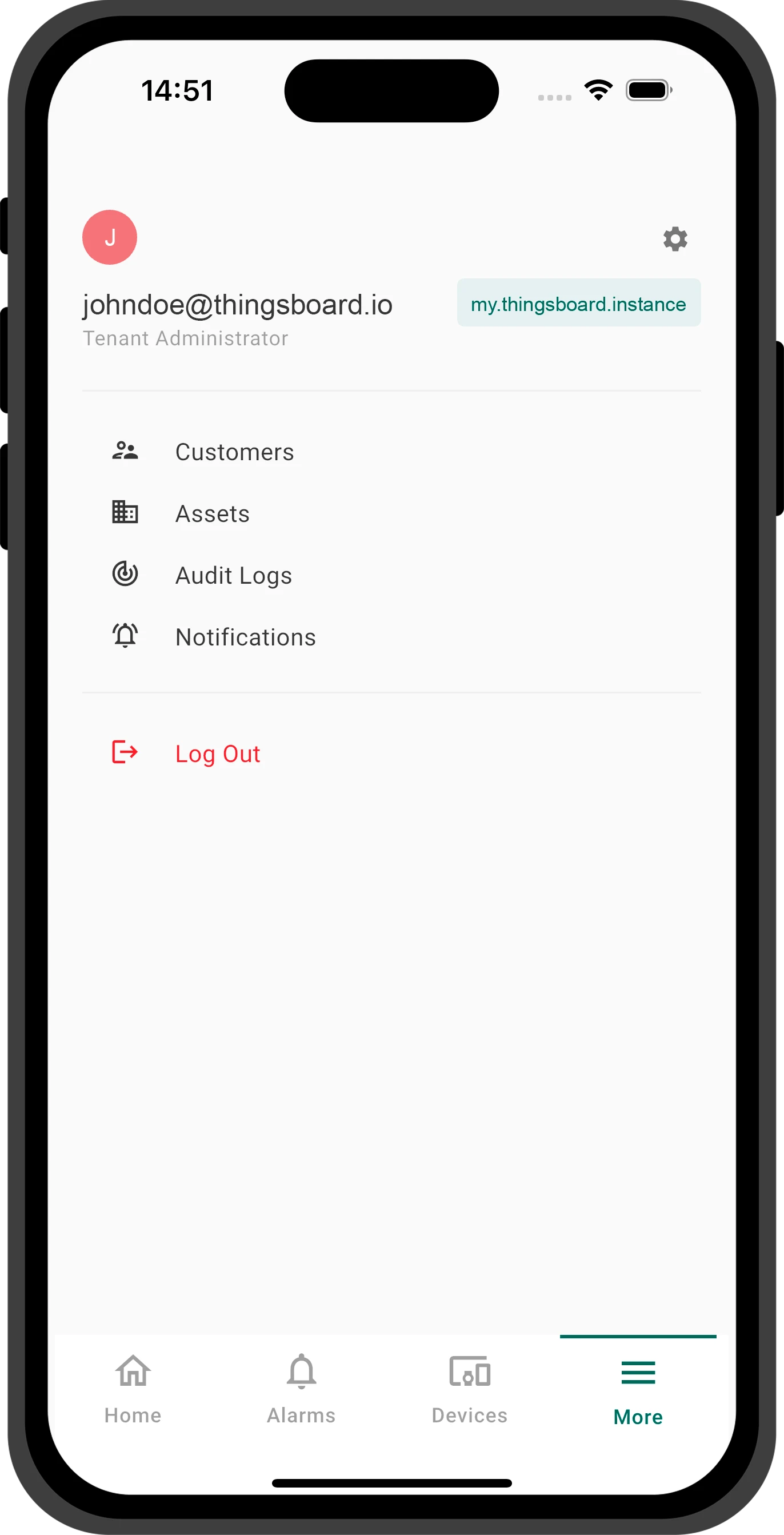
Self-Registration
Section titled “Self-Registration”The self-registration feature lets tenants set up a public sign-up page where clients can register and access ThingsBoard with predefined roles and permissions.
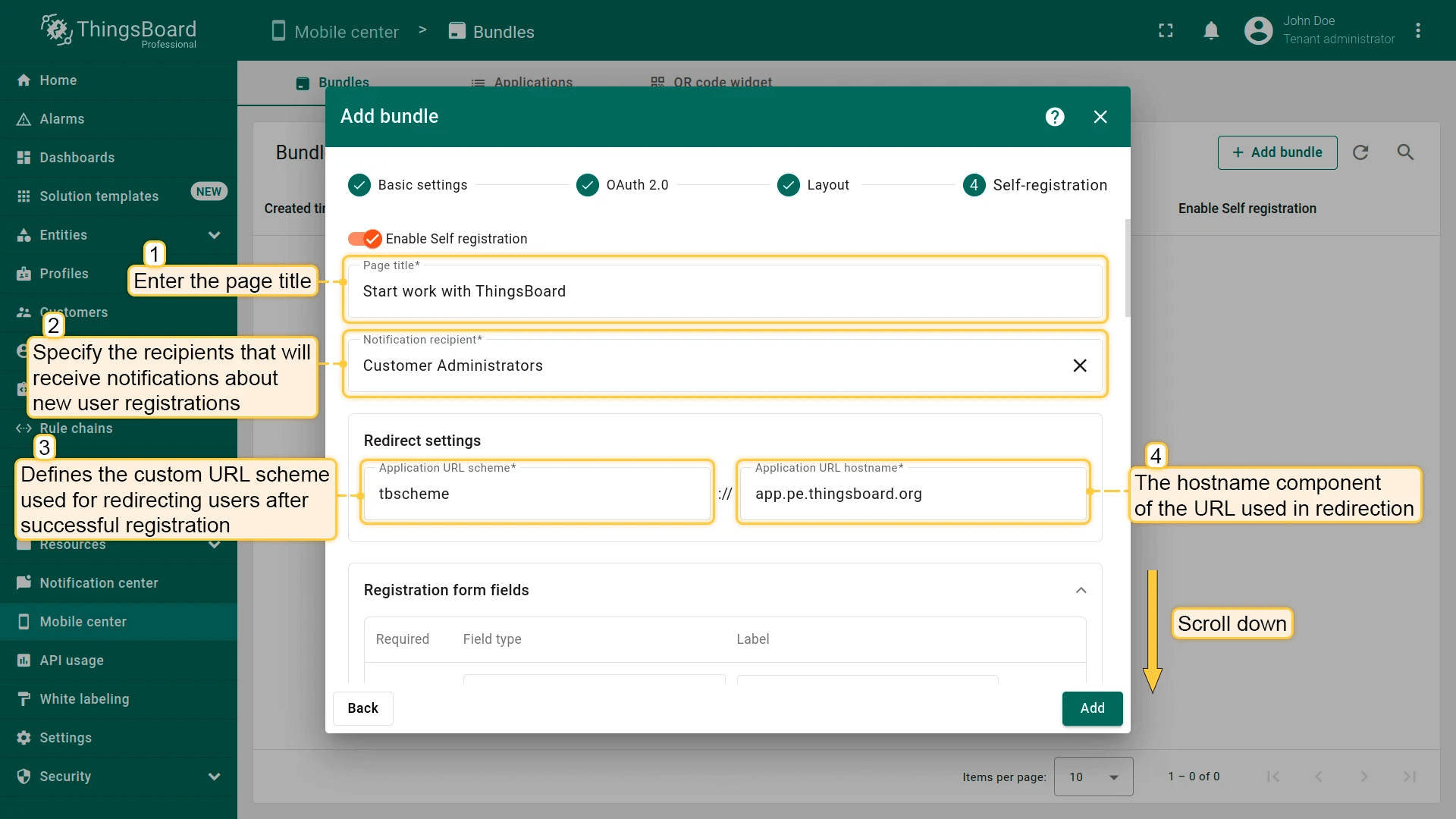
Configure the self-registration form:
Basic settings:- Page title — the header displayed at the top of the registration page.
- Notification recipient — recipients who receive notifications about new user registrations. Learn more about notifications.
- Redirect settings:
- Application URL scheme — the custom URL scheme for redirecting users after registration (e.g.,
tbscheme). - Application URL hostname — the hostname used in redirection (e.g.,
app.pe.thingsboard.org).
- Application URL scheme — the custom URL scheme for redirecting users after registration (e.g.,
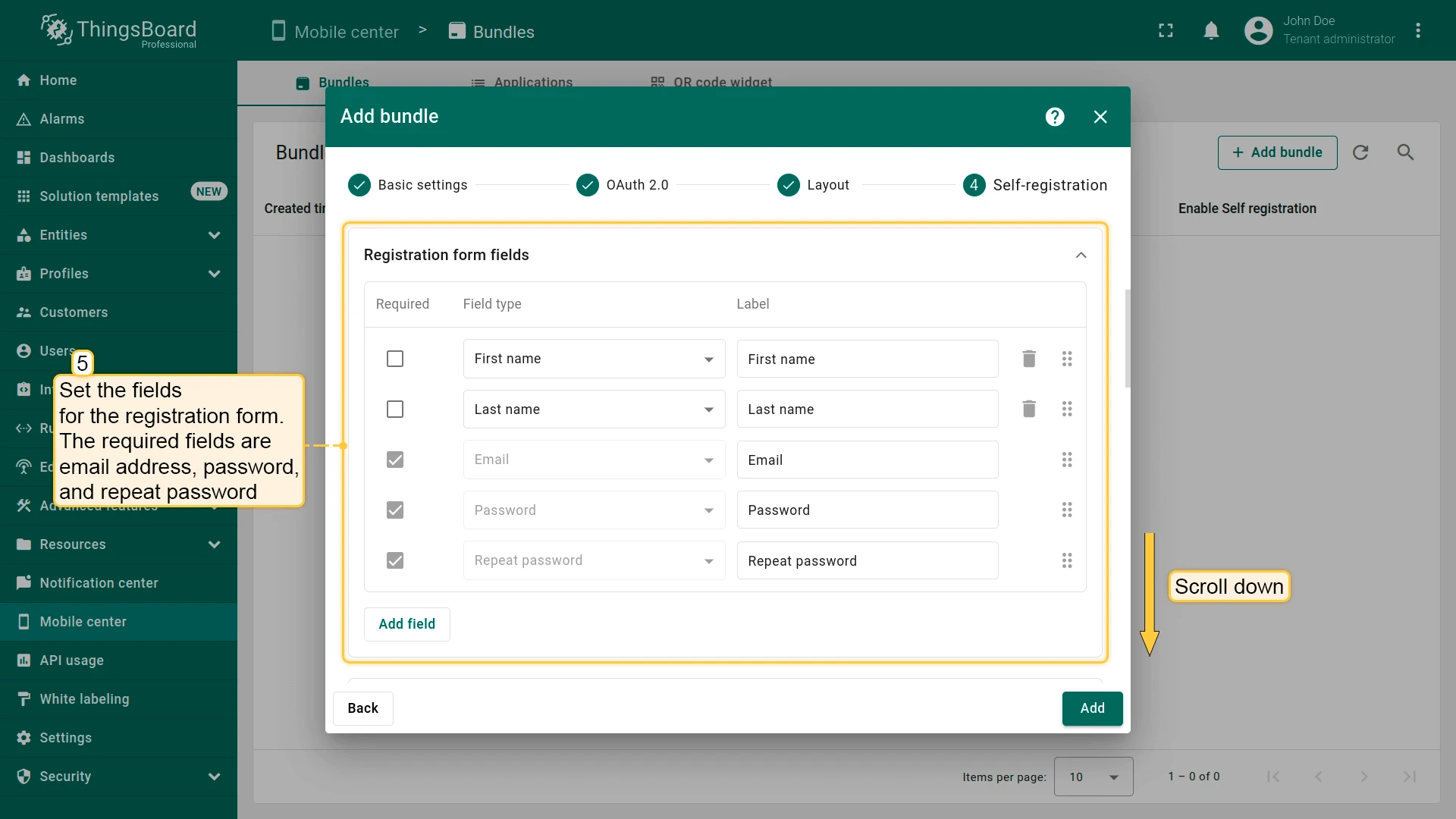
The mandatory fields are email, password, and repeat password. Additional fields can be added as needed.
Captcha prevents automated creation of fake accounts.
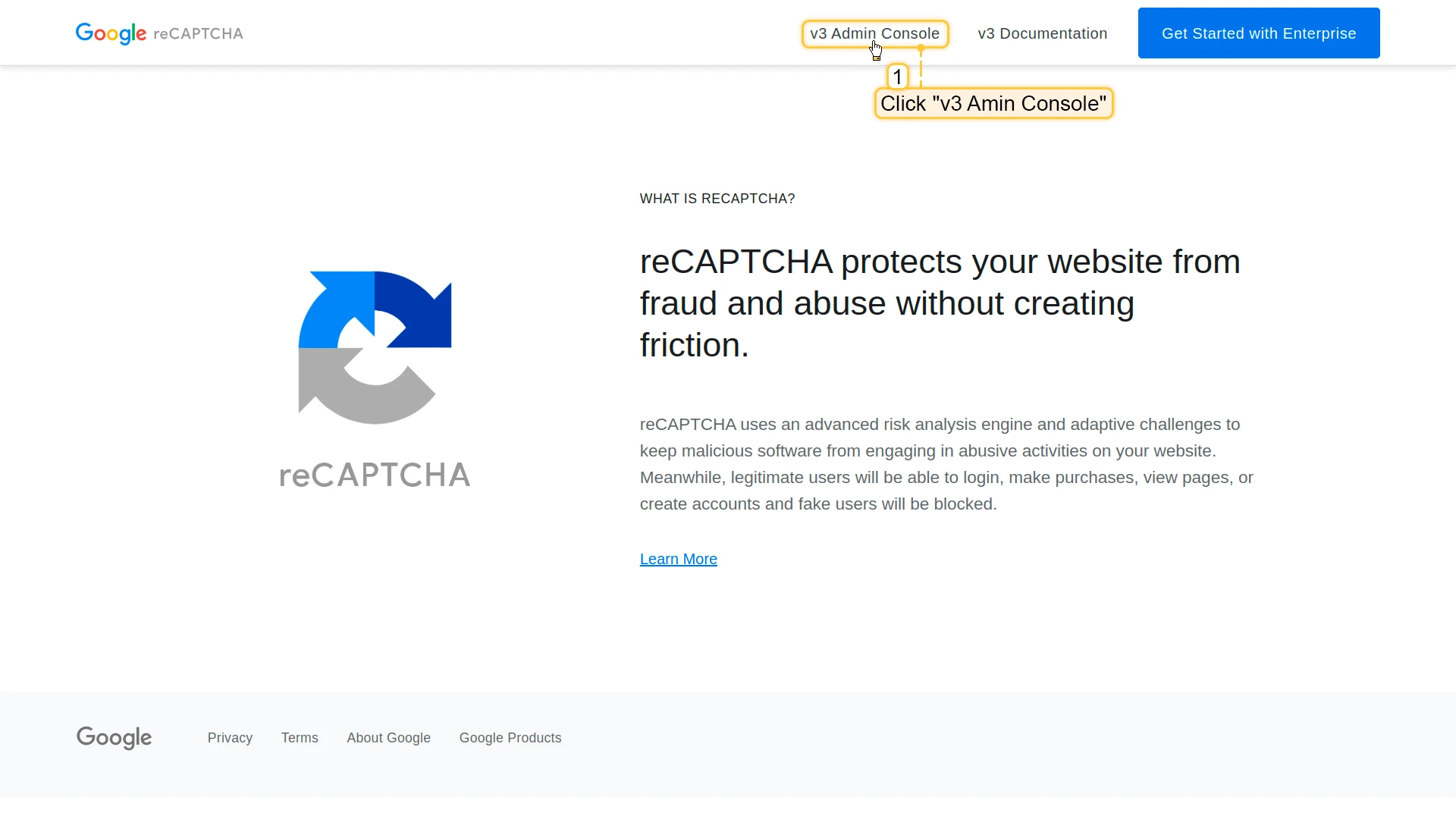
To generate Captcha keys, navigate to the Google reCAPTCHA admin console:
- Select the reCAPTCHA version (v2, v3, or Enterprise).
- Specify the domain name of your ThingsBoard instance.
- Copy and securely store the site key and secret key.

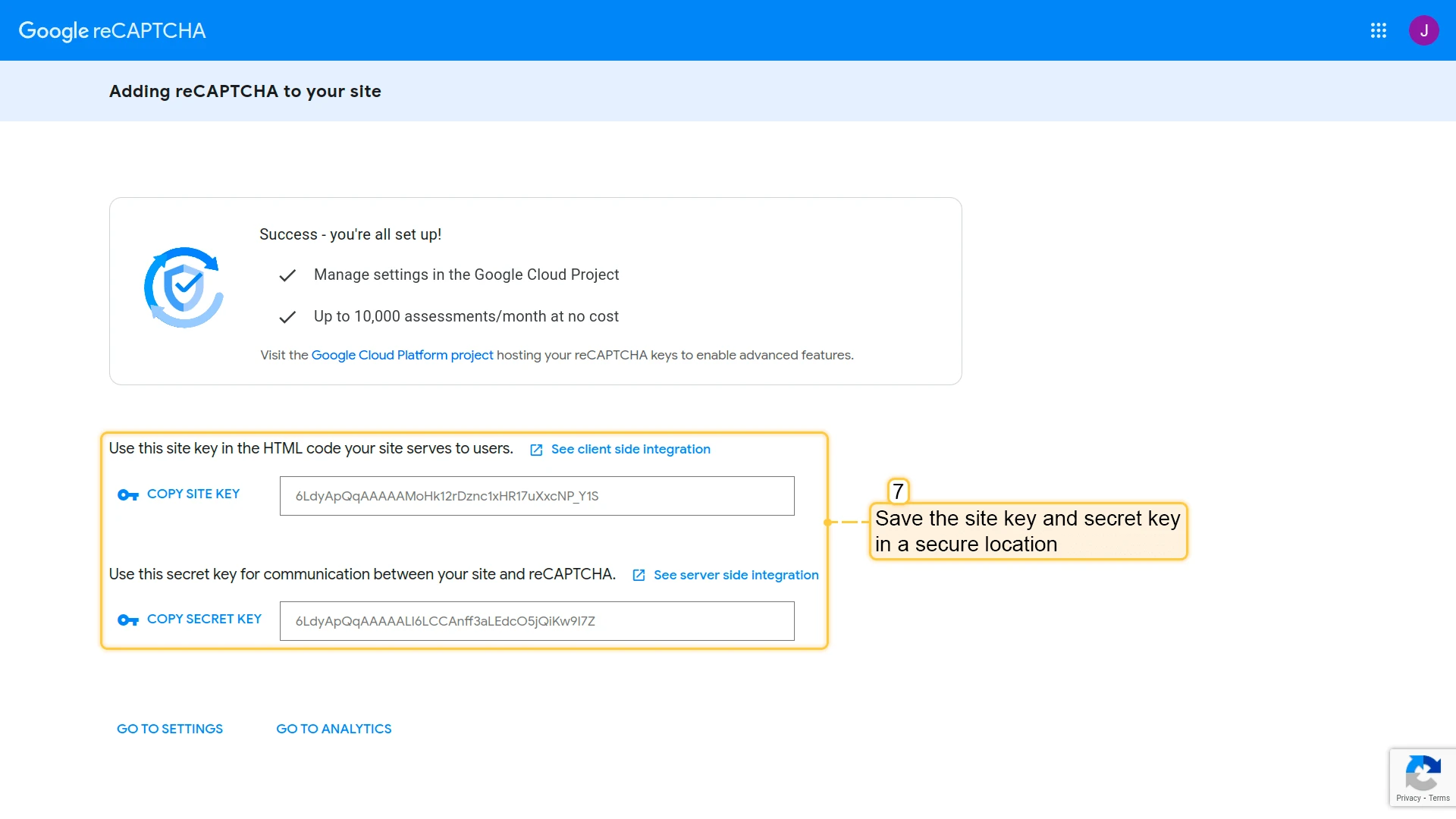
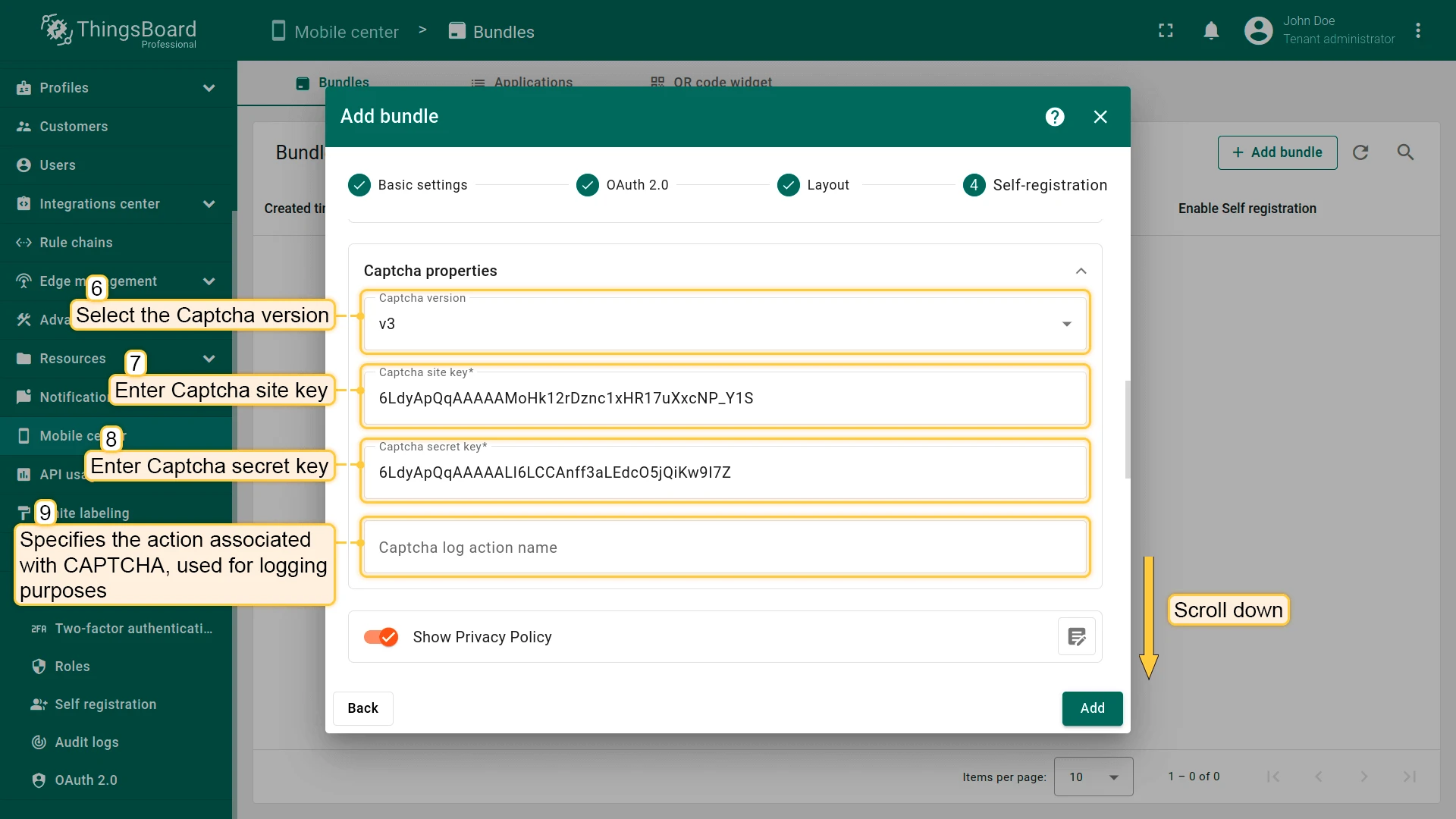
In ThingsBoard:
| Parameter | Description |
|---|---|
| Captcha version | The reCAPTCHA version to use. |
| Captcha site key | The public key used to render the captcha on the site. |
| Captcha secret key | The private key used to verify captcha responses on the server. |
| Captcha log action name | The action name associated with the captcha, used for logging. |
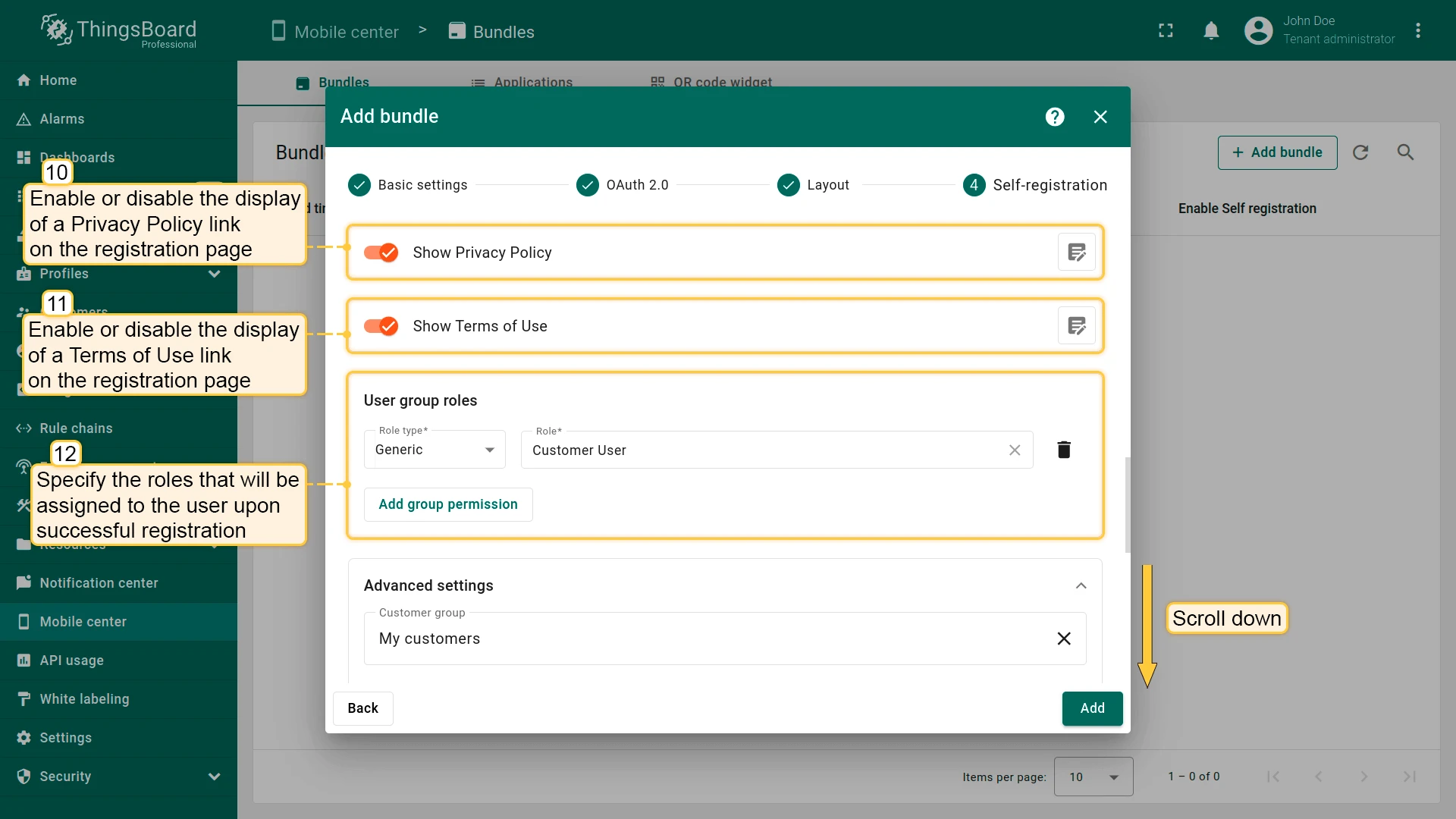
- Show Privacy Policy — enable or disable the Privacy Policy link on the registration page.
- Show Terms of Use — enable or disable the Terms of Use link on the registration page.
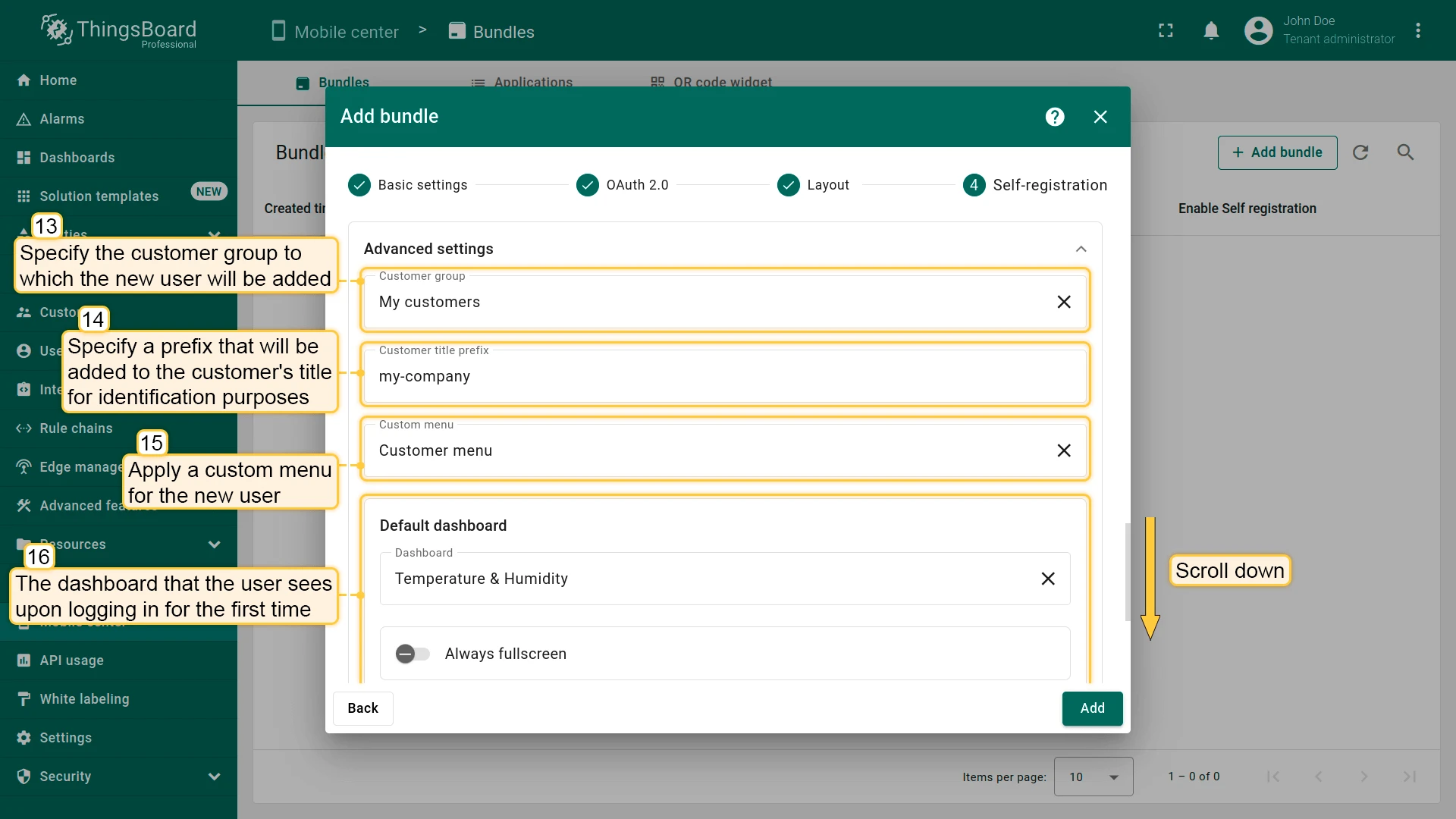
- User group roles — roles assigned to the user upon successful registration, determining their permissions and access level.
| Parameter | Description |
|---|---|
| Customer group | The customer group to which the new user will be added. |
| Customer title prefix | A prefix added to the customer’s title for identification. |
| Custom menu | A custom navigation menu applied for the new user. |
| Default dashboard | The dashboard displayed when the user logs in for the first time. |
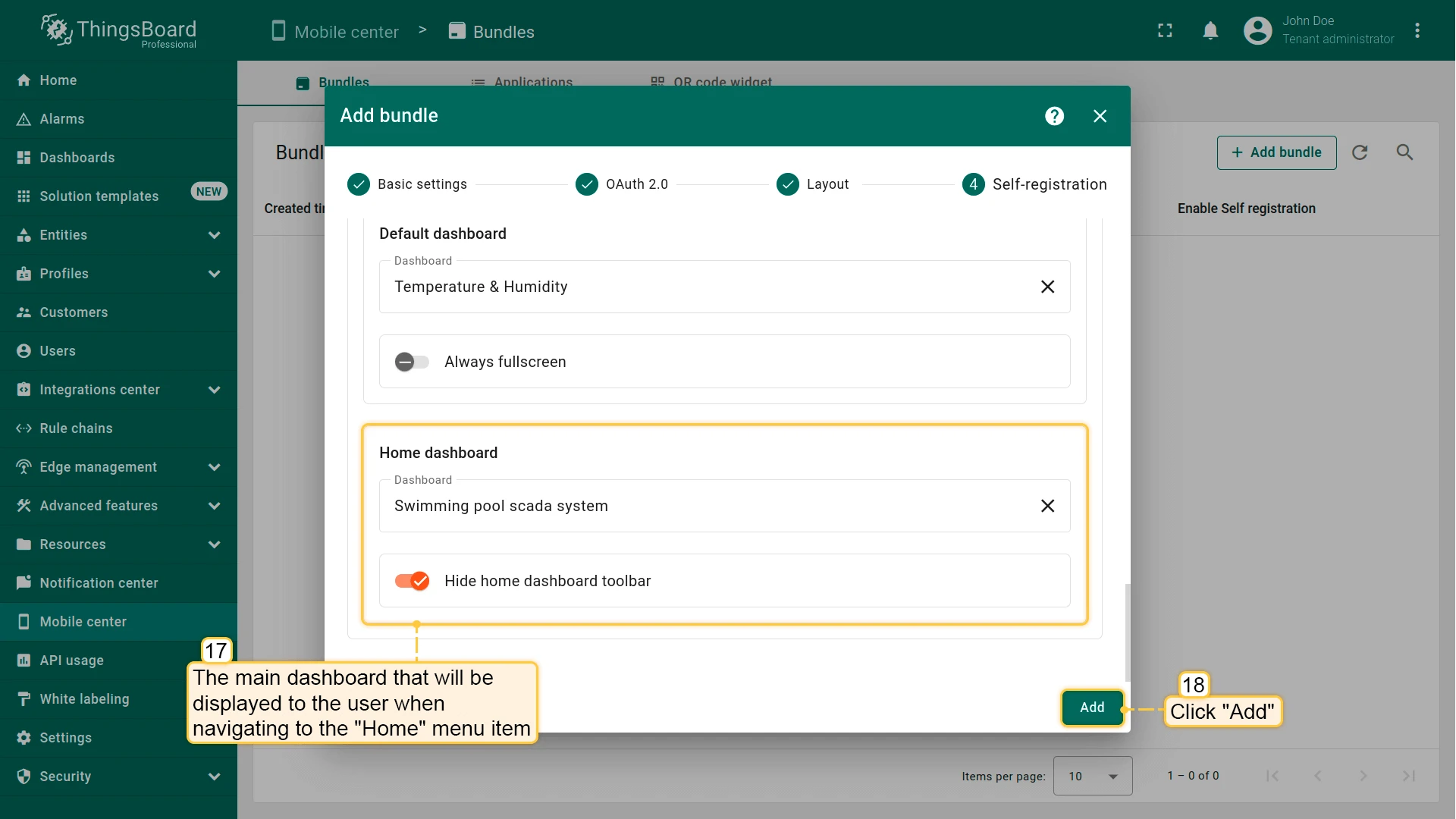
The main dashboard displayed when the user navigates to the Home menu item.
Configuration Dialog
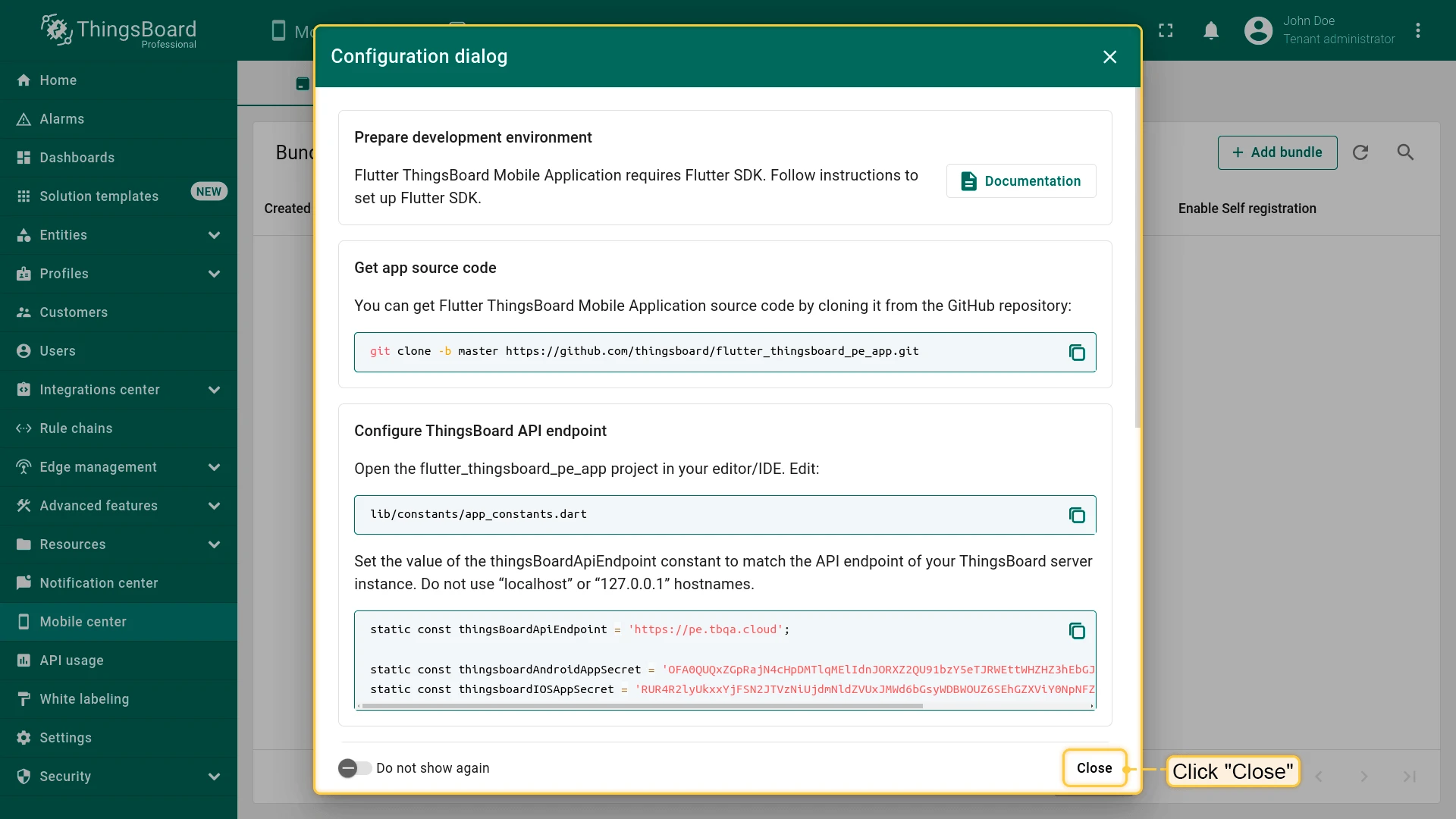
Section titled “Configuration Dialog”After the bundle is created, a dialog opens with SDK setup instructions for the ThingsBoard Mobile Application. Follow the instructions to set up your app, or click Close if you already have one configured.
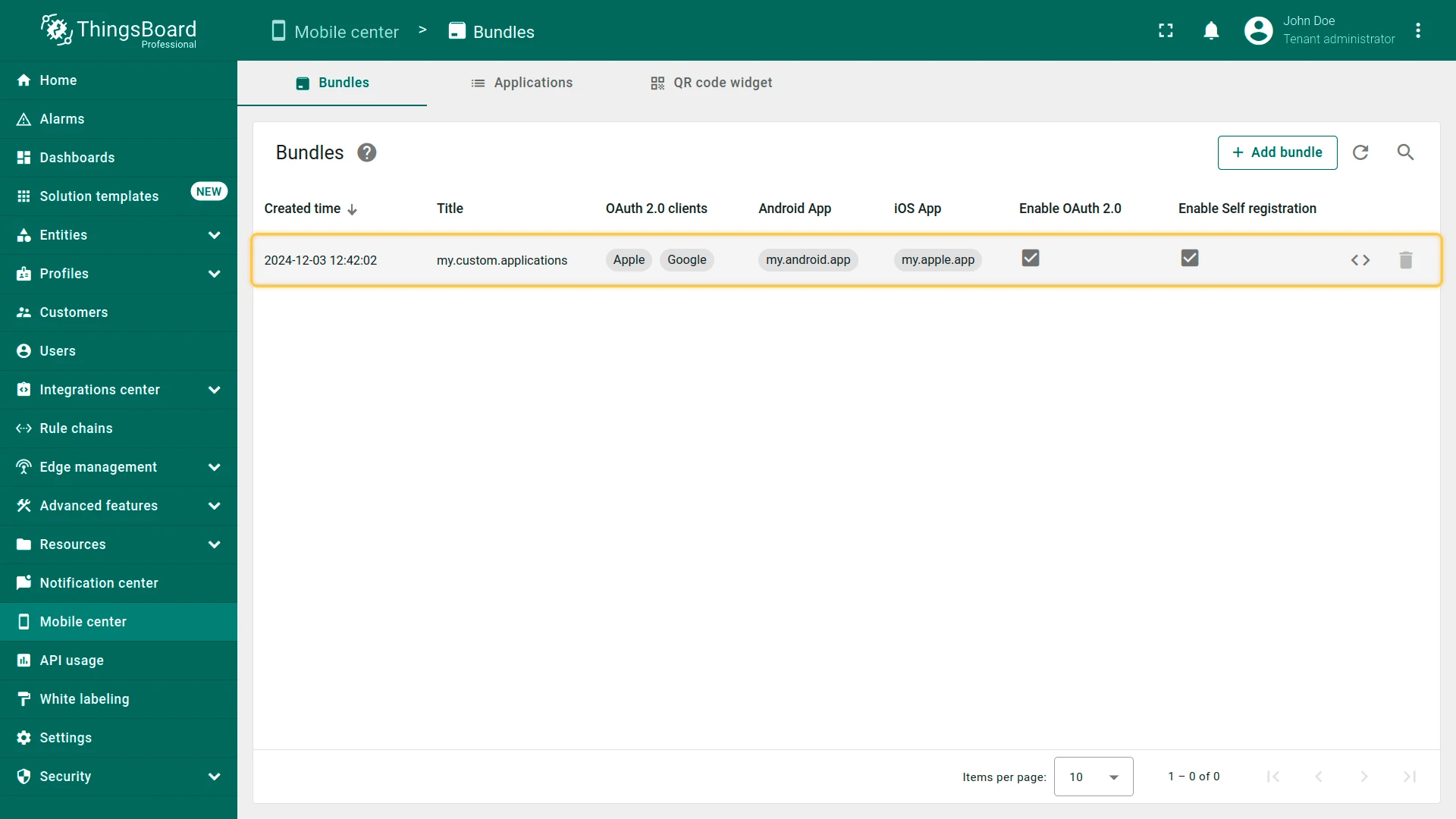
The bundle is created. Applications included in the bundle now use the configured settings.
Was this helpful?