Monolithic Architecture
In monolithic mode, all ThingsBoard services — transports, rule engine, core, and web UI — run inside a single Java process. This is the simplest deployment option, requiring at least 1 GB of RAM (2–4 GB recommended) for production workloads of up to 50–100K devices at typical reporting rates.
Architecture
Section titled “Architecture”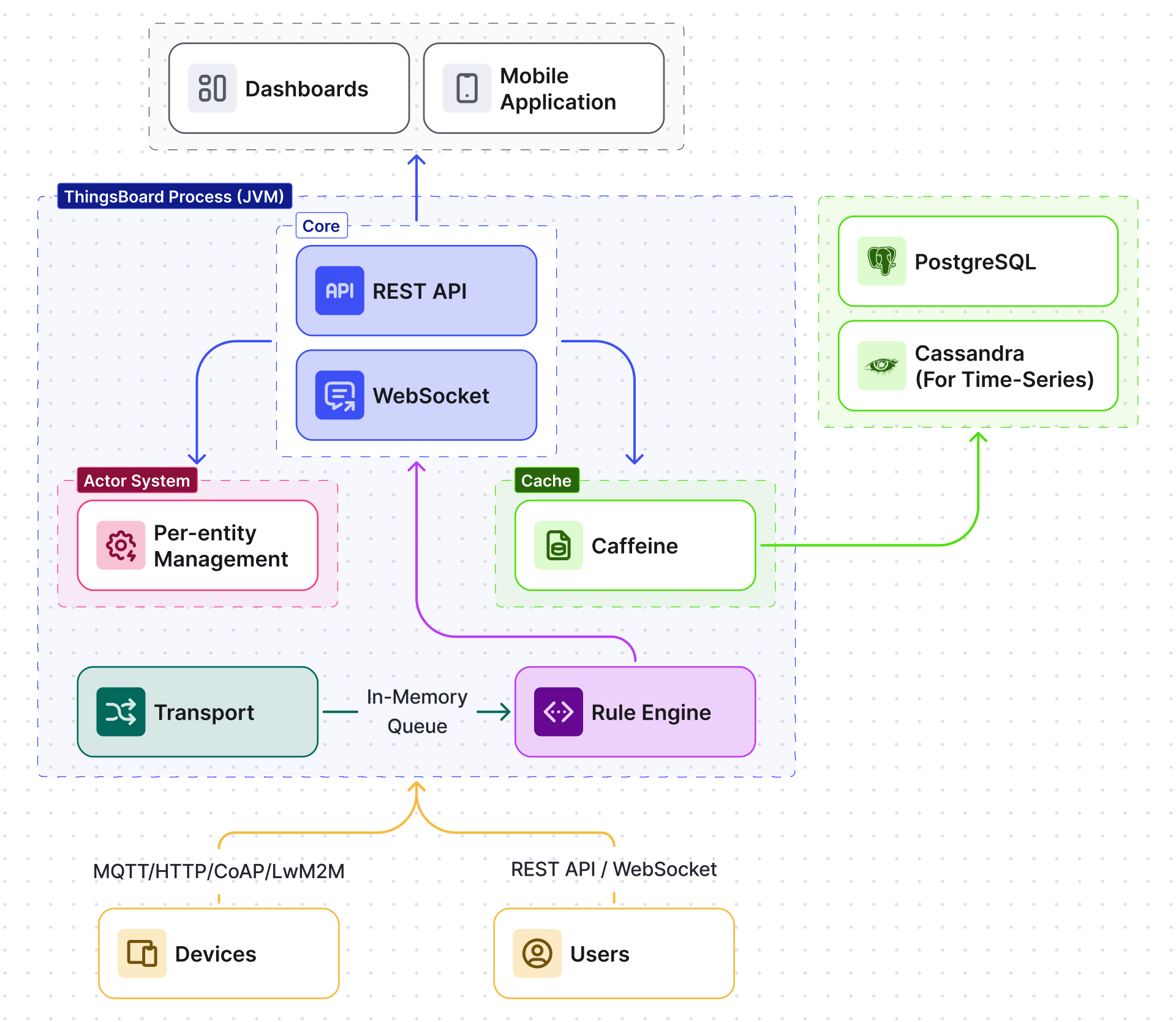
Single Node vs Cluster
Section titled “Single Node vs Cluster”Monolithic mode supports two configurations:
Single node — one JVM process, no external dependencies beyond the database. Uses in-memory queue (TB_QUEUE_TYPE=in-memory). The simplest possible setup for development, testing, and small production workloads.
Monolithic cluster — multiple identical JVM instances behind a load balancer. Each node runs all services. Requires:
- Zookeeper for service discovery and partition assignment
- Kafka for inter-node message passing (replaces in-memory queue)
- Load balancer (HAProxy / nginx) to distribute device connections and REST calls
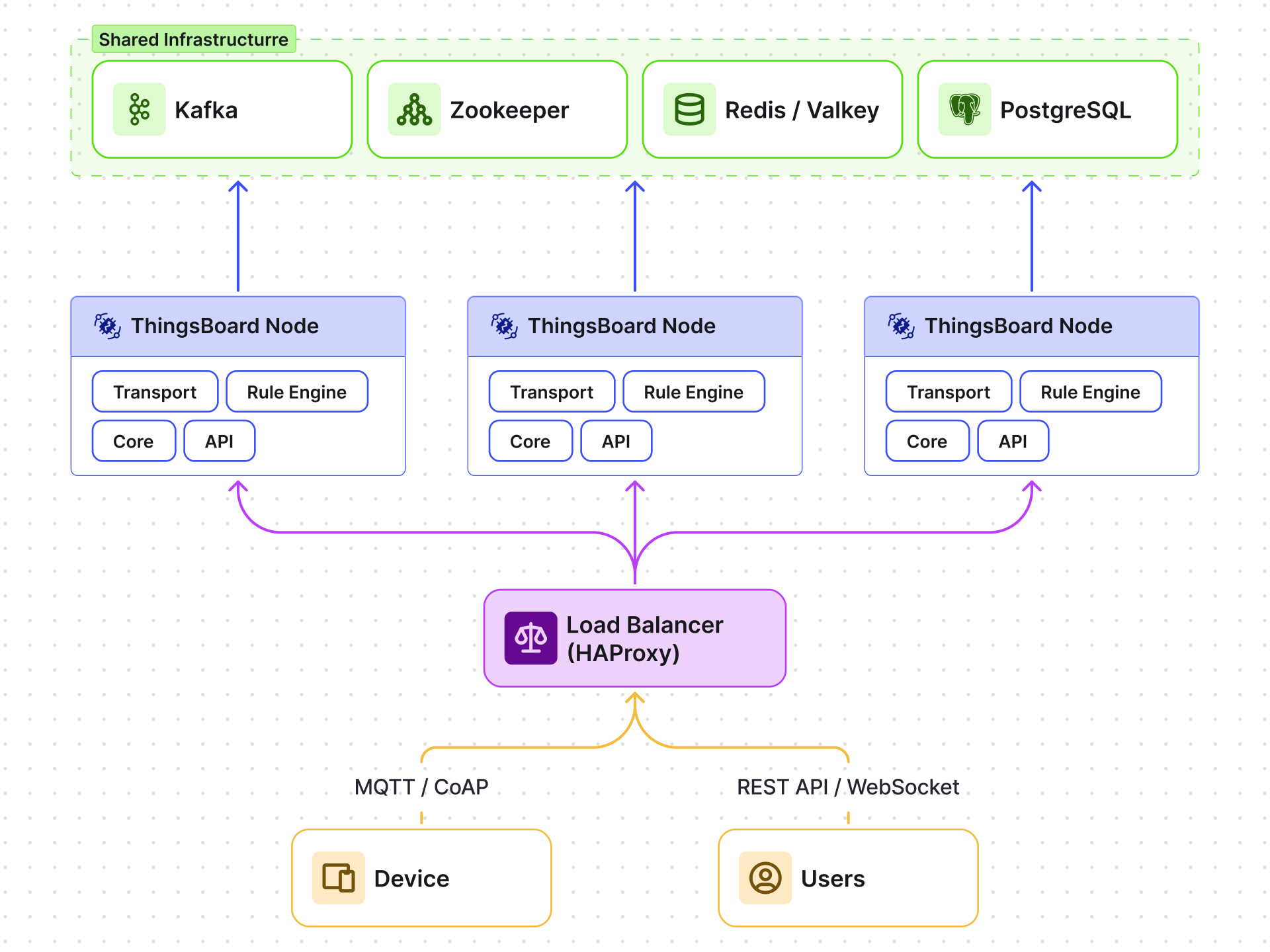
The cluster uses the same internal components (Actor System, Consistent Hashing, gRPC) described in the Architecture Overview. The key limitation is that every node runs every service — you cannot scale transports independently from the rule engine.
When to Use
Section titled “When to Use”| Advantages | Limitations |
|---|---|
| Simple to deploy — single process, minimal dependencies | Cannot scale services independently |
| Low resource footprint (1–4 GB RAM) | All components compete for the same CPU and memory |
| No message queue infrastructure required (single node) | In-memory queue loses messages on crash |
| Cluster mode adds fault tolerance | Cluster still can’t scale transports separately |
Choose monolithic when:
- You are developing, testing, or running demos
- Your production workload fits on 1–3 nodes
- You don’t need to scale transports independently from the rule engine
Switch to microservices when:
- You need to scale MQTT transport independently (e.g., 100K+ concurrent connections but light rule engine load)
- Your team requires zero-downtime rolling upgrades
- You want to isolate failures — a transport crash shouldn’t affect REST API availability
For installation instructions, see Installation. For microservices deployment details, see Microservices Architecture.
Was this helpful?