Deployment Scenarios
Choosing the right deployment architecture depends on your device count, message throughput, high-availability requirements, and operational complexity budget. This page walks through common scenarios with sizing guidance.
Estimating Requirements
Section titled “Estimating Requirements”Start by characterizing your workload. Two representative examples:
| Parameter | 20K GPS trackers | 100K smart meters |
|---|---|---|
| Devices | 20,000 | 100,000 |
| Messages per device | 1 per 10 sec | 1 per 15 min |
| Messages per second | 2,000 | ~111 |
| Data points per message | 5 (lat, lon, speed, fuel, status) | 3 (energy, voltage, current) |
| Data points per second | 10,000 | ~333 |
| Daily writes | ~864M | ~28.8M |
| Daily disk (PostgreSQL) | ~130 GB | ~4.3 GB |
| Daily disk (Cassandra) | ~26 GB | ~0.9 GB |
Key Characteristics
Section titled “Key Characteristics”| Factor | What it affects | Scaling lever |
|---|---|---|
| Messages per second | CPU, network | More Transport pods, more Rule Engine threads |
| Concurrent connections | RAM | More Transport pods (each MQTT connection ≈65 KB) |
| Rule engine complexity | CPU | More TB Node replicas |
| Data points per second | Disk IOPS, CPU | Database scaling (Cassandra nodes, TimescaleDB partitions) |
| Dashboard subscriptions | RAM, WebSocket connections | More TB Node replicas |
Scenario A: Standalone Monolith
Section titled “Scenario A: Standalone Monolith”A single server running ThingsBoard in monolithic mode with PostgreSQL on the same machine.

| Attribute | Value |
|---|---|
| Max devices | ~300,000 (depending on message rate) |
| Max data points/sec | ~5,000 (PostgreSQL limit) |
| High availability | No — single point of failure |
| Recommended RAM | 4–16 GB |
| Advantages | Limitations |
|---|---|
| Simplest deployment — one machine, one process | No redundancy — downtime during maintenance or failure |
| Lowest operational cost | PostgreSQL write throughput ceiling |
| No Kafka, Redis, or Zookeeper required | Cannot scale individual components |
Best for: development, testing, demos, and small production deployments with moderate message rates.
Scenario B: Standalone Monolith + External Database
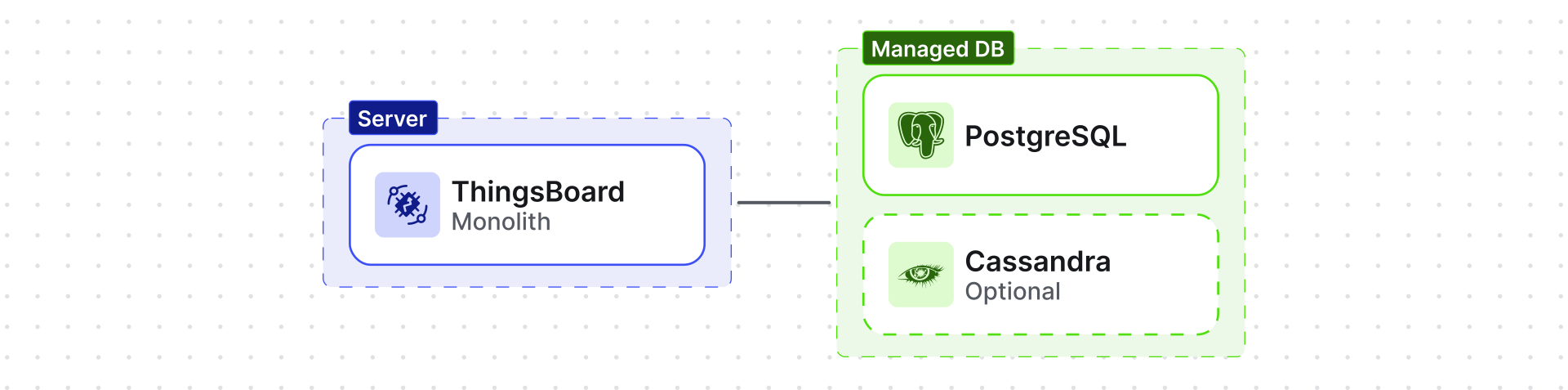
Section titled “Scenario B: Standalone Monolith + External Database”ThingsBoard on one server, database on a separate managed service (AWS RDS, Azure Database, Google Cloud SQL).
| Advantages | Limitations |
|---|---|
| Automated database backups and failover | Still a single ThingsBoard process — no HA for the application |
| Can use managed Cassandra for higher write throughput | Network latency between server and DB |
| Easier to scale storage independently | More infrastructure to manage than Scenario A |
Best for: production deployments that need reliable database operations but can tolerate brief ThingsBoard restarts.
Scenario C: Cluster (Microservices)
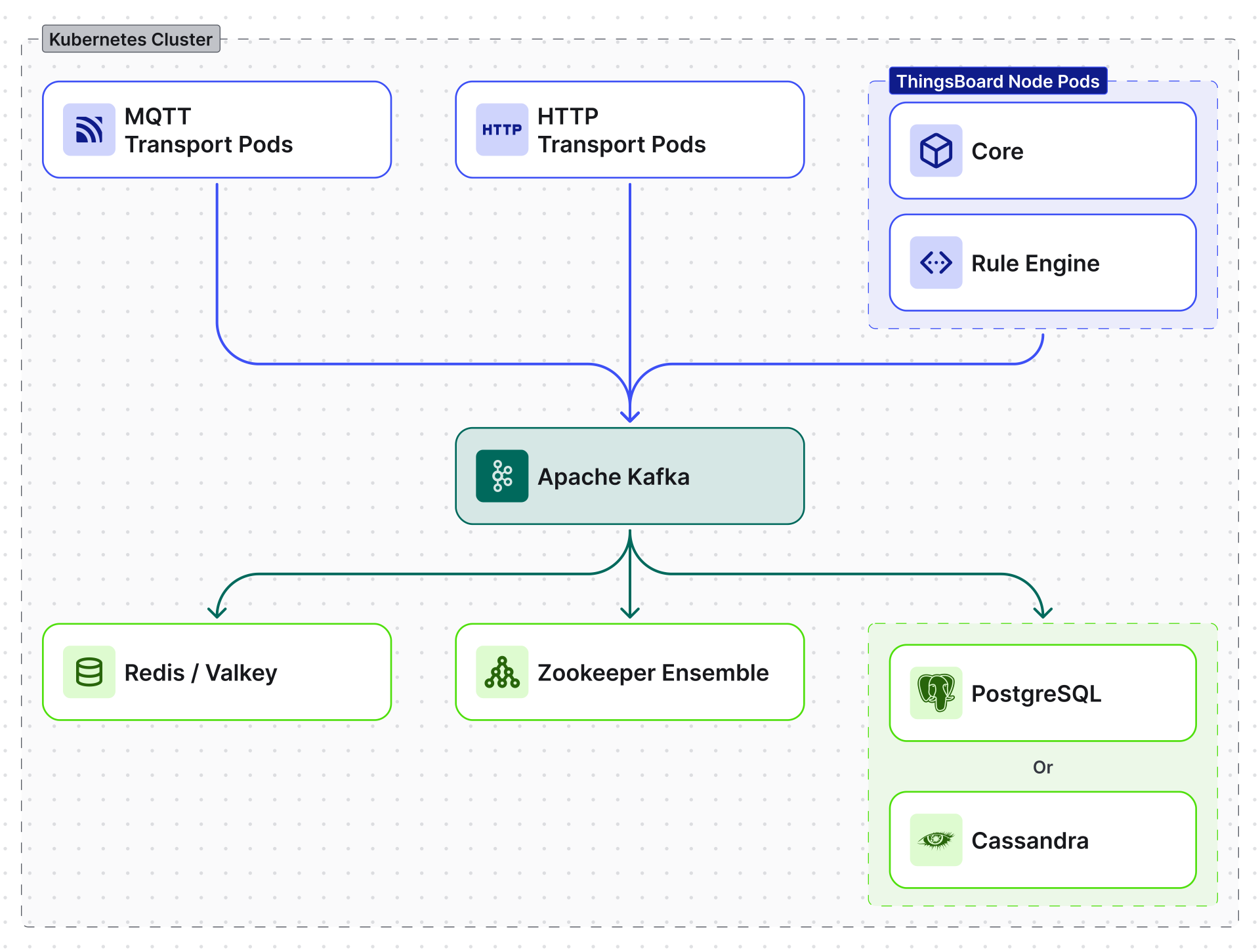
Section titled “Scenario C: Cluster (Microservices)”ThingsBoard deployed as microservices on Kubernetes or Docker Swarm with separate transport, node, and database pods.
Cluster Sizing: 1M Smart Meters
Section titled “Cluster Sizing: 1M Smart Meters”Smart meters reporting every 15 minutes — moderate message rate, large device count.
| Component | Instances | Specs (per instance) |
|---|---|---|
| MQTT Transport | 2 | 2 CPU, 4 GB RAM |
| TB Node | 2 | 4 CPU, 8 GB RAM |
| Zookeeper | 3 | 1 CPU, 1 GB RAM |
| Redis | 1 | 2 CPU, 4 GB RAM |
| Kafka | 3 | 2 CPU, 4 GB RAM |
| PostgreSQL | 1 | 4 CPU, 16 GB RAM, SSD |
Cluster Sizing: 1M GPS Trackers
Section titled “Cluster Sizing: 1M GPS Trackers”GPS trackers reporting every 10 seconds — high message rate, high write throughput.
| Component | Instances | Specs (per instance) |
|---|---|---|
| MQTT Transport | 8 | 2 CPU, 4 GB RAM |
| TB Node | 15 | 4 CPU, 8 GB RAM |
| JS Executor | 20 | 1 CPU, 1 GB RAM |
| Cassandra | 15 | 8 CPU, 16 GB RAM, NVMe SSD |
| Zookeeper | 3 | 1 CPU, 1 GB RAM |
| Redis | 3 (Sentinel) | 2 CPU, 4 GB RAM |
| Kafka | 3 | 4 CPU, 8 GB RAM, SSD |
| PostgreSQL | 1 | 4 CPU, 16 GB RAM, SSD |
For benchmark results that validate these sizing recommendations, see Performance.
Was this helpful?