
SCADA Oil & Gas drilling system
A SCADA (Supervisory Control and Data Acquisition) system template for automating oil and gas drilling processes has been implemented based on ThingsBoard. The use of SCADA systems allows operators to monitor drilling parameters in real time, control equipment, and prevent emergency situations. ThingsBoard, as an IoT platform, enables the collection, processing, and visualization of data from sensors and controllers, making drilling safer, more efficient, and more predictable.
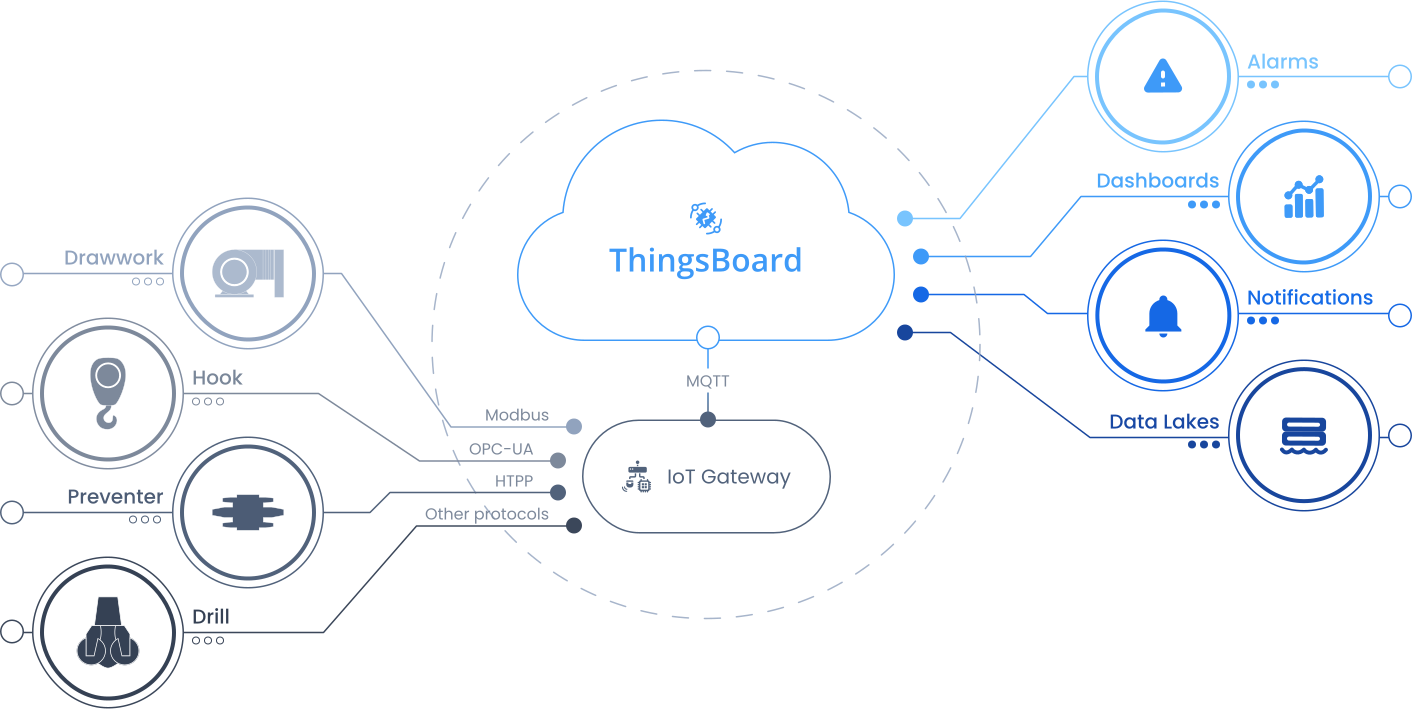
With a single installation action, the template deploys a fully functional solution that includes dashboards, devices, alarms, and gateway configuration. The solution is suitable for proof-of-concept deployments as well as a foundation for production SCADA applications.
Key application areas
Section titled “Key application areas”This solution template can be used as a baseline for:
- Onshore and offshore rigs: Centralize monitoring for distributed drilling sites to optimize extraction and ensure worker safety
- Equipment manufacturers: Offer remote diagnostics by embedding IoT connectivity into drilling equipment
- Training and simulation: Use the included emulator to train operators on SCADA systems without running actual machinery
Install solution template
Section titled “Install solution template”To understand how the SCADA Oil & Gas Drilling system template works, start by installing the solution template.
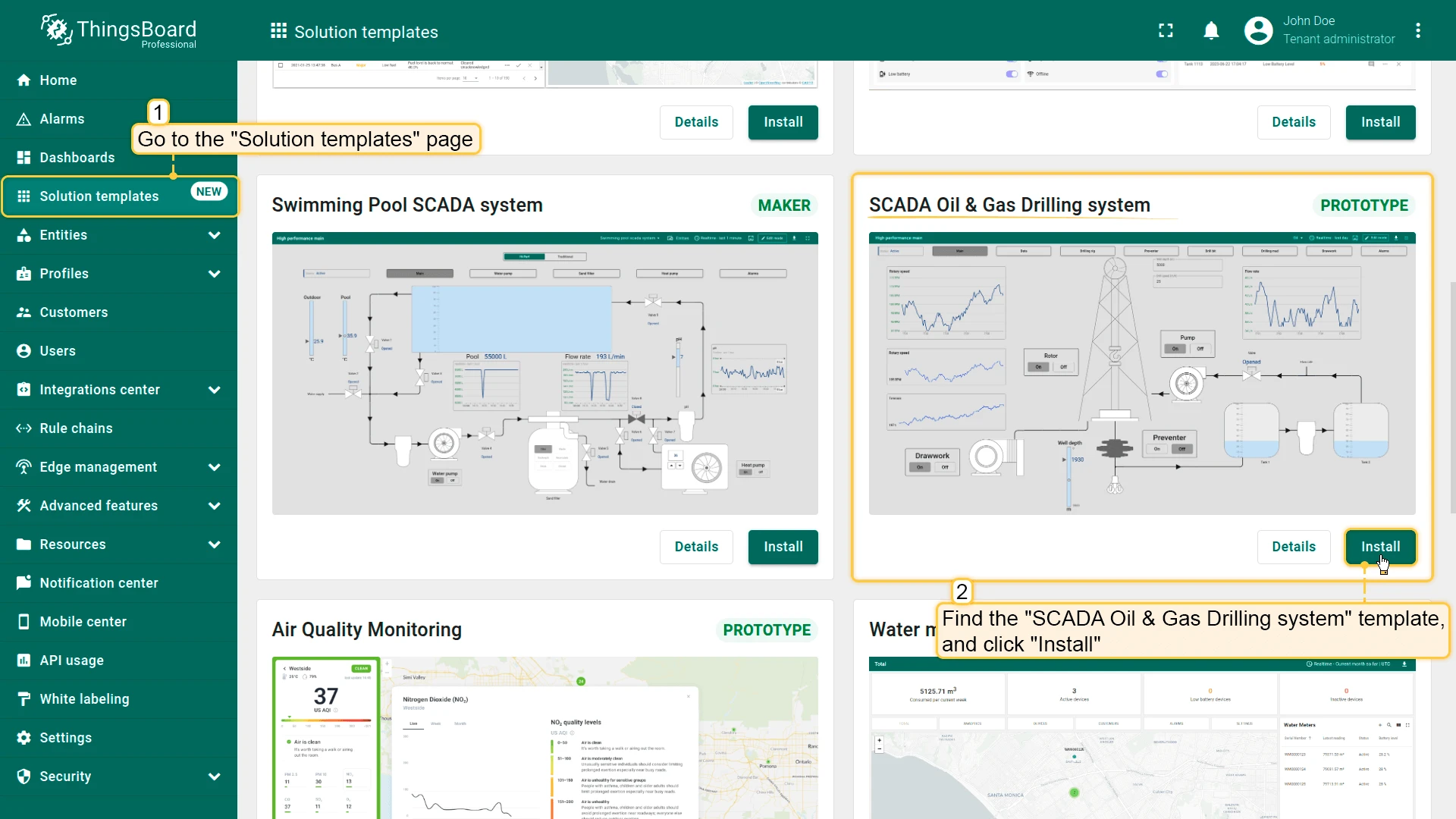
- Go to Solution templates in the main menu.
- Find SCADA Oil & Gas Drilling system and click Install.
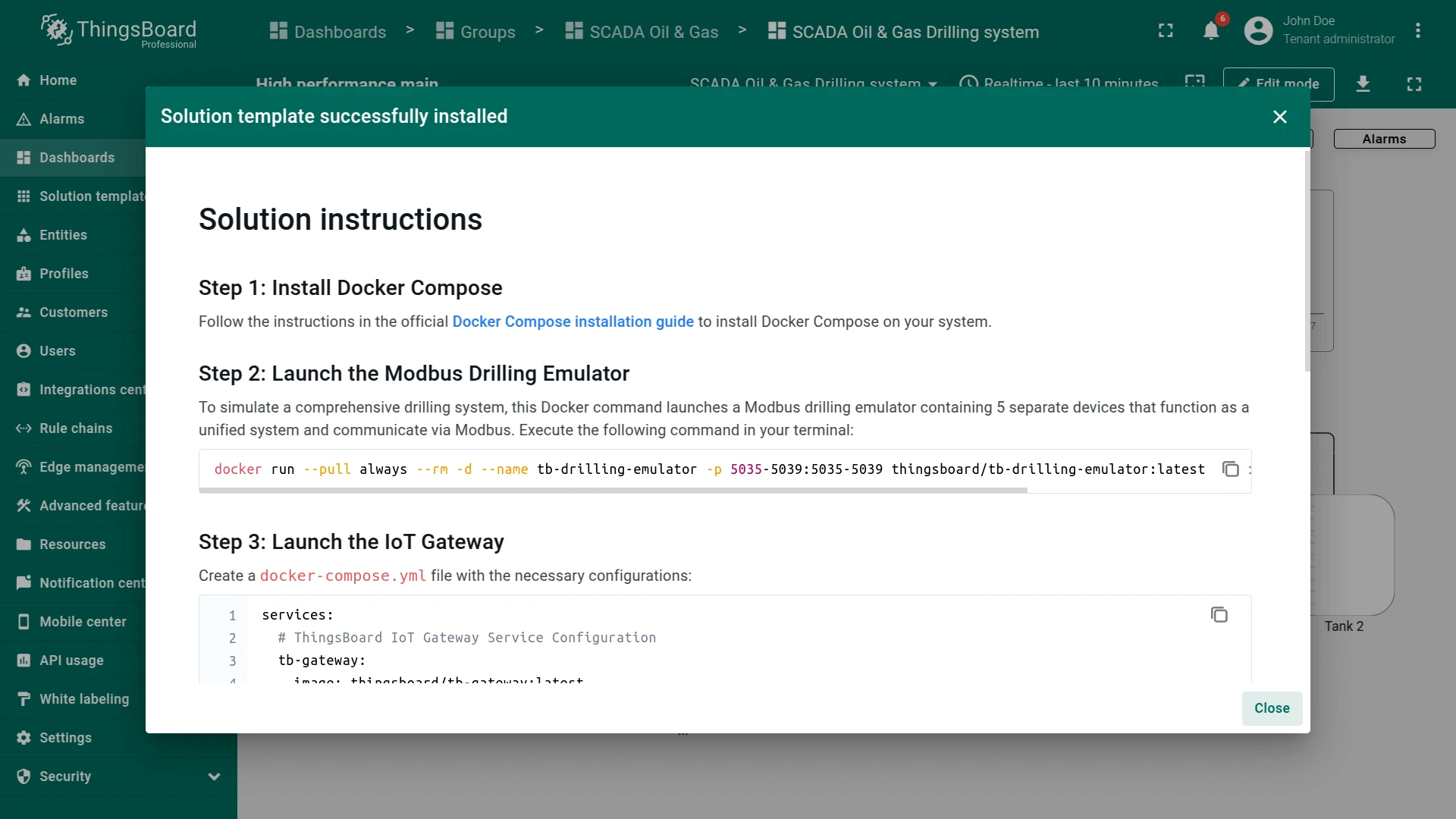
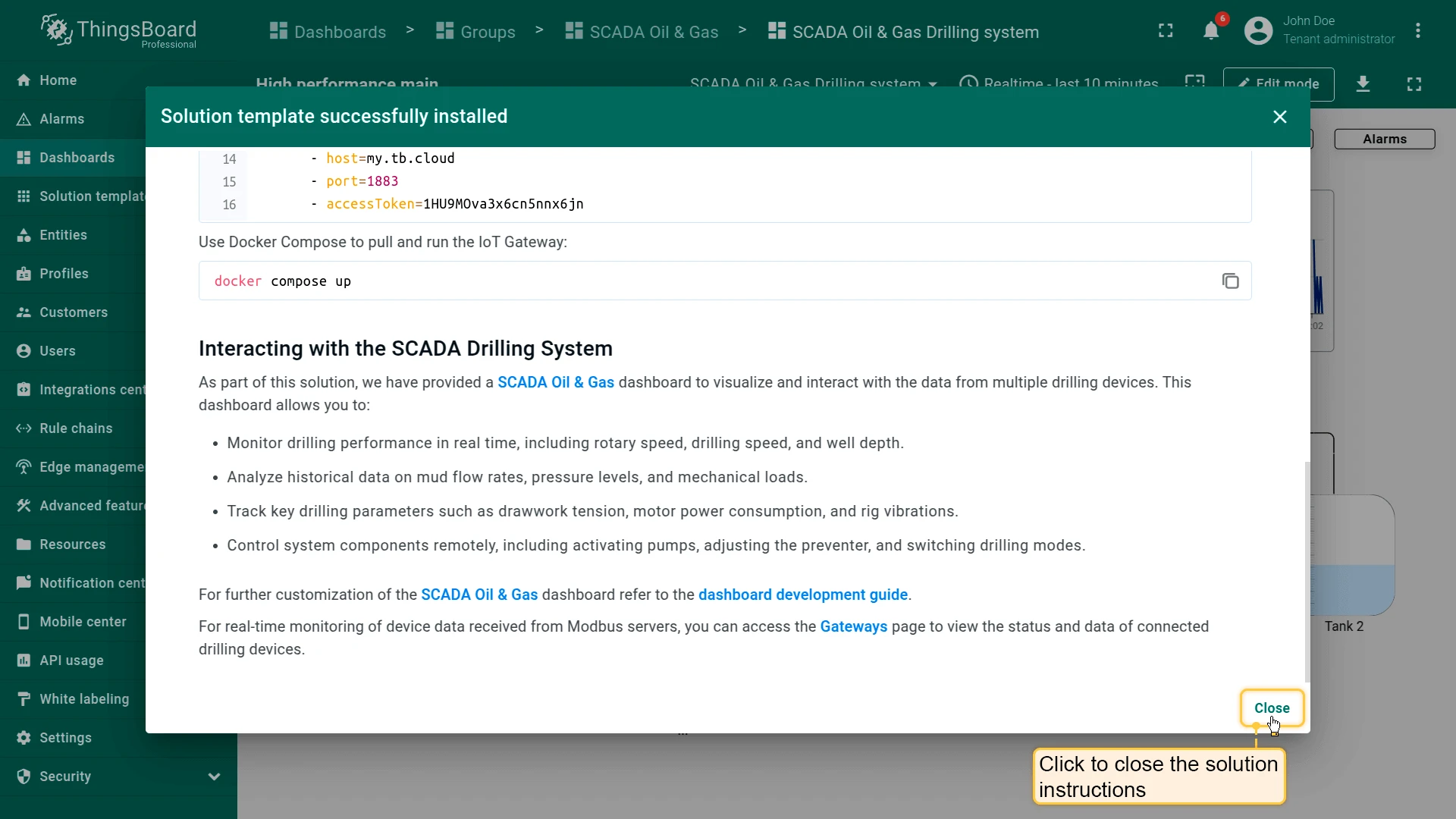
- Follow the provided configuration instructions and click Close.
- The SCADA Oil & Gas Drilling system dashboard opens automatically.
After installation, a fully functional simulation for monitoring drilling operations is created automatically. No physical devices or custom code are required to start exploring the solution.
System components
Section titled “System components”The SCADA Oil & Gas Drilling system includes:
- Devices: Sensors and actuators installed on drilling equipment. They collect data on drilling parameters such as rotation speed, tension, fluid level, and other indicators
- Modbus protocol: The primary communication protocol for data exchange between devices. It ensures reliable connection and seamless integration of equipment with the SCADA system
- Gateway: A device that transmits data from sensors to the ThingsBoard platform. It converts and relays data over the network for further processing
- ThingsBoard: An IoT platform where data is collected, analyzed, and visualized. It allows operators to access information and set up alerts for critical parameter changes
- Dashboard visualization: SCADA dashboards provide a clear representation of all drilling processes, enabling real-time monitoring and informed decision-making
Dashboard
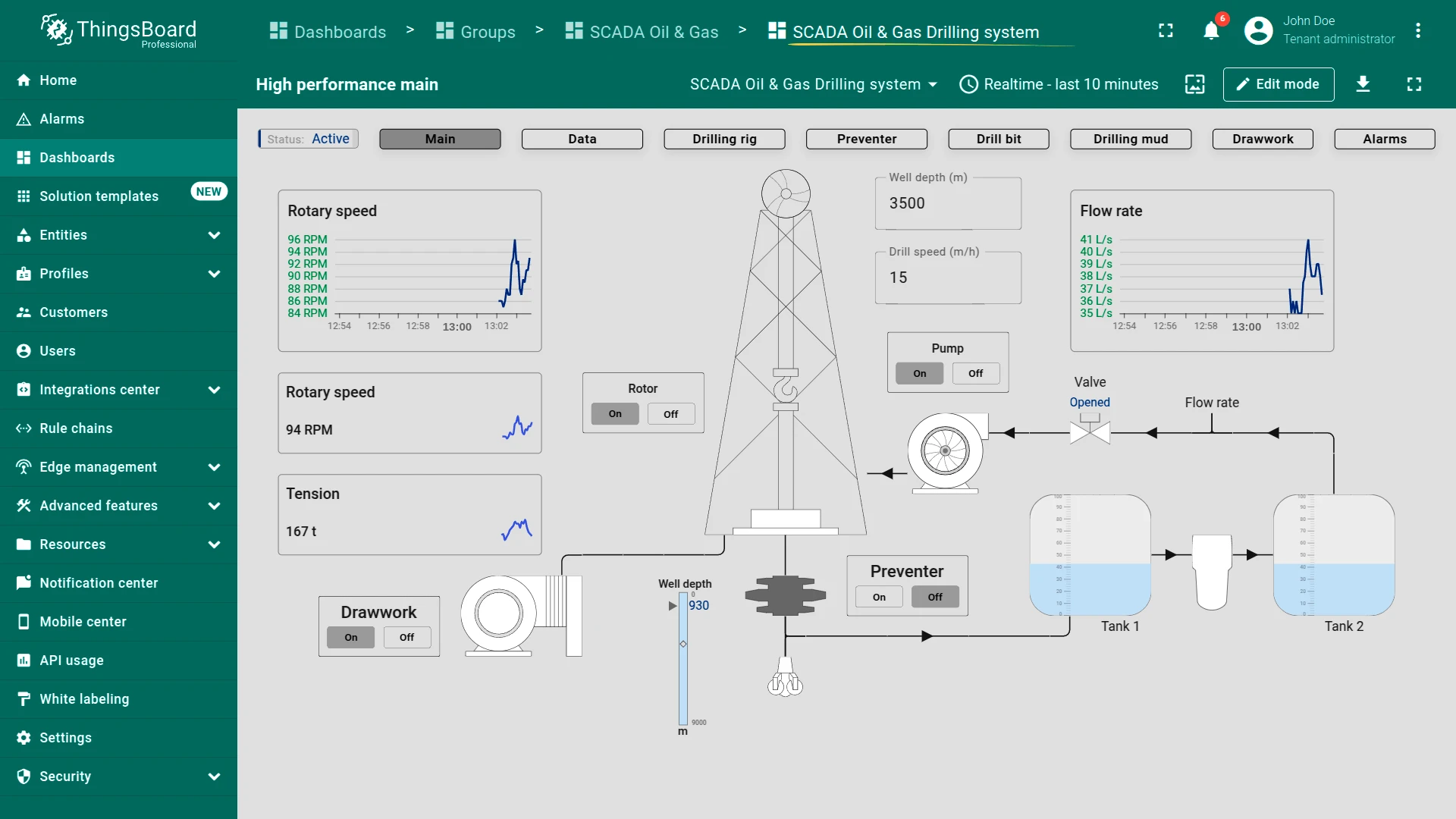
Section titled “Dashboard”The SCADA Oil & Gas Drilling system dashboard provides real-time monitoring and control of key drilling parameters such as rotary speed, depth, tension, and fluid flow rate. Operators can manage equipment (pump, rotor, preventer), analyze the condition of the drilling rig, drill bit, and drilling mud, and track load and vibration levels. The system features interactive graphs, alarm logs, and notifications, helping to prevent accidents and enhance operational efficiency.
Dashboard states
Section titled “Dashboard states”The dashboard consists of the following states:
- Main drilling SCADA system state: Real-time monitoring of drilling parameters (speed, depth, tension, flow rate) with control over pump, rotor, and preventer
- Data monitoring SCADA system state: Tracks drill bit position, well pressure, mud flow, mechanical tension, drilling performance, equipment status, and environmental conditions while analyzing temperature, vibration, and gas levels to prevent failures
- Drilling rig state: Monitoring and controlling the rotational speed, hoisting speed, and drilling rig pressure, with real-time load analysis and drilling progress tracking
- Preventer (BOP) state: Ensures well pressure control, monitors leaks, mud temperature, and gas levels, with real-time pressure trend analysis
- Drill bit state: Tracks drilling speed, bit position, vibration, and temperature to optimize penetration rate and efficiency
- Drilling mud state: Monitors and controls drilling fluid properties, ensuring proper lubrication, cooling, and circulation
- Drawwork state: Controls hoisting and lowering of the drill string, adjusting speed, direction, and tension while tracking vibrations and position
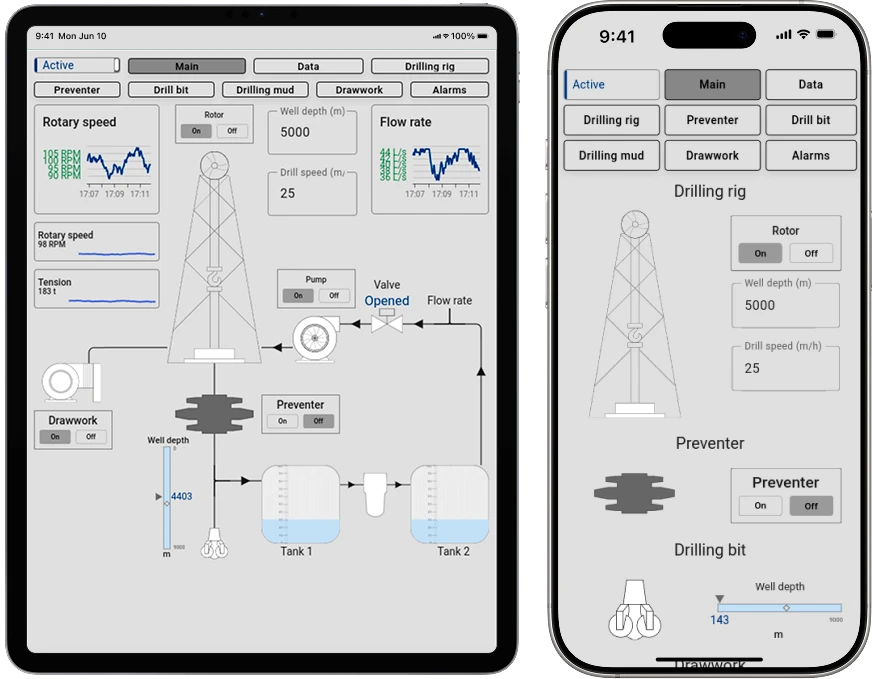
- Alarms state: Logs real-time alerts and warnings for quick response to failures, abnormal pressure, or unexpected temperature
Navigate through dashboard states using navigation buttons to track and manage details for each drilling rig component.
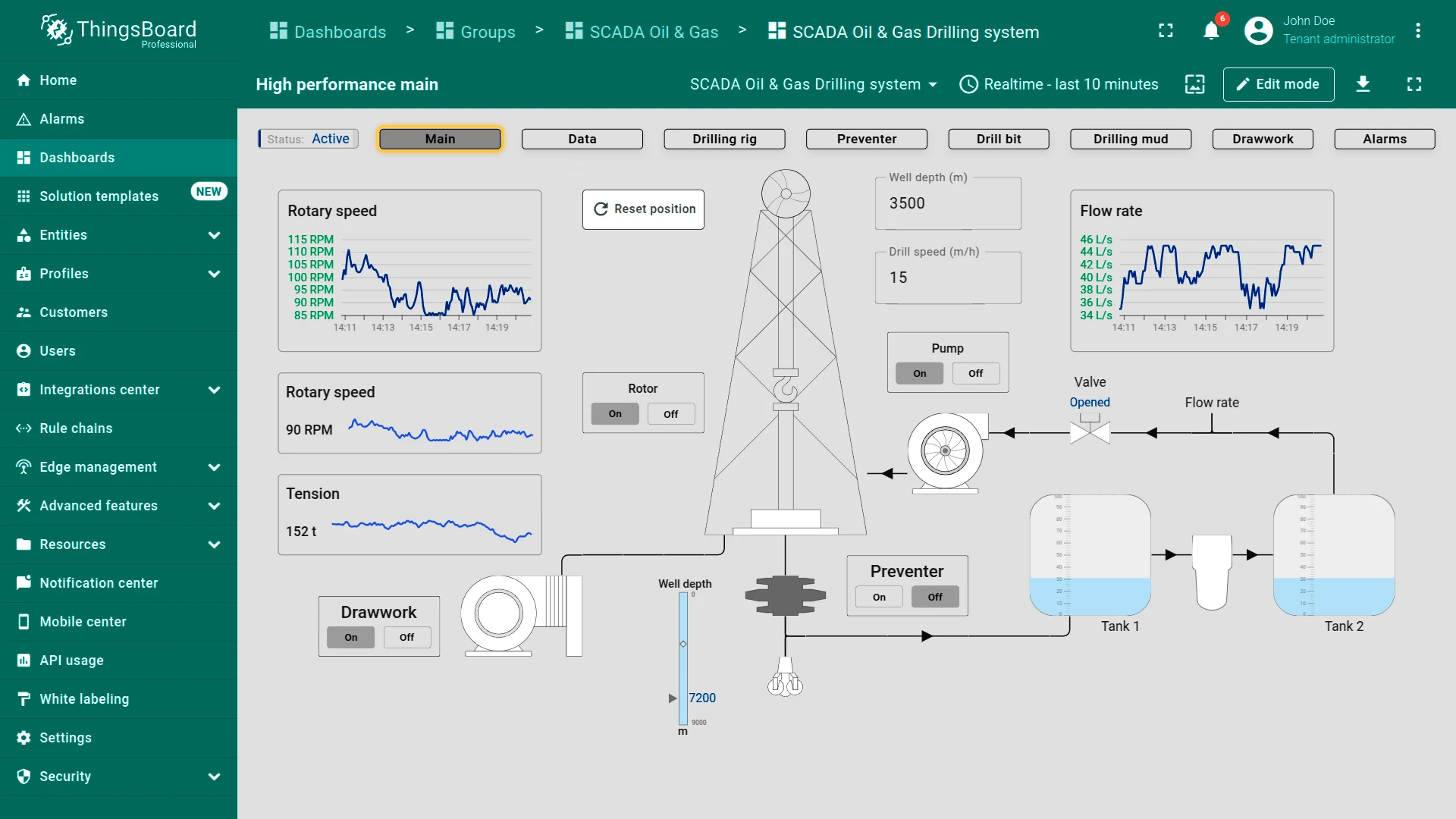
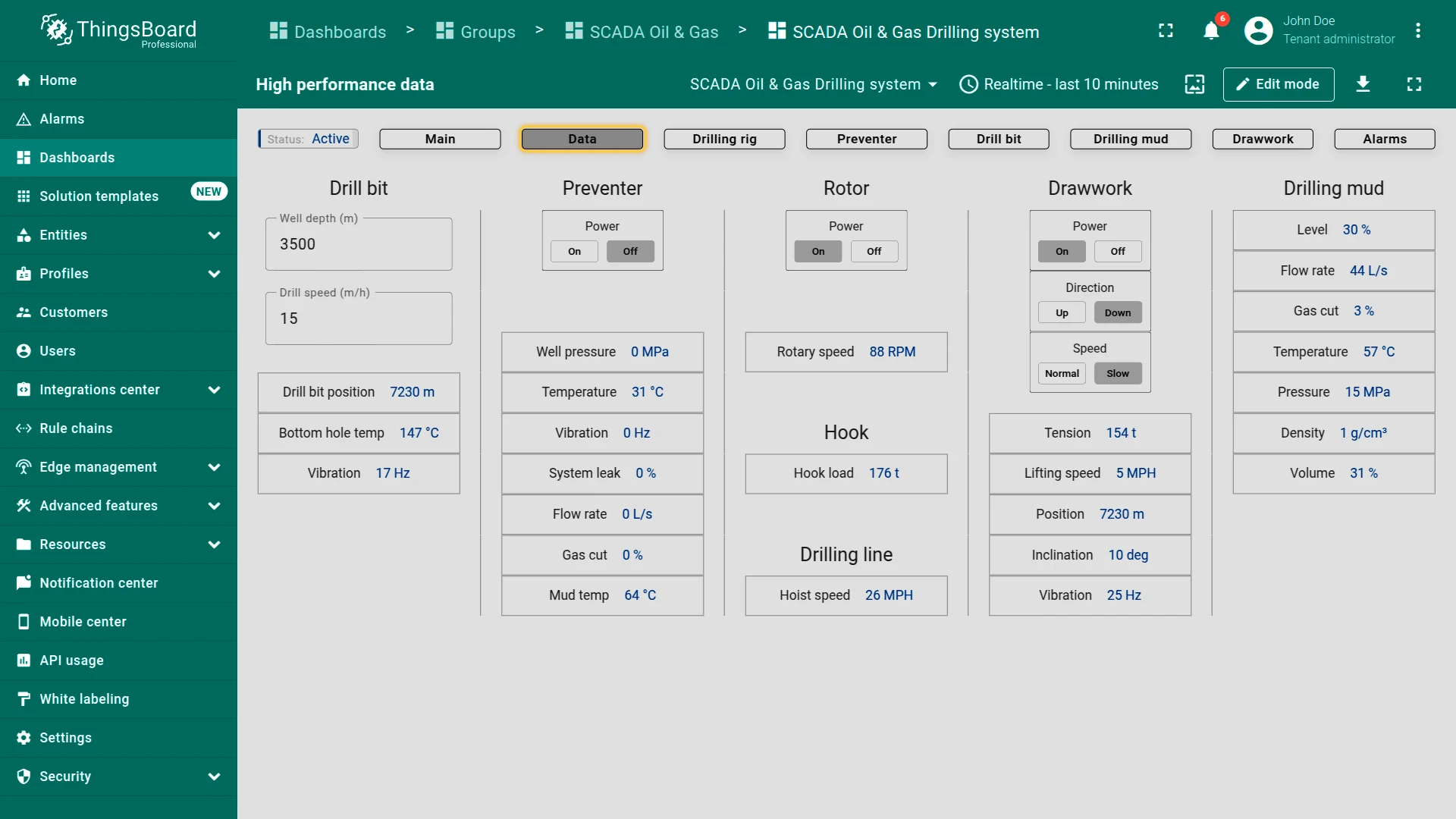
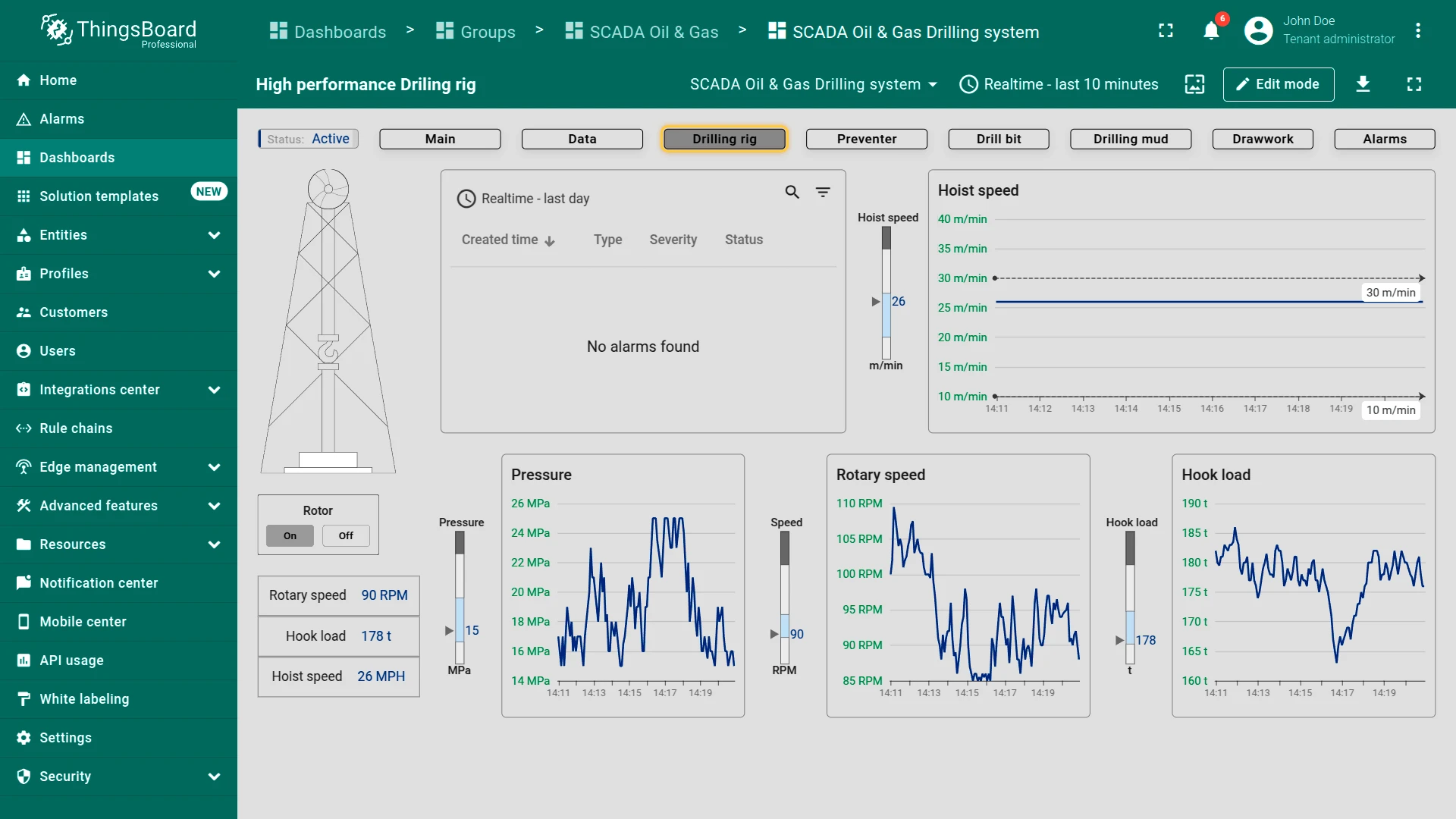
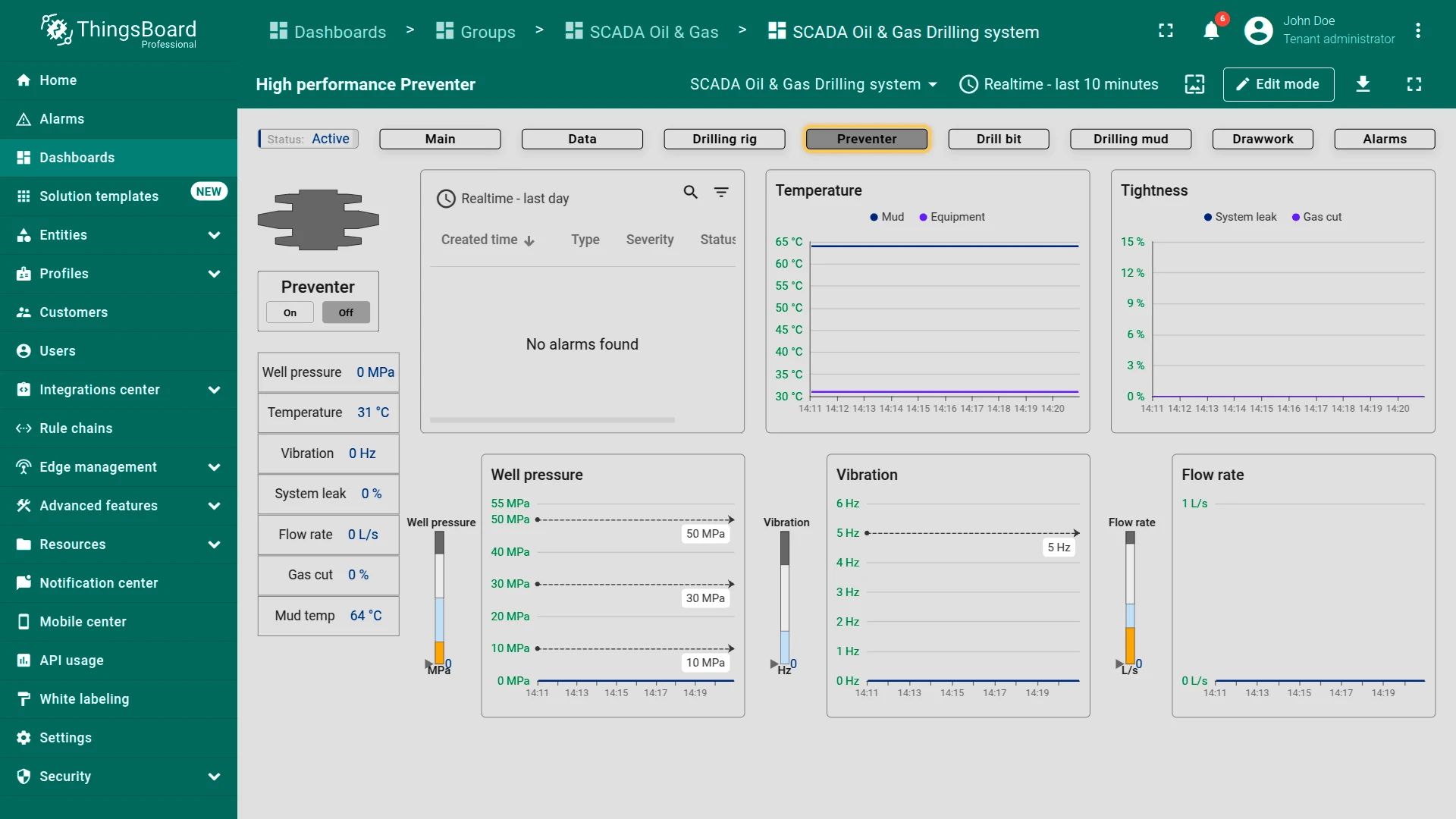
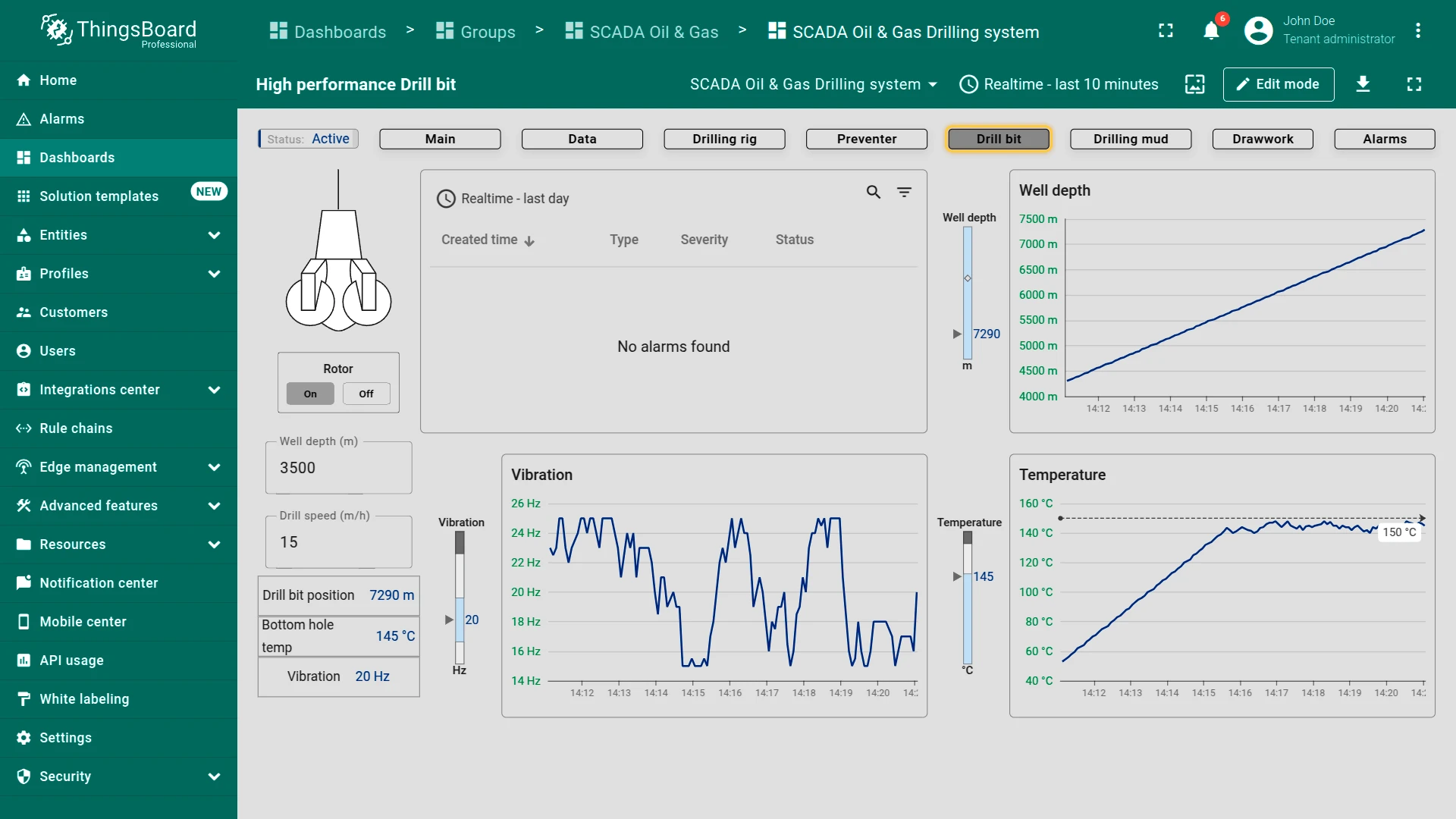
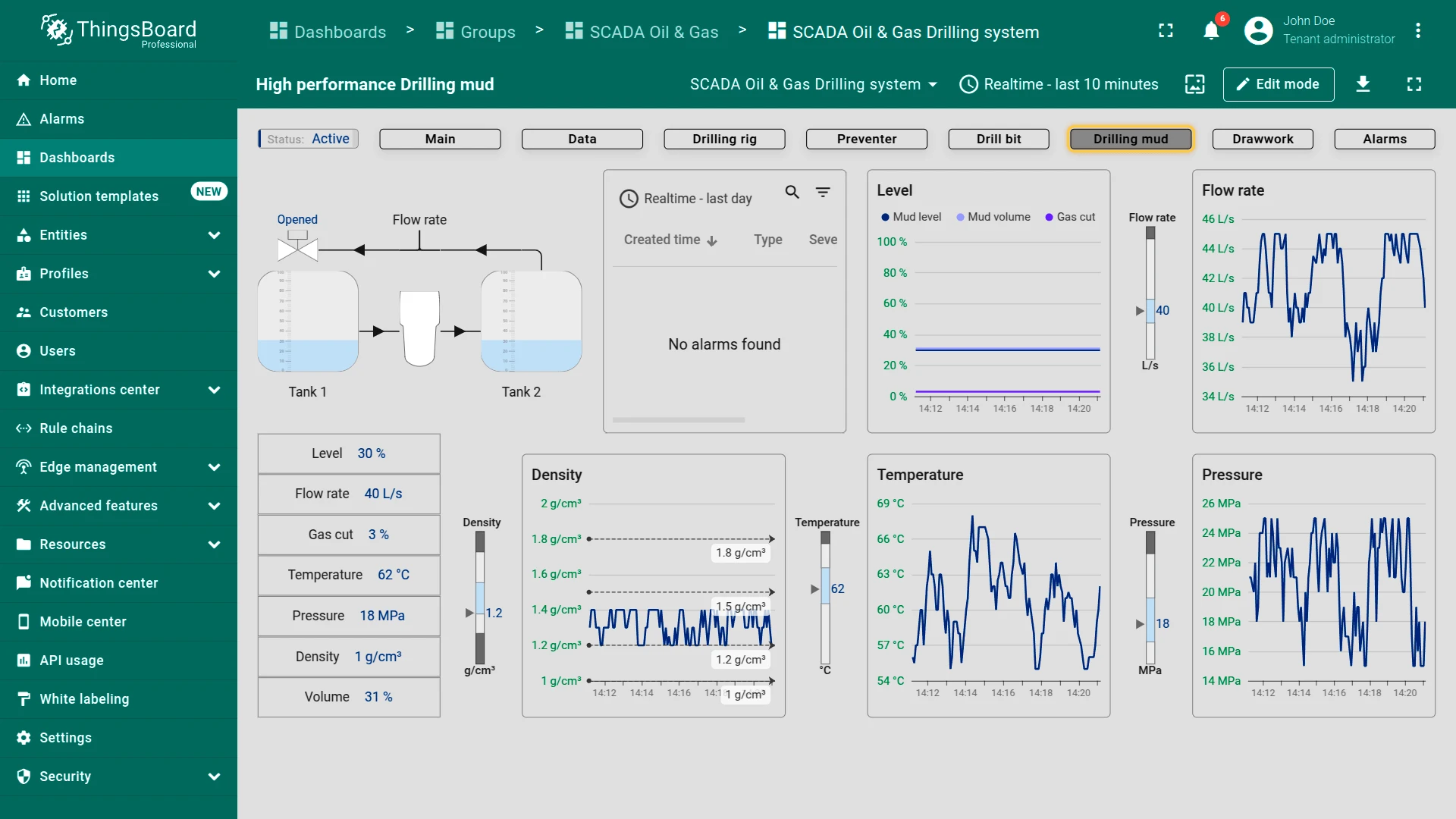
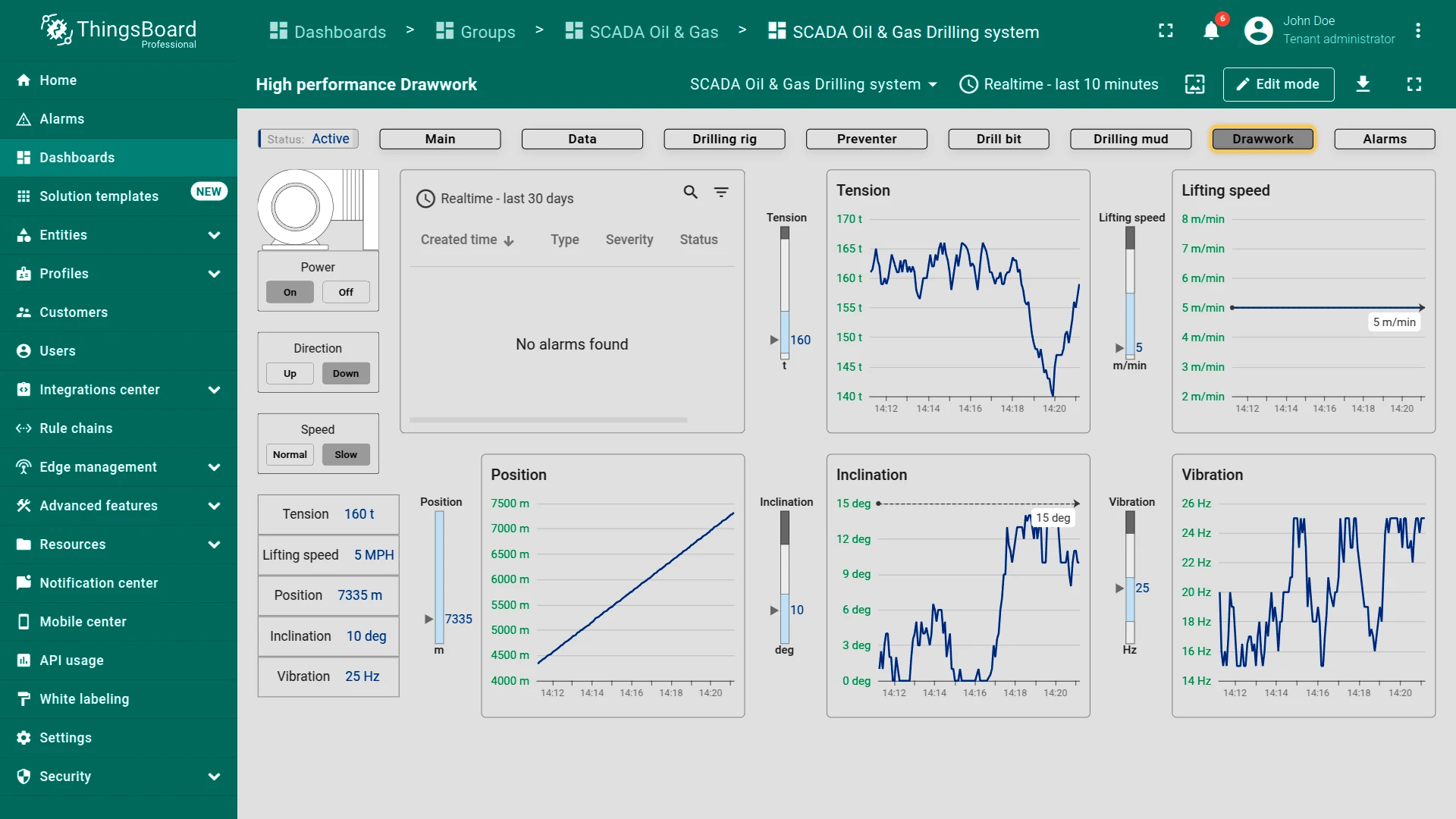
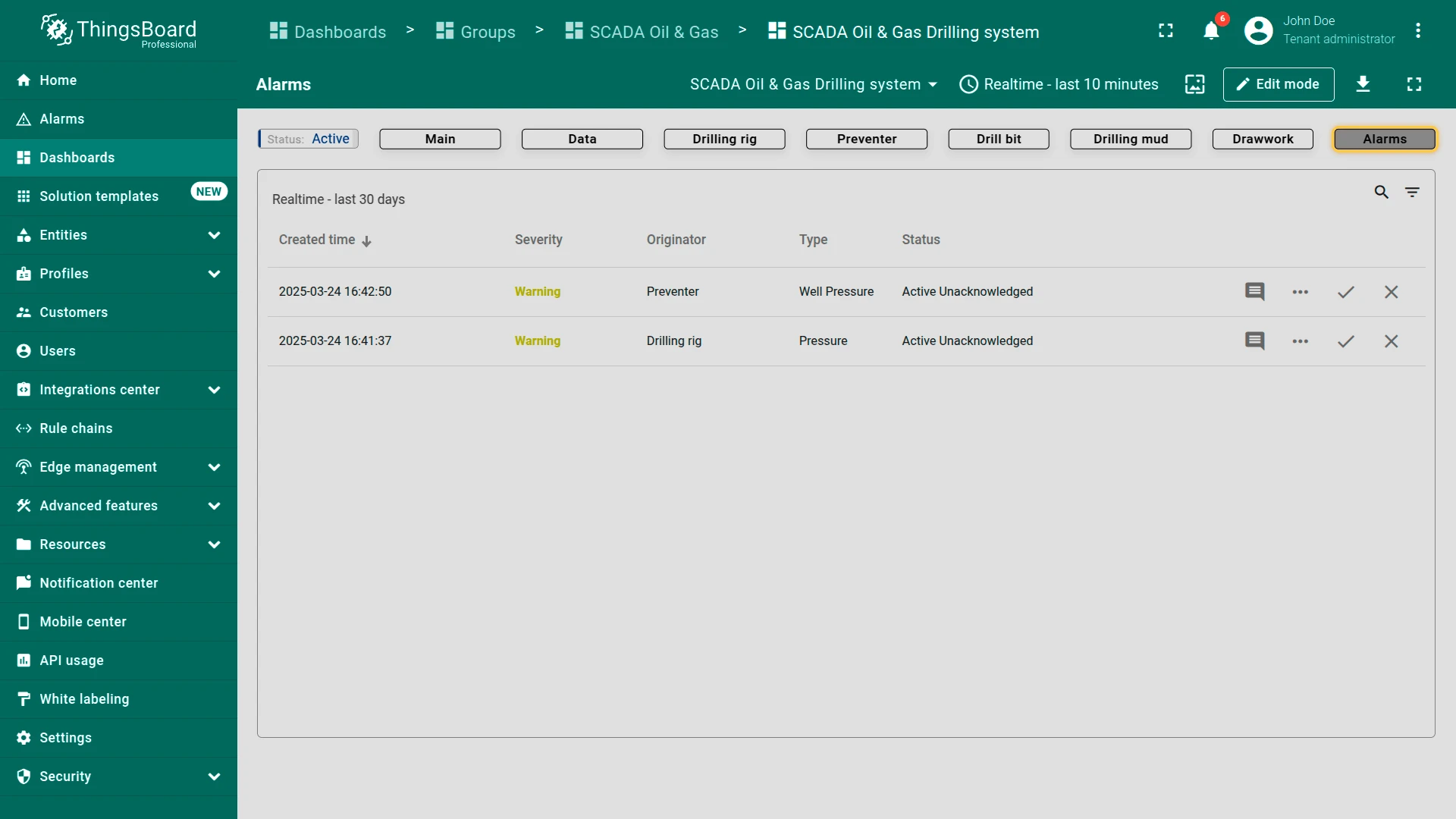
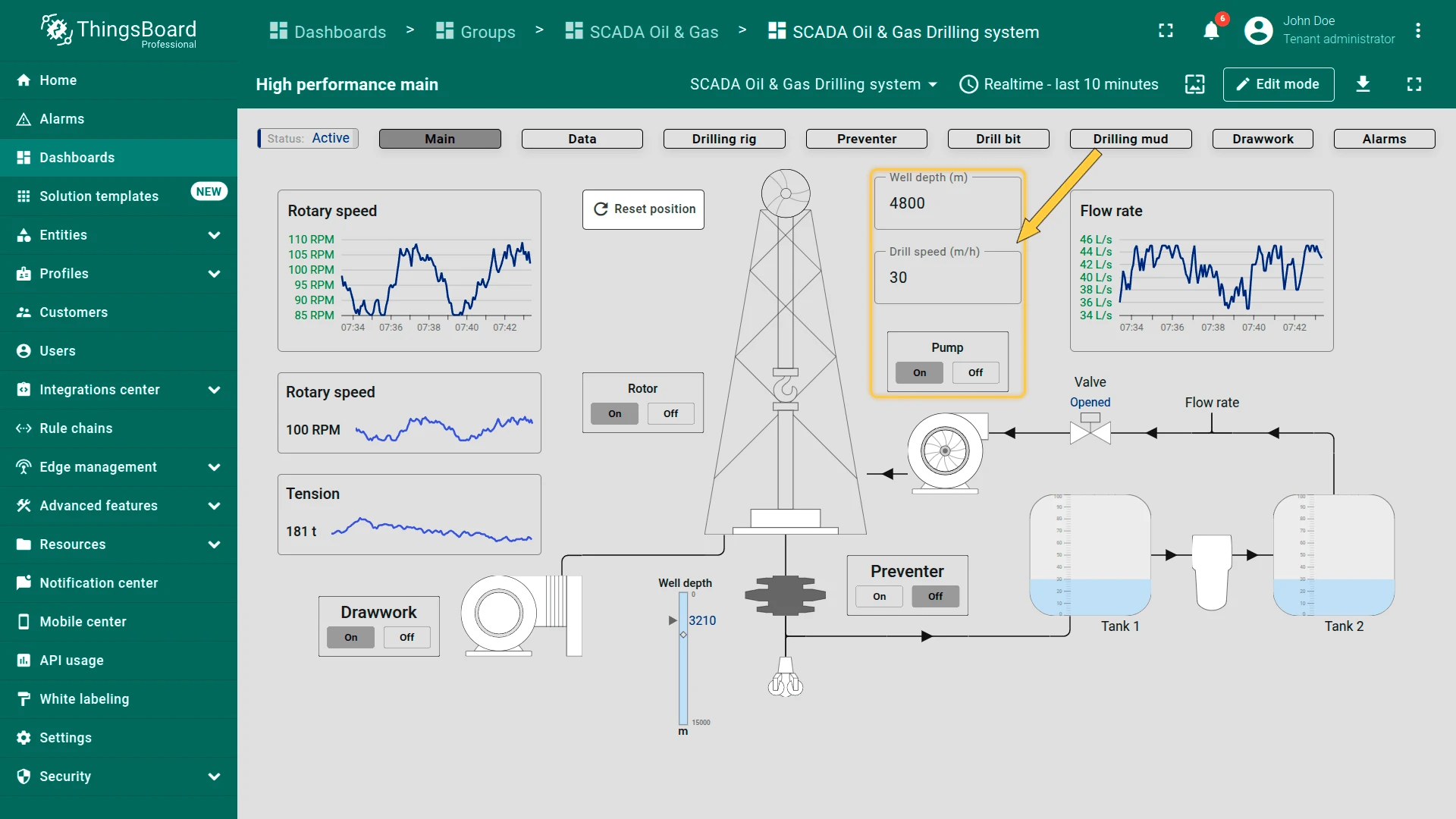
Try modifying some equipment configurations. For example, set a greater well depth, change the drilling speed, or turn off the pump and observe the results of these actions.
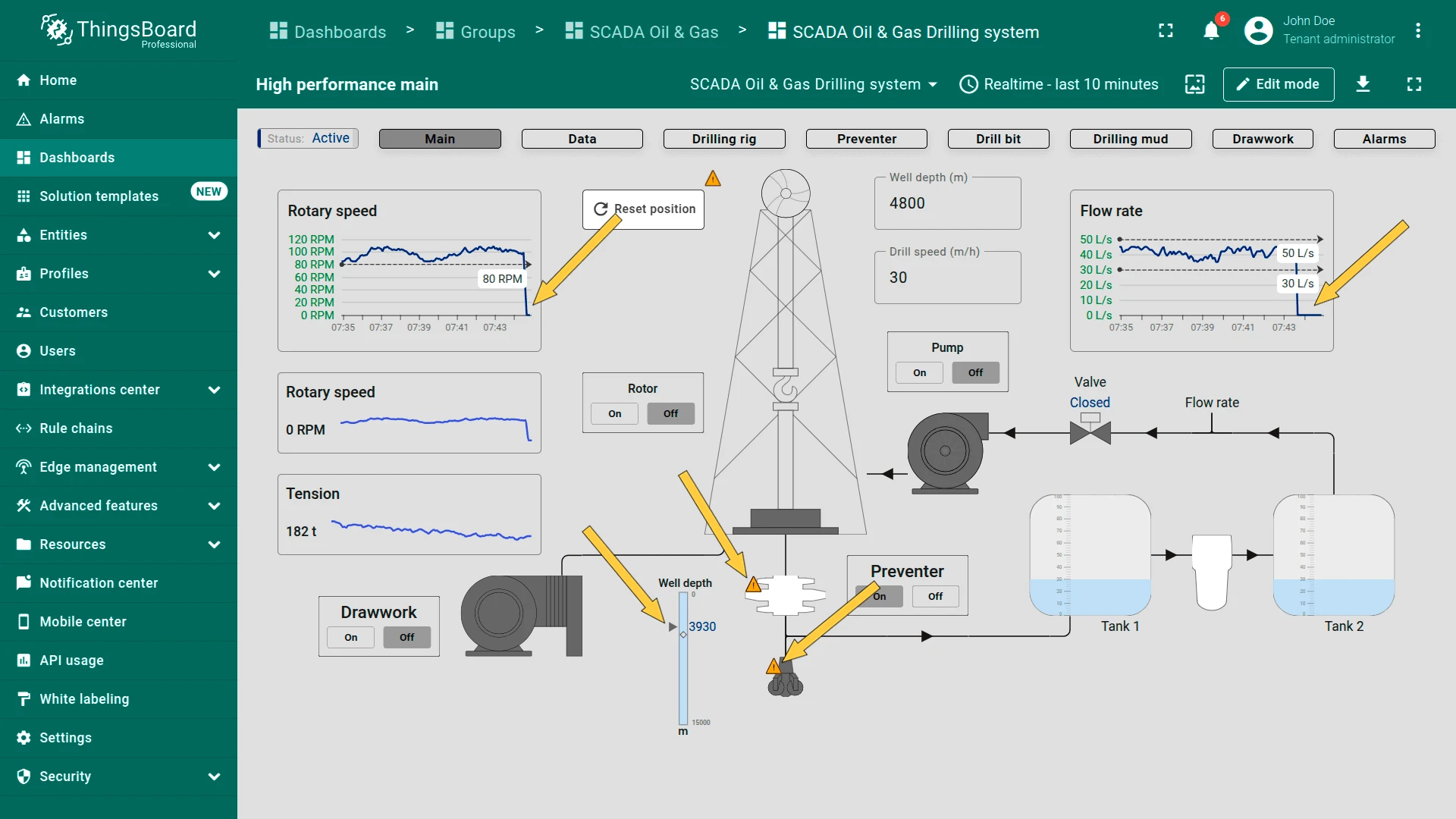
The dashboard supports responsive layouts for tablets and smartphones.
The dashboard can be fully customized using the dashboard development tools.
Devices
Section titled “Devices”The solution automatically configures the IoT Gateway and creates five drilling devices via the ThingsBoard IoT Gateway with the Modbus connector:
| Device | Monitored parameters |
|---|---|
| Drill Bit | Vibration, temperature |
| Drawwork | Lifting speed (slow/normal modes), inclination, vibration, tension |
| Drilling Mud | Density, pressure, flow rate, temperature |
| Drilling Rig | Rotary speed, hoist speed, hook load, pressure |
| Preventer (BOP) | Well pressure, flow rate, vibration |
Alarms
Section titled “Alarms”Alarm generation is handled by alarm rules configured in the device profiles. The solution includes 18 alarm rules across five device profiles, each with Warning and Critical severity levels:
- Drawwork (4 rules) — tension, lifting speed (normal), lifting speed (slow), vibration
- Hoist System (4 rules) — hoist speed, hook load, rotary speed, pressure
- Drilling Mud (4 rules) — temperature, flow rate, density, pressure
- Preventer / BOP (3 rules) — vibration, flow rate, well pressure
- Drilling Bit (2 rules) — vibration, temperature
All alarms check whether the device is in a running state before evaluating thresholds.
Conclusion
Section titled “Conclusion”The SCADA Oil & Gas Drilling system solution template delivers a monitoring and control system with real-time visualization of drilling parameters, interactive dashboard states for each rig component, and built-in alarm rules for safety thresholds. It enables fast onboarding through the included Modbus emulator and serves as a foundation for both demonstrations and production drilling monitoring use cases.
Was this helpful?